

Audio By Carbonatix
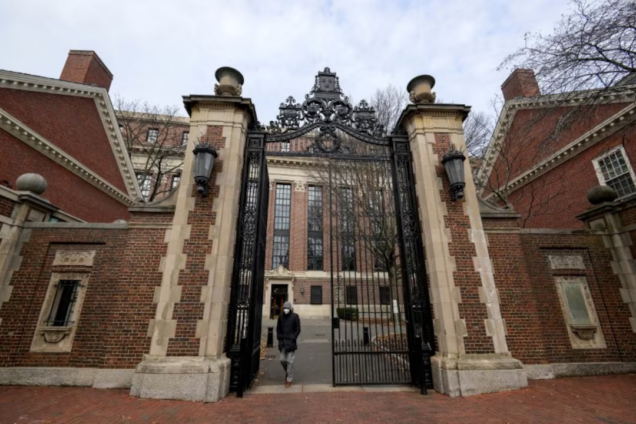
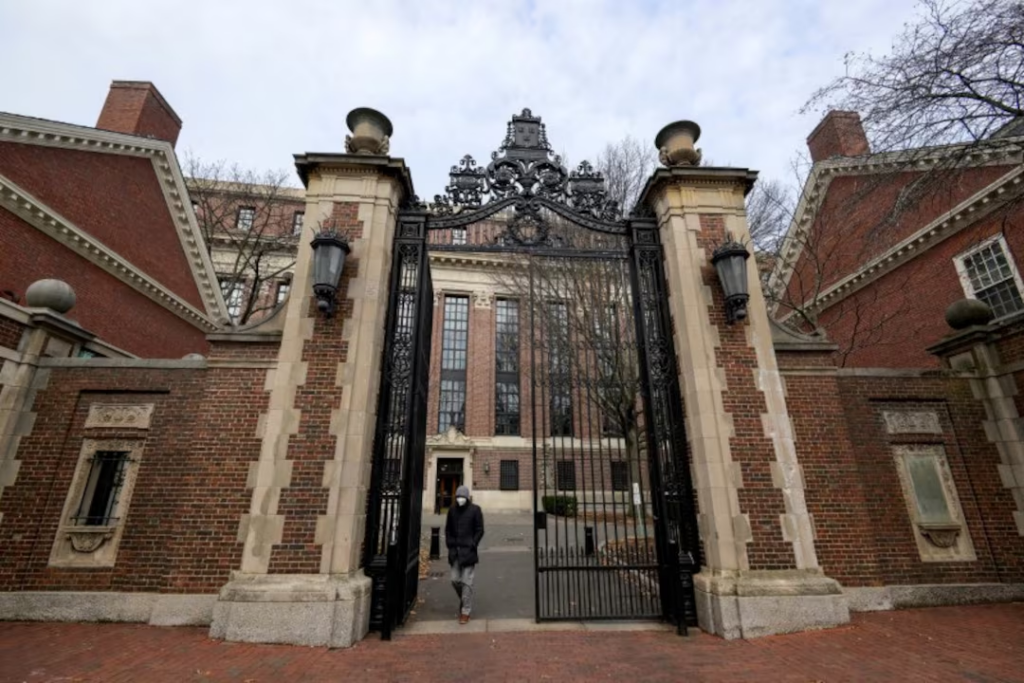
The percentage of Black students in Harvard University's freshman class dropped by more than a fifth following a landmark U.S. Supreme Court ruling that barred colleges from using race as a factor in admissions, according to data released by the school on Wednesday.
The Class of 2028 is 14% Black, compared with 18% last year, Harvard said, while the share of Hispanic students ticked up slightly from 14% to 16%.
Harvard, one of the world's most elite universities, was one of two defendants in the 2023 Supreme Court case, along with the University of North Carolina.
The schools argued that promoting racial diversity improved the educational experience for all students on campus, but the court's conservative majority ruled that taking race into account - commonly known as affirmative action - was a form of discrimination.
Many colleges had warned that prohibiting them from considering race, as admissions offices had done for decades, would inevitably lead to a drop in minority enrollment.
Thus far, the data on the first classes admitted since the ruling at several selective schools have presented a somewhat mixed picture.
Some top schools, such as Yale and Princeton universities, showed little change this fall among Black and Hispanic students.
Others saw precipitous declines. At the Massachusetts Institute of Technology, the percentage of Black, Hispanic, Native American or Pacific Islander students in its freshman class dropped to 16%, compared with an average of 31% over the previous four years.
Brown University, another elite school, saw its Black student share drop from 15% to 9% and its Hispanic share fall from 14% to 10%, according to the school's newspaper.
Amherst College, one of the country's top liberal arts colleges, reported that only 3% of its incoming class is Black, compared with 11% last fall.
The lawsuit against Harvard had accused the school of giving preference to some minorities at the expense of Asian American applicants.
The percentage of Asian American students in Harvard's freshman class held steady at 37%, Harvard said.
After the 2023 ruling, many schools bolstered recruitment programs, sought to remove application barriers and pursued other changes in an effort to increase diversity.
Other advocates have lobbied for state legislatures to pass bills that ban admission preferences for legacy applicants.
In releasing its data, Harvard noted that it had sent admissions staff to more than 150 cities to do student outreach and joined a consortium of universities seeking to raise awareness about their schools in rural communities, among other steps.
"The change in law did not change our fundamental commitments," Hopi Hoekstra, the dean of the Faculty of Arts and Sciences, wrote in a letter to colleagues announcing the data.
"We will continue to work tirelessly to pull down barriers to a Harvard education, and, in compliance with the law, to deepen even further our commitment to broad-based diversity."
Latest Stories
-
Why set up an anti-corruption agency while shielding GoldBod at the same time? – IERPP queries the government
1 hour -
Big Push for Infrastructure, Small Push for People
1 hour -
KsTU marks 70th anniversary, rallies partners for AI-driven future as gov’t pledges support
2 hours -
Ghana missing out on billion-dollar Carnival Industry — WCC CEO urges urgent investment
2 hours -
MP Akurugu cuts sod for 8.2 km Ashongman road project
3 hours -
No certificate, no entry – IFMA Ghana demands strict enforcement of occupancy permits to halt building collapses
3 hours -
Schools under trees: Gov’t targets 400 new schools, 1m desks this year – Mahama
3 hours -
Mövenpick Accra Business Forum 2026: A platform for shaping Ghana’s economic future
3 hours -
‘Not our jurisdiction’ — Mahama breaks silence on Ofori-Atta case
3 hours -
Mahama pushes for return of civic education to tackle indiscipline, sanitation challenges
3 hours -
Ghana’s Black Stars fall again as Germany snatch late victory
3 hours -
Mahama praises Volta Region’s cleanliness, urges national replicati
4 hours -
Ghana Medical Trust Fund set for launch as Board finalises key systems
4 hours -
Ghana restores investor confidence through economic reform – Deputy Finance Minister
4 hours -
We never promised to end sole sourcing, only its abuse – Sammy Gyamfi
4 hours