

Audio By Carbonatix
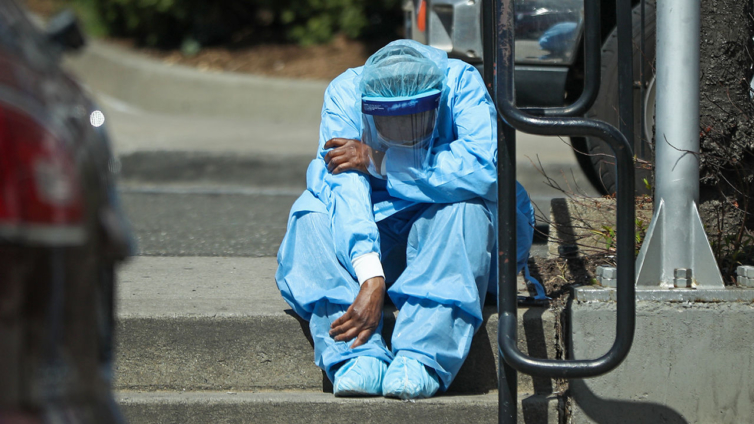
There are fears of a second wave of coronavirus among health and care staff whose mental health has suffered as a result of the trauma they have witnessed during the pandemic.
A report by leading health charity The King's Fund says the impact of the Covid-19 pandemic on the workforce "has been unprecedented and will be felt for a long time to come".
Winnie Nwosu has been a nurse for 10 years and loves her job. But she says what she saw during the peak of the virus left her feeling broken.
"I never knew depression until the Covid pandemic hit.
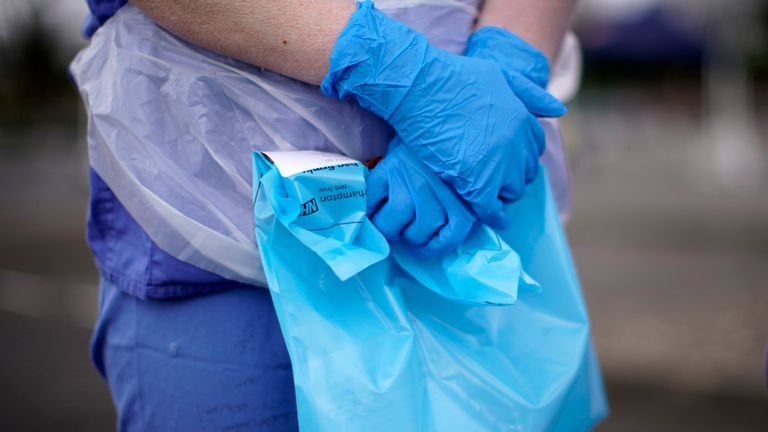
"I didn't know at the time that I was depressed or stressed or burnt out. Coming out if it now I realise that I was very depressed. Very, very demoralised."
She describes the situation on the wards as very difficult.
"It's so alarming how people suffer.
"Having to watch that patients beg for you to help them breathe or reach out to their family or bring their family to them and you can't do that because you're trying to also keep their family safe. It was awful."
Consultant psychiatrist Derek Tracy believes there is concern some healthcare staff may be suffering from a syndrome related to trauma.
He says: "Moral injury is an idea that originally tracks back to the military but has become more common in recent discussions in NHS healthcare.
"The idea is where people are exposed to work or stress for which they feel unprepared.
"Most staff, whatever your profession or your grade, we slot neatly into a wider structure, we know what to expect when we go into work. We know what risks we should be taking on and who we can speak to and a pandemic changes that.
"We're suddenly facing uncertainty. Will I become unwell when I go in? Will I go back and infect my family? We're seeing people with very high death rates when they're intubated and moral injury is this idea that we feel out of control of that."
The King's Fund report which was commissioned by The RCN Foundation says the pandemic exacerbated already high levels of stress and burnout among health and care staff.
It blames excessive workloads for "alarmingly high" numbers of staff intending to quit their jobs which would add to the already large numbers of nurse and midwife vacancies across the health and care system.
Winnie says despite the trauma she went through earlier this year she is ready to fight to the virus again.
"You know you get the patients that look at you after all you've done for them and say thank you."
And she knows her team will keep each other going, as they did before.
Latest Stories
-
Gov’t to establish Prison Industrial Hub to equip inmates with income-generating skills – Prison Service boss
15 minutes -
Alhassan Tampuli donates cement, roofing sheets to support storm victims in Gushegu
16 minutes -
Alhassan Tampuli appeals for urgent support for storm victims in Gushegu
18 minutes -
The hypocrisy must stop; pass Anti-LGBTQ+ Bill now – Alhassan Tampuli to Mahama
22 minutes -
Imprisonment should be rehabilitative, not punitive – Ghana Prisons boss at UNGA
44 minutes -
Ga Adangbe traditional priests petition Mahama over McDan aviation licence revocation
55 minutes -
Anti-LGBTQ Bill: NDC’s arrogance is worrying – Hassan Tampuli
1 hour -
Let’s give OSP time to mature, not to scrap it – Hassan Tampuli
1 hour -
Nigeria convicts 386 Islamist militants in mass trials
1 hour -
Djibouti president wins election with 97.8% of vote, state media says
1 hour -
We don’t have mandate to deduct tax from rent allowance of security services personnel – Interior Ministry clarifies
2 hours -
Ablakwa receives Presidential Special Envoy on Reparations to advance global agenda
2 hours -
Christina Koch becomes first woman to travel around the moon on Artemis II
2 hours -
Epstein survivors’ calls to meet King Charles and Queen harder to ignore as US visit approaches
2 hours -
UN Secretary-General names Ghana’s Anita Kiki Gbeho as South Sudan envoy
2 hours