

Audio By Carbonatix
A new study by the Institute for Fiscal Studies (IFS) has revealed that high transportation costs remain one of the biggest challenges confronting rice farmers in Ghana, significantly affecting their ability to market their produce and earn fair returns.
The findings, presented in a new policy document on Ghana’s rice sector, were based on field research conducted by the IFS team in the Volta and Oti Regions. The team engaged directly with rice farmers and millers to understand the real challenges facing the sector and how these issues impact its growth.
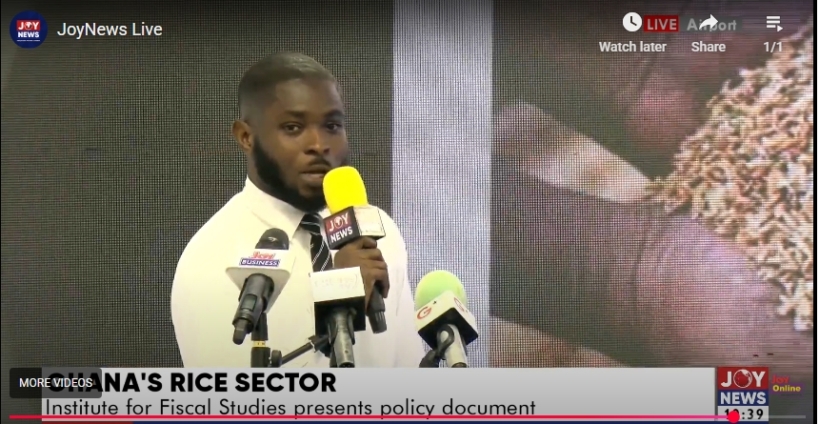
Presenting the findings, a Research Assistant at the Institute, Mr Frederick Amu, said marketing remains a major concern for rice farmers, with transportation costs standing out as a key burden.
“Another problem or challenge we faced with our engagement with these rice farmers is a marketing challenge,” Mr Amu explained. “This marketing challenge translates into high costs that these rice farmers mostly bear when they are transporting their rice produce to the final consumers. Sometimes they would have to split the cost of transport because when the transport takes produce to these consumers, it commands high prices, so they would sometimes have to take the transport cost themselves.”
He noted that the high cost of transporting rice from production areas to market centres often reduces farmers’ profit margins and discourages them from expanding production. In some cases, farmers are forced to absorb part of the transport costs to make their produce more competitive in the market.
Mr Amu added that apart from transportation, other marketing-related issues continue to compound the struggles of local rice producers. These include limited access to buyers, competition from imported rice, delayed payments, and low prices for locally produced rice.
He further observed that imported rice continues to dominate consumer preference, leaving local farmers at a disadvantage despite their efforts to meet demand. The combination of these challenges, he said, weakens the market position of local rice farmers and threatens the sustainability of the sector.
Latest Stories
-
Church of Pentecost supports over 2,000 BECE candidates in Obuasi with career guidance seminar
2 minutes -
Brandon Asante and Coventry all but promoted to Premier League despite Sheffield Wednesday draw
24 minutes -
GPL 2025/26: Late Kwartemaa strike downs Hearts in Tema
30 minutes -
Ghana Faces Sierra Leone Moment as Prosecutorial Powers come under strain
40 minutes -
Don’t consume fish or seafood from Tema Shipyard until further notice – FDA warns
45 minutes -
Why volunteering might be Africa’s most underrated career accelerator
51 minutes -
ActionAid Ghana raises concern over gender gaps in Feed Ghana Programme
53 minutes -
Windstorm wreaks havoc in Gushegu, displacing nearly 2,000 residents and damaging schools
55 minutes -
Friends of Bridget Bonnie Marks her 35th birthday with donation to Kasseh Model Health Centre
2 hours -
From Ekumfi Kokodo to the Pulpit Stage: Essi Donkor’s gospel journey takes shape
2 hours -
Landfilling waste management creates no value, it’s an economic waste
2 hours -
Photos: Speaker Bagbin Commissions MPs constituency office under parliamentary decentralisation programme
2 hours -
Black Stars technical advisor Winfried Schäfer sacked as GFA shakes up backroom staff
3 hours -
Wenchi water project almost complete, critical to gov’t agenda – GWL MD
3 hours -
Anti-LGBTQ+ bill not part of government’s legislative agenda – Inusah Fuseini
3 hours