

Audio By Carbonatix
On a hot Friday night in Palermo, Sicily's capital, musicians play Senegalese songs outside an African restaurant in the bustling outdoor market of La Vucciria.
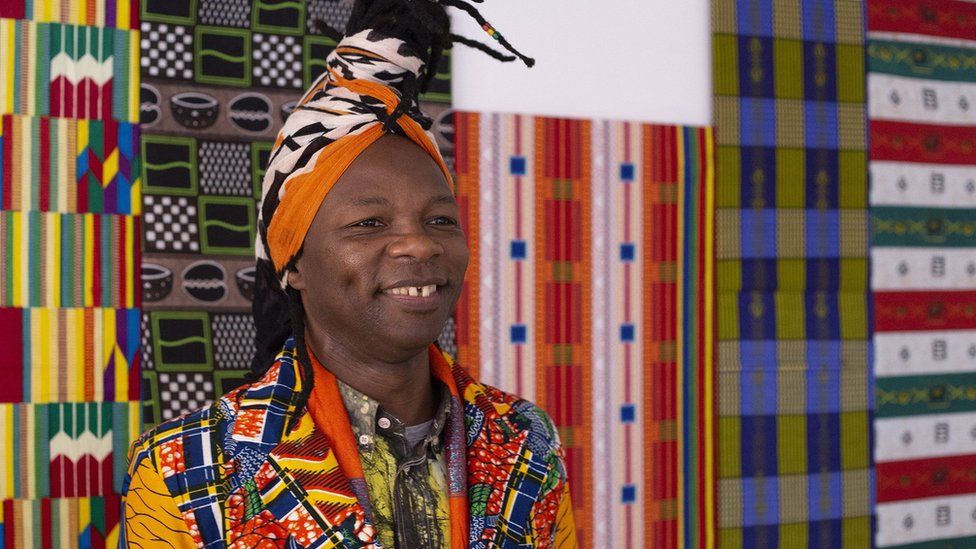
The band belongs to Doudou Diouf, a Senegalese musician and owner of the restaurant called Ciwara, which since opening in 2018 has become the focal point for the city's African community.
The sounds of African drumming and rhythm jostle for attention next to the Sicilian traders serving aperol spritz - an Italian aperitif - from their street carts and the restaurants dishing up Sicilian delicacies like caponata, arancini and fried fish.
As the evening turns to night, the restaurant becomes a dance floor where young Sicilians and Africans grind to Afrobeat hits.
When a remixed version of On The Low by Burna Boy plays, the crowd roars in giddy excitement.
The young African waiters ply the revellers with "African" cocktails - alcoholic beverages fused with the flavours of West Africa such mangos, hibiscus, pineapple and ginger.
In the years I have been reporting from Palermo I've seen how much African culture has reshaped the city.
Multicultural hotspot
From its musical tastes and the popularity of African dance to food and even the hairstyles of young Sicilians.
This is because Palermo has become home to thousands of Africans, mostly from West Africa, such as Nigerians, Senegalese and Gambians.
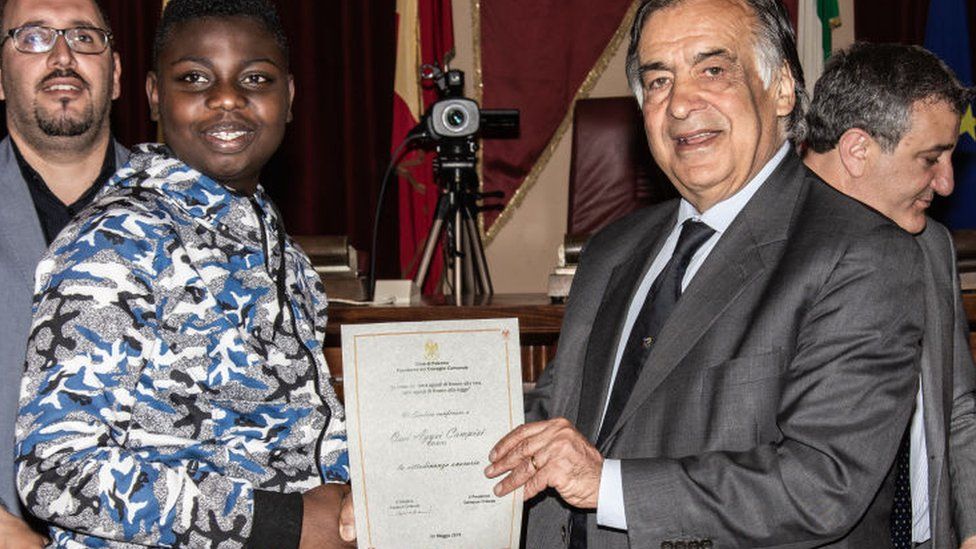
Palermo has been a cultural melting pot since ancient times and it has in recent years become known for its welcoming attitudes thanks in part to its pro-migrant mayor Leoluca Orlando.
Tens of thousands of African migrants have passed through Sicily on their way to northern Europe - but what is often forgotten is that many Africans stay on the island.
Nowadays Palermo has become one of the most multi-ethnic cities in Italy and a multicultural hotspot in Europe.
Nowhere is the African presence more visible than in Palermo's Ballarò neighbourhood, which was once the rough corner of the city with long-standing mafia associations.
It has been reshaped by communities from Africa, the Middle East and South Asia.
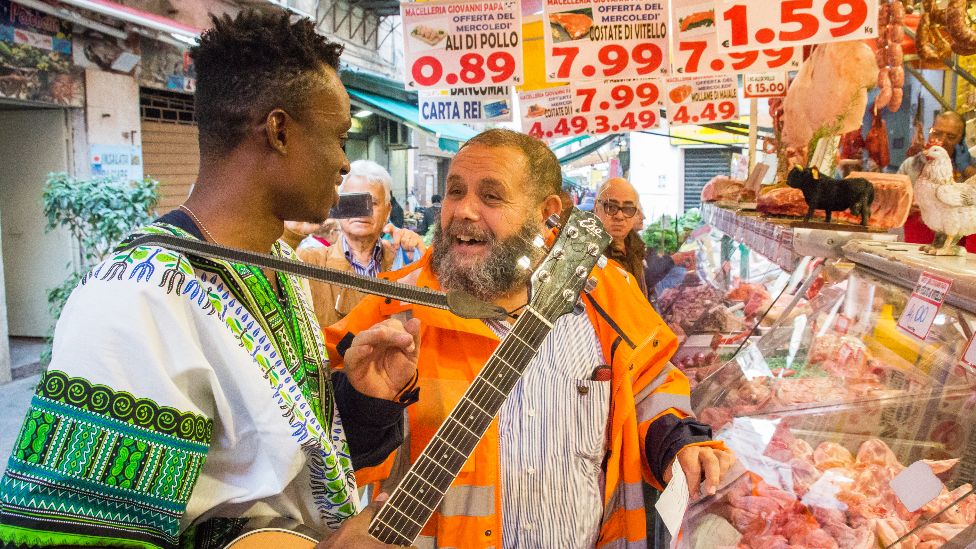
On a walk through Ballarò market the sounds and smells of daily Palermitan life now include the African restaurants serving up mafé, domoda and chicken rice, and stallholders selling ingredients unfamiliar in the Italian kitchen such as okra, yams and scotch bonnet peppers.
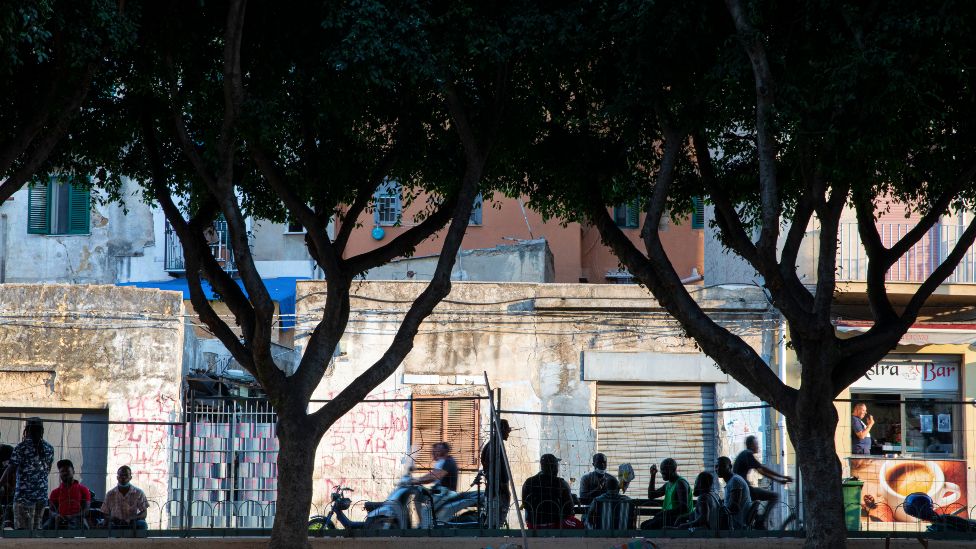
In the market an African woman grills corn cobs over coals next to elderly Sicilian men drinking cold beers while a little further down the cobbled back streets, a group of young African men gather to eat skewers of grilled chicken.
A slice of Africa can be seen everywhere - from the Nigerian women who run small convenience stores selling sodas, sweets and beers to the Senegalese tailors who make African-inspired garments.
Afrobeats stars
There is a growing anti-migrant sentiment on the island, which has been galvanised by the hardships brought on by the coronavirus pandemic.
But it cannot take away from the new cultural landscape that has seen musical talents emerge such as Nigerian Afrobeat artists Ray Jeezy and Nelson Billionz, also known as "Big Billy", who shoots slick music videos in Palermo.
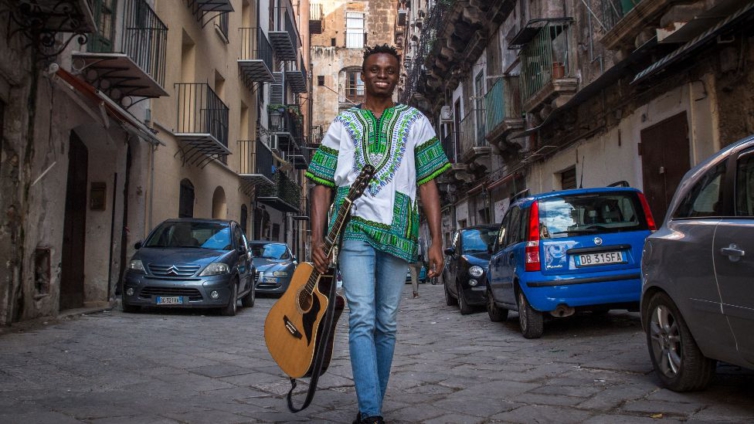
Other notable stars include Nigerian singer Chris Obehi. The 22 year old arrived from his home in Nigeria's Edo State aged 17 after making the perilous journey via Libya.
He released his album Obehi in May to much acclaim, singing in Italian, Sicilian, Edo and English.
Obehi sings passionately about his love for his new home.
This love was recognised when earlier this year he won a Rosa Balistreri e Alberto Favara award - Sicily's most prestigious music gong - named after one of the island's legendary singers Rosa Balistreri, whose hoarse voice and powerful lyrics have made her an iconic figure.
Many Sicilians have been astounded by Obehi's covers of her songs - in particular Cu ti lu dissi, meaning Who Told You - which he performs in beautiful Sicilian.
But many of his songs reflect on the hardship he endured in coming to Palermo.
In one of his most powerful hits, he sings about his journey over the Mediterranean.
"Non siamo pesci" - "We're not fish," the chorus goes.
"We're not fish in the sea, we're not fish, we're humans."
Latest Stories
-
I have supported highway authority financially to fix roads in my constituency – A Plus
51 minutes -
US, Iran fail to reach peace agreement after marathon talks in Pakistan
1 hour -
ECG kicks off Phase Two of transformer upgrades at Lashibi; brief outages expected
2 hours -
Port crises loom as 11,000 drivers threaten four-day strike
3 hours -
A source of excellence across generations – Vice President Opoku-Agyemang lauds Mfantsipim
4 hours -
(Photos) Mfantsipim School launches historic 150th anniversary
4 hours -
Knights and Ladies of Marshall group backs Catholic Bishops’ stance on anti-LGBTQ+
5 hours -
Bright Simons writes: All the Filla in the Ibrahim Mahama/E&P – Gold Fields Saga
5 hours -
Monetise Idiocy In Ghana
5 hours -
The Ghanaian prophet and the mysterious death of his scottish wife Charmain Speirs
6 hours -
Nearly 400 sentenced in Nigeria for links to militant Islamists
6 hours -
Ghana’s recovery supported by gold strength despite global oil price pressures – Standard Bank Research
7 hours -
Methodist Church hails Mfantsipim@150; calls for “fresh consecration” to excellence
7 hours -
‘Excellence is our inheritance’ – Nana Sam Brew-Butler hails Mfantsipim’s 150-year reign in leadership
7 hours -
Kwaku Azar writes: A-G vs OSP
7 hours