

Audio By Carbonatix
Government cannot determine cocoa producer prices without factoring in the realities of the international market, a key presidential official has said, as authorities continue engagements with farmers over the recent reduction in farmgate prices.
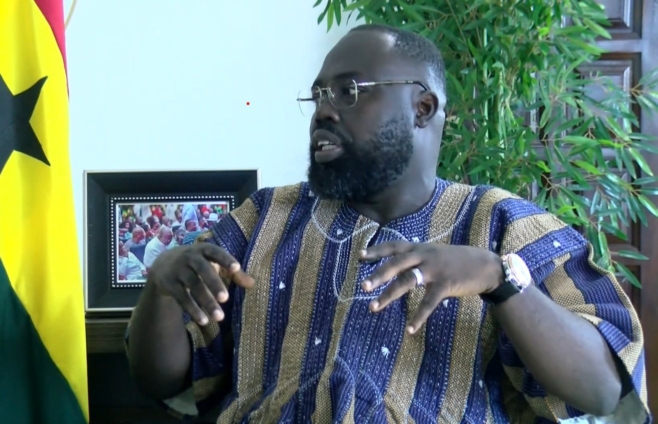
Dr Peter Boamah Otokunor, Director of Presidential Initiatives in Agriculture and Agribusiness at the Office of the President, said that although the government announces the producer price for cocoa, the final value of the commodity is ultimately determined by global market conditions.
Speaking in an interview with JoyNews’ Gemma Appiah after weeks of farm-level engagements in cocoa-growing communities in the Western Region, he explained that Ghana sells its cocoa on the international market and must therefore align its decisions with prevailing global prices.
“Even though the government sets the producer price, the government does not set the market price,” Dr Otokunor said.
“The product is sold on the international market, and any cocoa-growing country that brings cocoa there sells the cocoa at a particular price,” he added.
His comments come at a time when the cocoa sector is facing renewed pressure following the government's decision in February 2026 to reduce the producer price by 28.6%.
The farmgate price was cut from GH¢3,625 to GH¢2,587 per 64kg bag, a decision authorities say was driven by falling international cocoa prices.
The move has sparked concern among farmers, many of whom rely on cocoa as their primary source of income.
Dr Otokunor acknowledged the dissatisfaction among farmers, noting that declining commodity prices are never welcomed by producers.
“Nobody would be happy if you go to the market and you are trading a commodity and it appears as if the price of the commodity has fallen,” he said.
According to him, the Mahama administration has been engaging farmers directly to explain the rationale behind the pricing decision while outlining broader reforms being planned for the cocoa sector.
The issue has also been compounded by reports that some farmers have gone without payment for their produce since November 2025, worsening financial pressures on farming households.
Ghana’s cocoa industry remains one of the country’s most important economic sectors, supporting an estimated 800,000 farm families across 10 of the 16 regions.
The sector generates about $2 billion in foreign exchange annually and serves as the main source of livelihood for many rural communities.
Government officials say the ongoing engagements are aimed at providing clarity on pricing decisions while building consensus around reforms intended to stabilise and strengthen the industry in the long term.
Latest Stories
-
Reality Zone with Vicky Wireko: International Day of the Girl, shaping today’s girl for tomorrow’s future – ZONTA Clubs lead the way
29 minutes -
Global health must be led by countries, not designed for them – Mintah Akandoh
1 hour -
Mahama honoured at 2026 World Health Summit in Berlin for global health leadership
2 hours -
Breast cancer is not a death sentence – Besease Kontire Obaapanin, Magmina Foundation lead awareness campaign
2 hours -
EcoBank invests in digital education of 4 Garisson School to mark 40 years in Africa
2 hours -
AGI urges investment in skills and raw materials to strengthen local manufacturing
2 hours -
GPL 2026/27: ‘We have to rectify our mistakes’ – Boadu reacts to Aduana FC defeat
2 hours -
No disability access, no building permit – KMA declares
2 hours -
Asantehene to lead environmental restoration effort at Jimi Land Reclamation Site
2 hours -
Poor Ghanaians are being jailed because they cannot afford justice – Crime Check Foundation
2 hours -
No conflict in appointing Emelia Agbenyo as Deputy EC Chair – NDC
2 hours -
87-year-old man jailed 20 years for defiling 9-year-old girl at Ofankor
2 hours -
Sankofa Gold targets 70kg output after 9-month shutdown
2 hours -
Tamale, Bolgatanga had just one Legal Aid lawyer between them – Kwesimintsim MP
3 hours -
PAC orders eviction of former irrigation company MD from official residence
3 hours