

Audio By Carbonatix
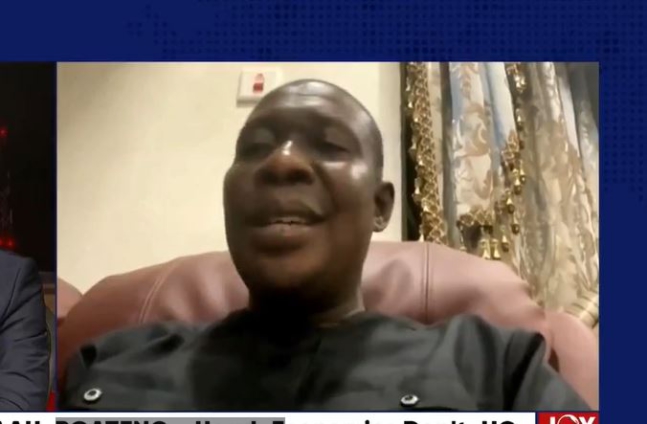
Head of Economics Department at the University of Ghana, William Baah-Boateng has commended the Bank of Ghana (BoG) for its swift approach to increase the policy rate by 300 basis points to 22%, after an Emergency Monetary Policy Committee.
Speaking in an interview on JoyNews’ Business Edition of PM Express, Dr. Baah-Boateng indicated that had the BoG not intervened, the country’s inflation rate would have been 100%.
“In economics, there is something we call counterfactual so if the problem is coming and they don’t even step in at all, perhaps we would have been in the 100’s,” he said.
Currently, year-on-year inflation shot up to 31% in July 2022, latest data from the Ghana Statistical Service (GSS) has revealed.
Dr. Baah-Boateng's comments are in relation to the decision by the Bank of Ghana to increase the policy rate by 300 basis points to 22%, after an Emergency Monetary Policy Committee meeting on August 17, 2022.
The move is part of measures to address the risks to the inflation outlook.
However, the cost of borrowing is expected to go up significantly, and consequently, increase cost of living and doing business.
In the meantime, a Partner at Deloitte Ghana, Yaw Lartey has expressed worry about the increased policy rate, saying it will not address the rising inflation rate, but rather shoot up cost of borrowing.
According to him, though the monetary policy rate historically has helped to manage inflation, the current economic situation proves otherwise
Dr Baah-Boateng, in response, stated that, since the measures have been implemented “and we are here, it will be very difficult for you to measure whether indeed the policy is not working.”
For this reason, he urged that comments that the policy is not working should be put in perspective.
He explained that fiscal policy and monetary policy are supposed to play complementary roles, adding that both cannot stand alone therefore there is a need to observe where the inflation is coming from.
He observed that the inflation is coming from the supply side therefore Central bank has no role to play.
According to him, the exchange rate is the bigger issue driving inflation in the country.
“You can look at inflation from January to now the moment the exchange rate depreciates, you know it reflects on fuel prices, fuel prices become cost push. So it means that there is some kind of demand element there moving into supply and therefore you cannot have the fiscal and monetary standing alone, they need to play a complementary role,” he stressed.
Latest Stories
-
National Peace Council urges investment in youth to sustain Ghana’s peace
3 minutes -
Afenyo-Markin urges youth to speak up against injustice
14 minutes -
CAF annuls Edo Queens victory, orders WAFU B final to resume from extra time
36 minutes -
Interior Minister urges traditional authorities to enforce anti-bushfire bye-laws
38 minutes -
3rd Republic Bank-JoyNews Habitat Fair Clinic ends on a high note after three days of strong patronage
40 minutes -
Ten climbers missing after avalanche hits Himalayan base camp
1 hour -
NPP had more permanent fuel relief measures than current GH¢2 diesel cut – Amin Adam
2 hours -
Photos from the 3rd Republic Bank-JoyNews Habitat Fair Clinic
2 hours -
Ethiopia’s army promises restraint amid fears of new civil war
2 hours -
Amin Adam calls for review of fuel taxes as diesel prices remain above GH¢18
2 hours -
World Vision Ghana, Ahafo districts sign MoU for universal WASH coverage
3 hours -
When the gold engine stutters: What Ghana’s Cedi and reserves are telling us about the new economic architecture
3 hours -
Two reportedly die after being trapped in mining pit at Juaboso
3 hours -
Petrosol cleans up Wa Municipal Hospital, to donate medical equipment
3 hours -
‘If NPP was ‘insensitive’ over fuel prices, NDC must accept same description now’ — Amin Adam
4 hours