

Audio By Carbonatix
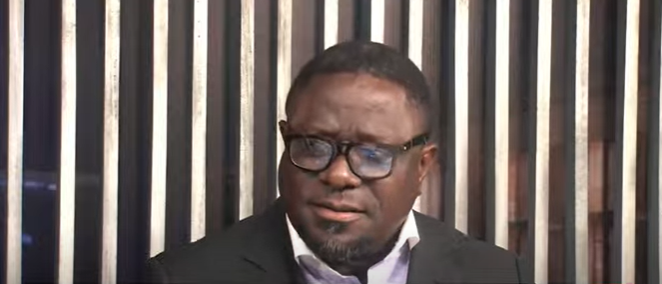
The President of the Association of Ghana Industries (AGI), has warned that the recent 10% tariff slapped on Ghanaian exports by the U.S. is a stark reminder of the country’s structural economic vulnerabilities.
Dr. Humphrey Ayim-Darke questioned the nation’s readiness to transform external crises into meaningful reform in his interview on Joy News’ PM Express Business Edition on Friday, April 11.
He stressed that while political assurances of resilience are often echoed in the wake of such external shocks, they rarely translate into real industrial transformation.
“To the extent of the assurance, you need to also internalise it and look at the risk element as an entity,” he argued.
“The general, broad assurance is there. But you know, there are some externalities—external factors—when they befall a nation, no matter the assurance from the President, because they are beyond your control.”
The AGI president described the U.S. tariff as a classic case of such external factors, calling on Ghanaian policymakers and industrial leaders to treat it as a moment of reckoning rather than rely on rhetoric.
“How do you manage it? How do you mitigate it?” he asked.
“There was this optimistic assurance that, look, we can recalibrate and restructure the economy to take advantage of it. Yes, it is possible. The case of Covid-19 showed us one clear example.”
Yet, he was quick to remind that while the Covid-19 pandemic exposed the fragility of global supply chains, Ghana did little to strategically reposition its economy in response.
“How did we execute the fallout of Covid?” he asked pointedly.
“How did we deliberately promote local manufacturing companies as a fallout of Covid? That example is there. How many companies can we count out beyond that?”
For Dr. Ayim-Darke, the failure to learn from past shocks raises doubts about the nation’s capacity to respond meaningfully this time.
“That said, assurance is not sufficient, because there are other obstacles in these structural reforms to build internal capacity.”
He pointed to the power industry as a missed opportunity, despite existing local content laws and clear prospects for value chain development.
“We even have a local content law, and we sought to build a value chain in the power industry so that manufacturers could produce cables and conductors,” he said, citing how the Electricity Company of Ghana (ECG) once encouraged meter assembly plants to set up in Ghana.
“But beyond that, you need to interrogate: how far have we come? Have they been successful over the years?”
To him, it is not enough to declare optimism or preach economic recalibration. The hard reality, he said, is that Ghana is still highly dependent on imports, and little has changed structurally.
“Recovery couldn’t take advantage of the situation to industrialize,” he lamented. “The structure of the economy is still highly dominated by imports.”
Casting doubt on the country’s ability to seize the moment following the U.S. tariff hike, Dr. Ayim-Darke asked: “If COVID couldn’t give us a start—reawakening to correct issues—and we see such mistakes still reoccurring, what is the probability that we could take our destiny into our own hands, even with this Liberation Day declaration?”
In his final remarks, he warned against complacency and political posturing, insisting that Ghana must move beyond talk if it is to ever build economic resilience.
“It’s full of talk that we need,” he said.
Latest Stories
-
NAIMOS has failed in galamsey fight; it’s time for a state of emergency – DYMOG to President Mahama
37 minutes -
Mahama to open African Court judicial year in Arusha, mark 20th anniversary
42 minutes -
Ghana begins partial evacuation of Tehran Embassy as Middle East tensions escalate
57 minutes -
EPA tightens surveillance on industries, moves to cut emissions with real-time monitoring system
1 hour -
Police conduct show of force exercise ahead of Ayawaso East by-election
3 hours -
Ghana launches revised Early Childhood Care and Development Policy to strengthen child development framework
3 hours -
AI to transform 49% of jobs in Africa within three years – PwC Survey
3 hours -
Physicist raises scientific and cost concerns over $35m EPA’s galamsey water cleaning technology
4 hours -
The road to approval: Inside Ghana’s AI strategy and KNUST’s leadership
4 hours -
Infrastructure deficit and power challenges affecting academics at AAMUSTED – SRC President
5 hours -
Former US diplomat sentenced to life for abusing two girls in Burkina Faso
5 hours -
At least 20 killed after military plane carrying banknotes crashes in Bolivia
5 hours -
UK reaffirms investment commitment at study UK Alumni Awards Ghana 2026
5 hours -
NCCE pays courtesy call on 66 Artillery Regiment, deepens stakeholder engagement
5 hours -
GHATOF leadership pays courtesy call on Chief of Staff, Julius Debrah
5 hours