

Audio By Carbonatix
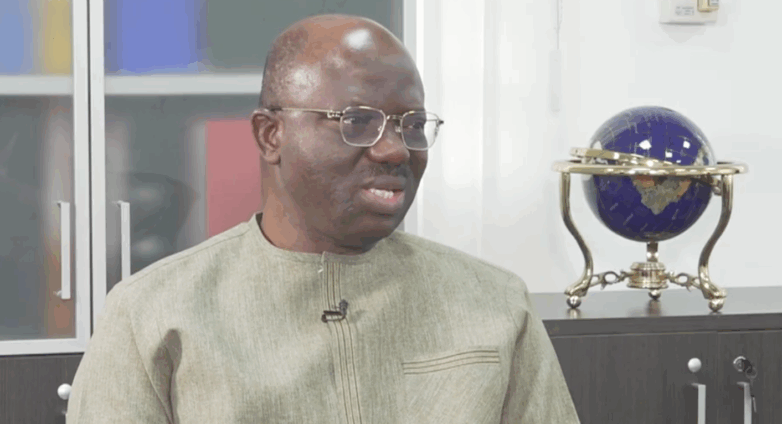
President of the Association of Ghana Industries (AGI), Dr Kofi Nsiah-Poku, says worsening water shortages are severely disrupting production and threatening Ghana’s industrialisation drive.
Speaking on Joy News’ PM Express Business Edition on Thursday, he described the situation as critical, especially for beverage manufacturers that depend heavily on water as a primary input.
“It is so bad in the sense that for about two weeks, water wasn’t running,” he said.
According to him, even when supply resumed, it has been unreliable and limited.
“When it started, they rationed it twice a week, and it ran for about only six hours,” he explained.
Dr Nsiah-Poku revealed that his own fruit juice production facility has been directly affected.
“I also have an industry there producing fruit juice, and they work only twice, and we have to buy water from outside to put in the water tanks before you can do production,” he said.
The added cost of sourcing water externally, he indicated, places additional strain on businesses already battling high operating expenses.
He warned that such conditions undermine Ghana’s ambition to industrialise.
“As a nation, we cannot industrialise with this kind of situation,” he stressed.
Beyond the water crisis, Dr Nsiah-Poku pointed to the broader financial environment that has constrained industry growth in recent years.
He said high interest rates previously made borrowing unattractive for businesses.
“Even before, the interest rate was so high that, you know, it was not worth borrowing money to do business,” he stated.
Instead of investing in production, he suggested that capital flowed into safer government instruments.
“It was rather more interesting to really change your money, your asset, into cash, and just go and buy treasury bills,” he said.
The result, he noted, has been declining industrial activity and rising unemployment.
“So unemployment has become very high because the industry is not growing, it’s rather falling,” he said.
Dr Nsiah-Poku, however, believes the country has reached a turning point.
“We’ve come to a point where we have to reverse it, and that is what I’ve come to do,” he declared.
His comments highlight mounting concerns within the manufacturing sector that unreliable water supply, combined with past financial pressures, is stalling growth and limiting job creation.
For industries that rely on water daily, the crisis is no longer an inconvenience. It is a production threat.
Latest Stories
-
US seeks changes to rejected $109m health compact with Ghana – Mahama
3 minutes -
Nine dead in mass shooting at Pennsylvania home
20 minutes -
‘Time for Ukraine to get new president,’ says Trump after Zelensky condemns diesel deal
23 minutes -
Hincapie injury adds to Arsenal issues after Guimaraes rescue act
31 minutes -
Henderson scores twice as Chelsea thumb Bournemouth
41 minutes -
Photos: Mentapulse Africa convenes health and labour summit to address talent retention
53 minutes -
Mahama inspects Nkokɔ Nketenkete plant, eyes Bechem as chicken capital
59 minutes -
Ghana not seeking full BRICS membership, applying as Partner Country – Ablakwa
1 hour -
Woman injures three people in third Poland school knife attack in a week
1 hour -
Ghana should join BRICS as partner, not member – NPP Bono East Regional Secretary
1 hour -
Ghana High Commission warns nationals in South Africa over protests in Johannesburg, Durban
1 hour -
Mahama praises Roads Minister for keeping Big Push contractors on their toes
1 hour -
World Cup Visa Scandal: ‘My client has not collected money for visas’ – Ampofo Ankrah’s lawyer
1 hour -
US immigration officials defend ICE agents who shot man in same car as child
1 hour -
Commentator Katie Zacharia picked as new White House press secretary
2 hours