

Audio By Carbonatix
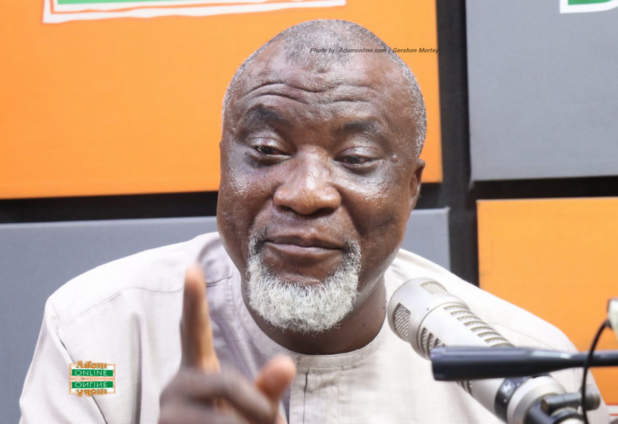
The Director of Field Operations of the United Party, Hopeson Adorye, has asserted that vote-buying has become an unavoidable feature of internal party elections in Ghana.
He argued that candidates who fail to give money to delegates risk losing at the primaries.
Speaking on The AM Show on JoyNews in the wake of investigations into alleged vote-buying during the just-ended National Democratic Congress (NDC) parliamentary primaries, Mr Adorye said the practice has become deeply embedded in the country’s political culture.
“If you don’t pay, they will not vote for you. So you have to pay. That is the system we’ve come to meet,” he stated.
Mr Adorye explained that even when candidates agree among themselves not to offer money to delegates, there is often a lack of trust, as at least one aspirant may secretly distribute cash to gain an advantage.
“We are five here, we want to contest an election, and then we decide not to pay. All of us decide not to pay. Not to pay. Yes, you go and sleep, I’ll go and sleep. Everybody sleeps. Do you know who will get up in the midnight and go and give money to people? That is the situation,” he said.
To buttress his point, Mr Adorye recounted his experience during the 2019 New Patriotic Party (NPP) parliamentary primaries in the Kpong-Katamanso constituency, where he contested after deciding to enter the race late.
“I can tell you, people voted based on the small, small things that we gave them. Every candidate was prepared to pay,” he revealed.
According to him, he began distributing money to delegates on the Friday night before the Saturday election, starting around 10 p.m. and finishing by 6 a.m.
“By 6 a.m., I have finished seeing all the delegates,” he said, adding that he gave each delegate GH¢200.
Asked how many delegates were involved, Mr Adorye said there were “about 700 and something” delegates, insisting that the payments influenced the outcome of the contest.
“So the one who gave us the money, we are going to vote. And the difference was about 122 votes,” he stated, noting that he eventually won the primary.
Mr Adorye concluded that vote-buying is a widespread problem across the political spectrum, describing it as a “canker” that no political actor can claim to be exempt from.
“Everybody who is in the political space is guilty of this. Nobody can exclude himself or herself from this kind of canker,” he added.
Latest Stories
-
Prioritise cocoa sector with better prices, timely payments-Annoh-Dompreh urges NDC
12 minutes -
Lands and Mines Watch Ghana endorses Heath Goldfields’ mining capacity
27 minutes -
Gbintiri residents protest alleged diversion of 24-hour market project
52 minutes -
Justin Bieber headlines Coachella with nostalgia-fuelled set
55 minutes -
Ukraine and Russia accuse each other of hundreds of ceasefire violations
59 minutes -
Asha Bhosle: The sound of Bollywood dies aged 92
1 hour -
Fire destroys section of 4-bedroom apartment at Tantra Hill
1 hour -
Safe city: Unnoticeable protection
2 hours -
North East Regional Police Commander raises alarm over burning of checkpoints
2 hours -
Free Primary Healthcare Programme set for take-off — Health Ministry confirms readiness
2 hours -
3 co-wives, 5 children perish in canoe disaster – Maritime Authority insists life jackets use mandatory for all water transport
3 hours -
Iran war lands ‘triple blow’ to flood-ravaged Sri Lankans
3 hours -
Gunmen kill at least 11 people at Afghanistan picnic spot
4 hours -
Woman, 25, in court for stealing baby at Bogoso
4 hours -
Trump unveils giant gold-accented victory arch design for US capital
4 hours