

Audio By Carbonatix
Commandant of the U.S. Coast Guard, Admiral Karl Schultz has warned illegal, unreported, or unregulated fishing (IUU fishing) in oceans around Africa is threatening the sovereignty of African nations.
He also cautions these illegal activities could cause huge security challenges for Africa and destabilize the fragile economies of many coastal states.
“IUU fishing is a criminal enterprise that weakens the global rules-based order and threatens the sovereignty and economic security of many African nations with a maritime nexus,” he said.
Admiral Karl Schultz was speaking in a telephone press briefing organized by the Africa Regional Media Hub of the United States Department of State to discuss US partnerships with African nations.
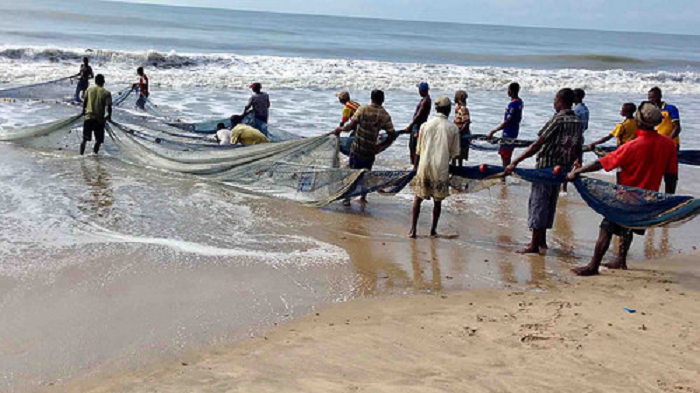
“Fish are a strategic global resource. Regions such as West Africa contain several highly productive fisheries that provide as much as 60 to 70 per cent of the region’s protein supply. IUU fishing undermines the ability of maritime states – in Africa and around the world – to achieve their own domestic food security.
“Loss of that security can destabilize the fragile economies of many coastal states. Total IUU fishing accounts for between one-third and one-half of the overall catch and an estimated annual loss of $2.3 billion alone in West Africa,” Admiral Schultz observed.
“It is also symptomatic of a larger security vulnerability, particularly those who currently have limited capacity to patrol their maritime domain or apprehend and prosecute criminal actors.
IUU fishing often happens in concert with other illicit activities, including the atrocities of human trafficking and forced labour, as well as the smuggling of illegal substances,” he added.
Admiral Schultz told the media the problem with illegal fishing is usually more troubling when state actors support such crimes.
“We become particularly concerned when IUU is perpetrated or abetted by state actors. Such states may use government resources to support unlawful fishing operations, encourage or assist their commercial fishing fleets to violate sovereign waters and exclusive economic zones, obtain dubious licensing and other certifications through illegal arrangements with corrupt officials, or even intimidate legitimate local fishermen using armed vessels and unsafe navigation practices,” he noted.
He called on world leaders and regional maritime security agencies not to allow the normalization of this illegal behaviour that erodes responsible maritime governance.
He said the United States Coast Guard will work with like-minded partners to protect sovereignty, support cooperative enforcement of international laws, and drive stability, legitimacy, and order.
“IUU actors operate in the shadows, which is why we need a broad network of partners to eradicate this threat to our collective prosperity. Together, we can spotlight bad actors and root out this illicit behaviour,” he said.
Admiral Robert P. Burke, Commander of U.S. Naval Forces Europe-Africa and Allied Joint Force Command Naples explained the US Navy and Coast Guard are working hard alongside African partners to improve maritime security in Africa.
“Maritime security is critical to the African continent, yet, as Admiral Shultz noted, we face serious challenges ranging from piracy to the IUU fishing, as Admiral Schultz described, even including trafficking of arms and narcotics, or all the way up to and including terrorist activity,” he observed.
He observed seaborne trade is the absolute lifeblood of commerce and needs to be prioritized by governments.
More than 90 per cent of global trade travels on the seas.
“When maritime trade freely sails across the oceans, economic development and opportunities for prosperity are possible. Illicit activity undermines stability and economic development and sets the foundation for nefarious activities as well. We must cooperate to overcome these security challenges,” Admiral Burke noted.
He observed developing countries like Ghana are at higher risks if the activities of illegal fishers happen in their waters.
“When you’re talking about a developing nation – and that’s particularly the case for many of the African nations, like Ghana – these actions harm the economic growth of our African partners and they threaten their livelihood.
“A more developed nation may be able to absorb this in the short term, but it has a proportionately larger short-term impact and more immediate and more profound impact on these developing nations that are dependent on the blue economy,” he observed.
Latest Stories
-
Conflicts among care providers linked to maternal, neonatal deaths – Expert
44 minutes -
GIS marks 10th TIME conference, champions improved teaching practices
52 minutes -
BRICS Or Balance? What Ghana’s bid really means
1 hour -
GPRTU wants full TRAFFITECH-GH implementation to start in 2027
2 hours -
Mahama announces plans to import electric wheelchairs for PWDs
2 hours -
KGL U17 Colts 2026: Western beat Prempeh Elite Academy to set up final final with Greater Accra Region
2 hours -
Late Solanke strike salvages 10-man Spurs draw at Man United
2 hours -
Gender Ministry to monitor welfare of Nana Akua Addo’s children amid domestic violence case
2 hours -
Benedict Okyere Yeboah: Ghana’s football problem goes beyond sacking a coach
2 hours -
GPL 2026/27: Darkwah Wiafe’s winner sees All Blacks beat Kotoko
3 hours -
ITF World Tour : Patel Wins Boys’ Singles Final at J100 Accra
3 hours -
Ghana must pursue BRICS partnership if it brings economic benefits – Kpebu
3 hours -
Success and Wright Claims J100 Accra Girls’ Doubles Championship
3 hours -
ITF J100: America’s Wright wins J100 Accra Girls’ Singles Title
3 hours -
Expedition hopes to find aviator Amelia Earhart’s plane on remote island
3 hours