
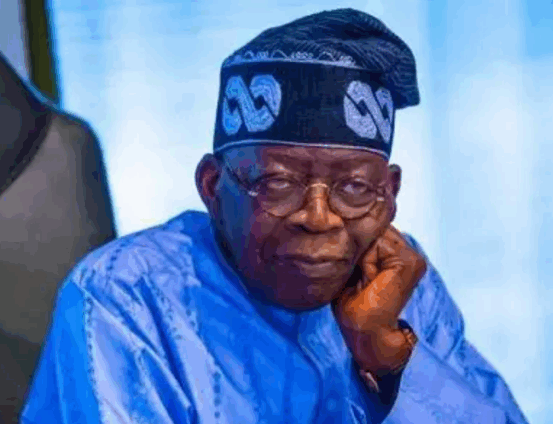
President Bola Tinubu

Audio By Carbonatix
The IMF on Tuesday warned of risks surrounding Nigeria's plan to borrow up to $5 billion through a derivatives agreement with First Abu Dhabi Bank, saying such transactions are often opaque and complex.
In April, Nigeria's Senate gave its approval to the agreement, joining other African borrowers like Senegal and Angola who have tapped into similar arrangements over the past year.
- "Our view is that the transactions in these types of structures carry risks. Usually they are opaque so the terms are not always very transparent when we reviewed these instruments across countries," Christian Ebeke, IMF resident representative in Nigeria, told reporters.
- Ebeke said Nigeria could instead issue eurobonds to finance its deficits or other means to raise funding, including on concessional terms.
- Nigeria intends to use proceeds from the total return swap, or TRS, to refinance expensive debt and pay for infrastructure.
- In its latest Article IV review, the Fund praised Nigeria's sweeping reforms, saying they had strengthened economic stability and investor confidence, but warned that the benefits had yet to reach millions of citizens and could be undermined by global shocks, including the Middle East conflict.
- The reforms since 2023 under President Bola Tinubu - including fuel subsidy removal, tighter monetary policy and exchange rate liberalisation - had rebuilt buffers and improved macroeconomic management, the IMF said.
- However, it cautioned that the reforms were also contributing to social strain, with poverty at 63% and millions facing food insecurity, underscoring a widening gap between macro gains and household realities.
- The IMF said improved policy credibility and forex reforms had helped Nigeria regain access to international capital markets and attract portfolio inflows, while reducing risk premiums. The central bank says gross reserves are at $50 billion, the highest in 17 years.
- But reliance on volatile foreign portfolio investment poses rollover risks, the IMF said, urging a shift towards more stable, long-term capital such as foreign direct investment.
DISCLAIMER: The Views, Comments, Opinions, Contributions and Statements made by Readers and Contributors on this platform do not necessarily represent the views or policy of Multimedia Group Limited.
DISCLAIMER: The Views, Comments, Opinions, Contributions and Statements made by Readers and Contributors on this platform do not necessarily represent the views or policy of Multimedia Group Limited.
Latest Stories
-
UK tries to stop Trump’s diesel export ban
3 hours -
Late Olise goal gives France win over Belgium
3 hours -
Mancini enjoys first win since return as Italy boss
3 hours -
Interest payments to average a high 20% of government revenue over next 4 years
3 hours -
Anthropic warns AI may pose ‘existential risks to humanity’ in IPO filing
3 hours -
Joe Hart trusts Man City chair Al Mubarak over ruling
4 hours -
Strategy of accumulating foreign reserves, gold carries high fiscal cost – S&P Global
4 hours -
Weak institutional arrangements, high debt servicing constrain Ghana’s rating – S&P
4 hours -
Man City CEO defiant over Premier League charges
4 hours -
Infantino makes bigger cash pledge to Fifa members
4 hours -
Bond market: Turnover declined by 28% to GH¢1.56bn
4 hours -
Volta Region National Public Speaking contest advances drug prevention conversation
4 hours -
New health training facility at Ampoma-Jema to address admission shortfalls, but Minister flags missing amenities
5 hours -
Black Challenge unveiled with sights set on Amputee World Cup glory
5 hours -
Pay striking teachers before expressway spending, Dr Kingsley Agyemang tells government
6 hours