

Audio By Carbonatix
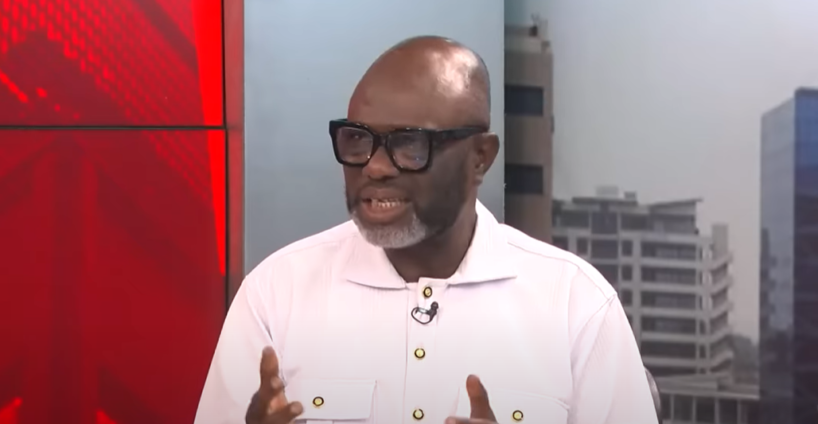
The President of the Ghana Union of Traders Association (GUTA), Dr. Joseph Obeng, says the government’s proposed import restriction bill is not backed by data.
The Trade Minister, K.T. Hammond is set to lay a legislative instrument before Parliament this week seeking to restrict the importation of certain products into the country.
These include, rice, poultry, animal and vegetable oil, margarine, fruit juices, soft drink, mosquito coil and insecticide, soaps and detergents, fish, clothing and apparel and cement.
However, commenting on the bill on Joy FM’s Super Morning Show, the GUTA President explained that the Minister has failed to provide data to buttress his proposition.
He explained that previous import restrictions on products like poultry had failed to live up to expectation, taking into consideration the fact that Ghana’s supply of poultry is currently 90% imported.
“We don’t even have any good reference with it because as I’m speaking there’s still restriction on poultry products but what do we see? We don’t have anything to show that this is a good reference point. We still have a shortfall of about 90% of the demand of consumption and so what do we have to show?” he said.
He noted that there have been no provisions also in the L.I. to cater for monopoly-related abuses.
He said the import restrictions bill should it be passed would be subjected to abuses and the L.I. in its current form does not safeguard against that.
Dr. Obeng further noted that without data backing the bill and measures put in place to ensure that local industries are up to the task to meet demand, the restriction will prove counterproductive.
“And then there’s also no data. It is not backed by data. When you say that you’re restricting imports, what you’re saying is that they’re telling you to reduce the import that you do and look from within what we produce and buy from it.
“And we haven’t done anything to show us that we can be able to get that shortfall from within and that’s what we’re talking about, that we cannot do the restriction thing in isolation.
“You’ll have to do it side by side with your programmes and measures, your timelines that will show that you’re serious about shoring up the local production so that we will be able to continue with our businesses,” he said.
Latest Stories
-
Burnham had formal meeting with Man City chair while mayor
4 minutes -
Is Ghana producing too many lawyers? What is the best lawyer-to-citizen ratio?
7 minutes -
NDC sinking Ghana’s democracy with Emelia Agbenyo’s appointment – Miracles Aboagye
16 minutes -
Seedorf back in football as Corinthians head coach
29 minutes -
Hincapié and Zubimendi injured in post-match training session
38 minutes -
Fridges in French supermarkets hit by cyberattack
49 minutes -
Qantas flight grounded after bedbug outbreak
58 minutes -
Reality Zone with Vicky Wireko: International Day of the Girl, shaping today’s girl for tomorrow’s future – ZONTA Clubs lead the way
1 hour -
Global health must be led by countries, not designed for them – Mintah Akandoh
2 hours -
Mahama honoured at 2026 World Health Summit in Berlin for global health leadership
2 hours -
Breast cancer is not a death sentence – Besease Kontire Obaapanin, Magmina Foundation lead awareness campaign
2 hours -
EcoBank invests in digital education of 4 Garisson School to mark 40 years in Africa
3 hours -
AGI urges investment in skills and raw materials to strengthen local manufacturing
3 hours -
GPL 2026/27: ‘We have to rectify our mistakes’ – Boadu reacts to Aduana FC defeat
3 hours -
No disability access, no building permit – KMA declares
3 hours