

Audio By Carbonatix
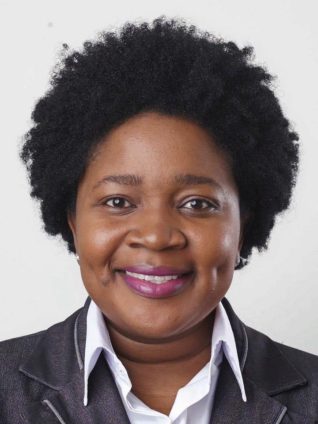
Rosalyn Kyere-Nartey, the Founder and Executive Director of African Dyslexia Organisation, has called for the inclusion of Dyslexia management in school curriculum.
This, she said, would promote inclusiveness, personal development and unearth the hidden talents of children with Dyslexia.
At a Dyslexia Educational Stakeholder’s Forum on the theme: “Rethinking Inclusivity in Education, Addressing the Needs of Dyslexic Students,” Madam Kyere-Nartey said teaching methods needed some revision to help create a convenient learning environment for Dyslexic children.
“The policy makers must take cues from these conversations back to the Education Ministry and Ghana Education Service and relook into things so when we are addressing inclusion, it won’t be just about physical challenges but those that are hidden.
The approach of teaching students with dyslexia like the multi-sensory approach can be applied to all learning so why are we not doing the best thing? The world is going far, and it is time for Ghana to wake up,” she said.
During an interview with the GNA, she encouraged teachers and parents to show empathy to kids with learning difficulties especially those with dyslexia and avoid labeling and punishing them as this killed their confidence, talents and passion for education.
“Most of the time, we label them as blockheaded in our local languages and we worry them so much that many drop out of school and end up leading wayward lives. We are losing talents.
"Globally, many millionaires and successful people are dyslexic. The likes of Richard Branson, Will Smith, Leonardo da Vinchi, Albert Einstein, Steve Jobs are all dyslexic yet very creative, innovative and have solved many issues in the world,” she said.
All the above and many more examples, she said were doing well hence dyslexic Ghanaian children, if given the necessary support, would equally flourish.
The forum, sponsored by the British Council, attracted public figures and celebrities with dyslexia to share their experiences, growing up with the condition.
Some of these notable individuals included Nana Ansah Kwao IV, the Chief of Akwamu Adumasa and a media personality, Kwame Nsiah-Apau, widely known as Okyeame Kwame, and Reverend John Nii Mota Oquaye, son of a former Speaker of Parliament, Michael Oquaye.
Okyeame Kwame narrated how he suffered in the hands of his parents and teachers due to the condition and how it influenced his sense of empathy towards victims, unearthed his talents and positively altered his career path.
“My dad was really disappointed in me because he didn’t find out that I had this challenge so, he beat me often and sanctioned my teachers to do same. I grew up quite depressed…because I went through that much pain, I am able to identify the pain of others and come to their aid.
Whenever I am creating music, writing a drama or running something, my creativity is not just based on exciting people but, on how I can use tools to create something that will foster inclusion,” he said.
Nana Ansah Kwao IV also narrated a similar experience with his parents growing up as a child with dyslexia.
“My father was the research manager for Bank of Ghana, being their first born; I was such a disappointment to them. They changed schools severally and did all they could but things were still the same,” he said.
He however touched on the need to raise more awareness and educate people, especially educational stakeholders, on the condition for such children to be assisted and not ostracized.
Dyslexia is a learning disorder that involves difficulty reading because of challenges in identifying speech sounds and how they relate to letters and words (decoding). It occurs as a result of individual differences in areas of the brain responsible for language processing.
The condition has no relation to intelligence, hearing or vision hence such children can still succeed in school with the help of specialized tutoring and a healthy dose of emotional support and encouragement.
The learning disability affects one in five individuals globally.
Though there is no known cure for dyslexia, early assessment and intervention often results in the best outcomes.
In sub-Saharan African countries such as Ghana, data and statistics is widely unavailable because the condition goes undiagnosed for years and not often recognised until adulthood.
Latest Stories
-
Akoti Chief lauds Chirano Sefwiman Foundation, Asante Gold for new teachers’ quarters
2 minutes -
WASS teacher assault case: Court fines three GH₵4,000 each
12 minutes -
TTU makes history as first deaf student graduates with Master’s degree
13 minutes -
Ohemma Pokua Afoa Dankoto II enstooled as Queen Mother of Wenchi
13 minutes -
GhIE identifies use of mixed rock types in collapsed Accra New Town school building
24 minutes -
Ayawaso Central MCE says technical assessment delayed action before New Town collapse
29 minutes -
Weak enforcement behind New Town building collapse – Bureau of Public Safety
42 minutes -
‘Neglect is killing our people’ – NALAG President sounds alarm after Accra New Town building collapse
46 minutes -
Betty Krosbi Mensah urges young women to prepare for leadership, not wait for it
52 minutes -
Evidence collection must follow rescue, not debris clearance — GhIE President on Accra New Town buiding collapse
53 minutes -
NALAG President writes: When neglect kills in Accra New Town; preventable tragedy
1 hour -
Abandoned La Beach Towers under assessment as engineers probe unsafe structures
1 hour -
Disaster averted in Kpong as fuel tanker and articulated truck collide at filling station
1 hour -
Ga Asafoatsemei demand government intervention as McDan–GACL dispute deepens
1 hour -
Universities from Ghana and Germany exchange experiences at DAAD forum
1 hour