

Audio By Carbonatix
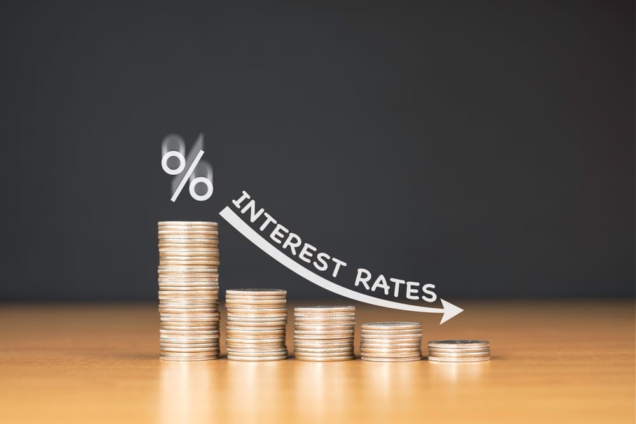
Interest rates have assumed a downward spree for short-dated instruments since the year begun, the Bank of Ghana has revealed in its latest Monetary and Financial Developments.
According to the Central Bank, the 91-day and 182-day Treasury bill rates declined to 12.65% and 13.40% respectively in June 2021 from 13.97% and 14.02% respectively, in June 2020. Similarly, the rate on the 364-day instrument decreased marginally to 16.34% from 16.87% over the same comparative period.
The rate has since gone down further albeit slightly in July and August 2021 respectively.
However, there have been mixed trends for medium- to long-dated instruments.
Whilst, rates on medium- to long-term instruments declined, the rate on the 7-year bond increased by 185 basis points [1.85%] to 18.10%.
Rates on 2-year, 3-year, 5-year and 6-year bonds decreased by 115bps [1.15%], 115bps [1.15%], 95bps [0.95%] and 175bps [1.75%] respectively, to 17.60%, 17.70%, 18.30% and 19.25% respectively. Rates on the 10-year, 15-year and 20-year bond however remained unchanged at 19.80%, 19.75% and 20.20% respectively, over the same comparative period.
Also, the Interbank Weighted Average Rate (IWAR) declined to 12.88% from 13.82%, in tandem with the reduction in the Monetary Policy Rate (MPR) and supported by improved liquidity conditions on the interbank market.
Consequently, average lending rates of banks declined marginally to 20.61% in June 2021, from 21.95% recorded a year earlier. This is in line with developments in the interbank market.
Real interest rates also tipped in June 2021 due to the marginal uptick in inflation from 7.5% in May 2021 to 7.8% in April 2021.
Credit developments
Credit to the private sector and public institutions increased by GH¢2.56 billion, representing 5.7 percent increase in June 2021 compared with GH¢6.302 billion (16.3%) recorded in June 2020.
Also, credit to the private sector also increased by GH¢2.706 billion (6.8%) relative to GH¢4.98 billion (14.2%) over the same comparative period.
The credit flow to the private sector remained concentrated in four sub-sectors, namely, Services; Commerce and Finance; Construction; and Manufacturing.
Outstanding credit to the private sector at the end of June 2021 was GH¢42.743 billion, compared with GH¢40.036 billion same period last year. In real terms, private sector credit contracted marginally by 1.0% compared to a growth of 2.8% in June 2020, broadly reflecting the heightened credit risks associated with the Covid-19 pandemic.
Overall, real growth in private sector credit has been marginally above the long-run trend since May 2021
Latest Stories
-
Feeding Hungry Pupils: 38-year-old female teacher initiates food bank to promote teaching and learning at Abankoro
6 minutes -
Education Minister announces 2027 start date for Jomoro College project in Western Region
8 minutes -
‘Sit us down and explain ‘it’—Customs agents raise alarm over new GRA AI system
17 minutes -
Gov’t commits GH¢25m seed fund to Ghana Defence University project
23 minutes -
Fighters condemns PAC Chair Abena Osei-Asare over Agbana comments; renew call for inclusive politics
25 minutes -
72 Days to Mundial: Ghana’s risky gamble after sacking Otto Addo
29 minutes -
Health Ministry boosts cardiovascular care with new guidelines, GH¢6m equipment support
35 minutes -
OmniBSIC Bank delivers 104% profit growth, assets and deposits double in 2025
54 minutes -
Ghana month donation drive ends on high note as NPA donates GH₵1m to GMTF
55 minutes -
Prudential Africa CEO working visit to Ghana sets pace for business excellence and agency expansion
56 minutes -
Salman residents call for halt to illegal mining activities
58 minutes -
Goaso Municipal Hospital decries NHIS arrears, staff and equipment shortages
1 hour -
Two dead, one critically injured in domestic fire at Kodjonya
1 hour -
No start date yet for Ghana–Dangote fuel deal — Gov’t
1 hour -
GWL attributes Kokomlemle water crises to rationing, localised faults after JoyNews report
1 hour