

Audio By Carbonatix
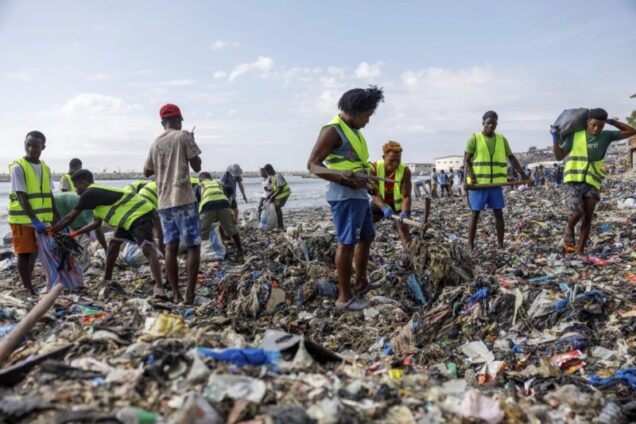
Experts from the University of Ghana’s Institute of Statistical, Social and Economic Research (ISSER) are urging government to treat waste management as a major economic growth strategy, not merely a public health concern.
In a recent paper titled “The High Cost of Improper Waste Management and Poor Sanitation on Ghana’s Economy,” the researchers argue that improved sanitation infrastructure could unlock billions in economic gains, create thousands of jobs, and enhance environmental sustainability.
Citing World Health Organization data, the authors estimate that for every US$1 invested in sanitation, a country can earn up to US$5.50 in returns through higher productivity, reduced healthcare spending, and lower mortality. Applied to Ghana’s GDP, a one-percent investment — roughly US$883 million — could yield an economic return of US$4.86 billion.
“Proper waste management is not just about keeping our cities clean,” the report states. “It’s about protecting lives, saving money, and creating a healthier, more productive economy.”
The study highlights success stories from around the world where waste recycling, composting, and renewable energy recovery have boosted employment and supported the shift toward a circular economy. It estimates that the global waste management industry, valued at US$1.4 trillion in 2024, is expected to reach US$2.4 trillion by 2033, offering vast opportunities for countries like Ghana to participate in the green economy.
In addition to its economic value, proper sanitation has direct public health benefits. The authors point to Ghana’s October 2024 cholera outbreak as an example of the devastating consequences of neglect. Such crises force government to redirect funds from productive sectors to emergency responses, while lost workdays and medical costs drain household and national resources.
The paper also warns that Ghana’s sanitation funding model is unsustainable. Despite collecting over GHS 500 million annually through the Sanitation and Pollution Levy, less than 5% of those funds are reinvested in sanitation projects. The researchers called on government to demonstrate “strong political will” by ring-fencing a greater portion of these revenues for waste management infrastructure and innovation.
Beyond public investment, the authors advocate private sector participation and the adoption of modern recycling technologies to close funding gaps and improve efficiency. “Cleaner cities attract tourists, investors, and jobs. Waste can be turned into wealth — if managed properly,” they assert.
Ultimately, the ISSER team concludes that sanitation reform offers a rare win-win for Ghana’s economy, public health, and environment: “Investing in waste management is not a cost; it’s an opportunity for Ghana to build a more sustainable, prosperous, and resilient future.”
[Credit: Prof. Peter Quartey, Prof. Ebo Turkson, Prof. Yaa Adobea Owusu, Dr. Kwame Adjei-Mantey & Dr. Ralph Armah, Institute of Statistical, Social and Economic Research (ISSER), University of Ghana]
Read the full paper below:
Latest Stories
-
Philanthropist Alhaji FuZak donates Da’wah bus to Ambariya Sunni community
1 minute -
GUTA calls for suspension of Publican AI system over trade disruptions, demands temporary halt in import activities
4 minutes -
TTAG raises alarm over proposed recruitment of 7,000 teachers, demands national posting roadmap
37 minutes -
Civilians feared killed after reports of air strike on Nigerian market
47 minutes -
Bishop Simon Kofi Appiah installed as new Jasikan Diocese Bishop
48 minutes -
Trump’s Strait of Hormuz blockade threat raises risks and leaves predicaments unchanged
50 minutes -
US Court backs extradiction of former MASLOC CEO Sedina Tamakloe-Attionu’s to Ghana
1 hour -
Seven arrested as NAIMOS dismantles illegal mining camp, seizes firearms at Boin River
1 hour -
Fire erupts at Madina Ritz Junction, destroys multiple wooden structures and containers
1 hour -
Daniel-Kofi Kyereh returns from long-term injury, registers assist for Freiburg U23
2 hours -
Knifeman calling himself ‘Lucifer’ slashes three at NYC’s Grand Central
2 hours -
Brands are built from within to without
2 hours -
Matriculants urged to pursue excellence as gov’t reaffirms support for Maritime education
2 hours -
See the areas that will be affected by ECG’s planned maintenance on Monday, April 13, 2026
2 hours -
GPL 2025/26: Salim Adams double fires Medeama back to summit after Kotoko rout
2 hours