

Audio By Carbonatix
Iran's morality police, which is tasked with enforcing the country's Islamic dress code, is being disbanded, the country's attorney general says.
Mohammad Jafar Montazeri's comments, yet to be confirmed by other agencies, were made at an event on Sunday.
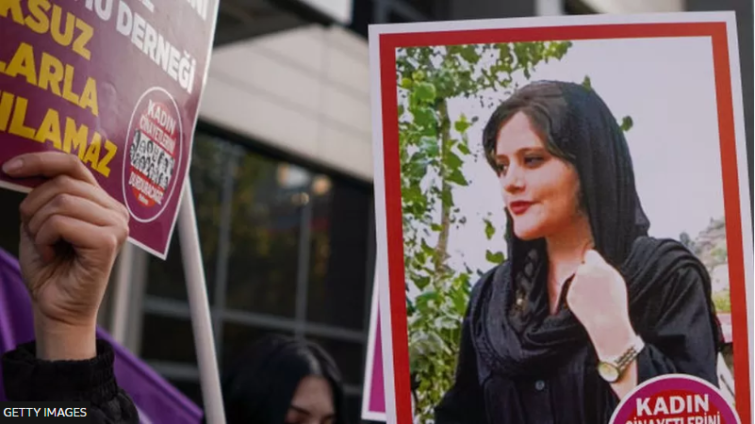
Iran has seen months of protests over the death of a young woman in custody.
Mahsa Amini had been detained by the morality police for allegedly breaking strict rules on head coverings.
Mr Montazeri was at a religious conference when he was asked if the morality police was being disbanded.
"The morality police had nothing to do with the judiciary and have been shut down from where they were set up," he said.
Control of the force lies with the interior ministry and not with the judiciary.
On Saturday, Mr Montazeri also told the Iranian parliament the law that requires women to wear hijabs would be looked at.
Even if the morality police is shut down this does not mean the decades-old law will be changed.
Women-led protests, labelled "riots" by the authorities, have swept Iran since 22-year-old Amini died in custody on 16 September, three days after her arrest by the morality police in Tehran.
Her death was the catalyst for the unrest but it also follows discontent over poverty, unemployment, inequality, injustice and corruption.
'A revolution is what we have'
If confirmed, the scrapping of the morality police would be a concession but there are no guarantees it would be enough to halt the protests, which have seen demonstrators burn their head coverings.
"Just because the government has decided to dismantle morality police it doesn't mean the protests are ending," one Iranian woman told the BBC World Service's Newshour programme.
"Even the government saying the hijab is a personal choice is not enough. People know Iran has no future with this government in power. We will see more people from different factions of Iranian society, moderate and traditional, coming out in support of women to get more of their rights back."
Another woman said: "We, the protesters, don't care about no hijab no more. We've been going out without it for the past 70 days.
"A revolution is what we have. Hijab was the start of it and we don't want anything, anything less, but death for the dictator and a regime change."
Iran has had various forms of "morality police" since the 1979 Islamic Revolution, but the latest version - known formally as the Gasht-e Ershad - is currently the main agency tasked enforcing Iran's Islamic code of conduct.
They began their patrols in 2006 to enforce the dress code which also requires women to wear long clothes and forbids shorts, ripped jeans and other clothes deemed immodest.
Latest Stories
-
Sri Lanka’s ex-first lady arrested over alleged misuse of children’s hospital donations
5 minutes -
La Traditional Council kicks against redevelopment of La Pleasure Beach without consultation
8 minutes -
Some basic schools have just 2 or 3 teachers despite needing 9 – Right To Play
12 minutes -
Mahama to cut sod for SSNIT-funded Accra Convention Centre
14 minutes -
FAO calls for stronger REDD+ systems to unlock climate finance
14 minutes -
Illegal mining pushes Birim River turbidity to 50,000 NTU – Abuakwa South MP
15 minutes -
Bawumia’s opponent in 2028 will face nearly two decades of experience and preparation – Gabby Otchere-Darko
18 minutes -
Community 25 water shortage temporary, GWL assures residents
19 minutes -
‘Standing with teachers means supporting them in classrooms’ – NTC Registrar
21 minutes -
FAO urges innovation, technology to strengthen Ghana’s food security
22 minutes -
Haruna Iddrisu vows to resolve teachers’ strike within days
23 minutes -
Melcom serves 1,000 meals to children in selected orphanage homes
26 minutes -
Mohammed Polo vouches for Karim Zito to lead Black Stars
40 minutes -
Asthma Ghana donates over GH¢50,000 worth of aerochambers to Ho Teaching Hospital
41 minutes -
Inflation rises to 5.2% in September 2026 as prices in Services sector still high
48 minutes