

Audio By Carbonatix
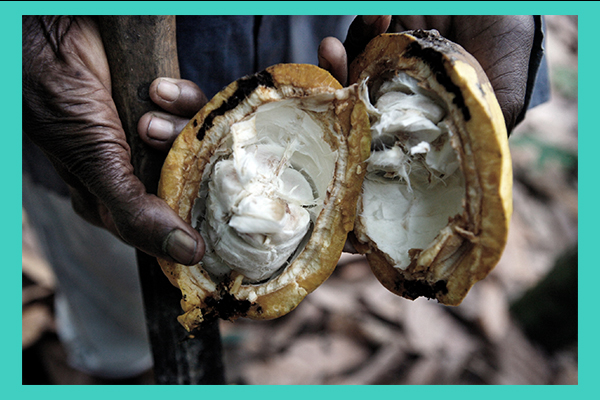
Ghana's cocoa industry, traditionally a mainstay of its foreign exchange earnings, has faced challenges in maximising its potential.
Despite a bold move less than a year ago by the Ghanaian government to increase the price per bag of cocoa beans by 63.5% to incentivise farmers and boost yields, the country's inability to obtain funds from cocoa syndicated loans almost truncated this good news as authorities struggled to fund purchases.
In fact, this was exacerbated by Ghana's economic crisis which compelled it to seek a rework of its domestic and external debt.
Consequently, instead of the over $1 billion, only $800 million was received, leading to delays and disruptions in purchasing beans. According to a Bloomberg report, this is the costliest syndicated facility the board has received since the annual loans started in 1992-93.
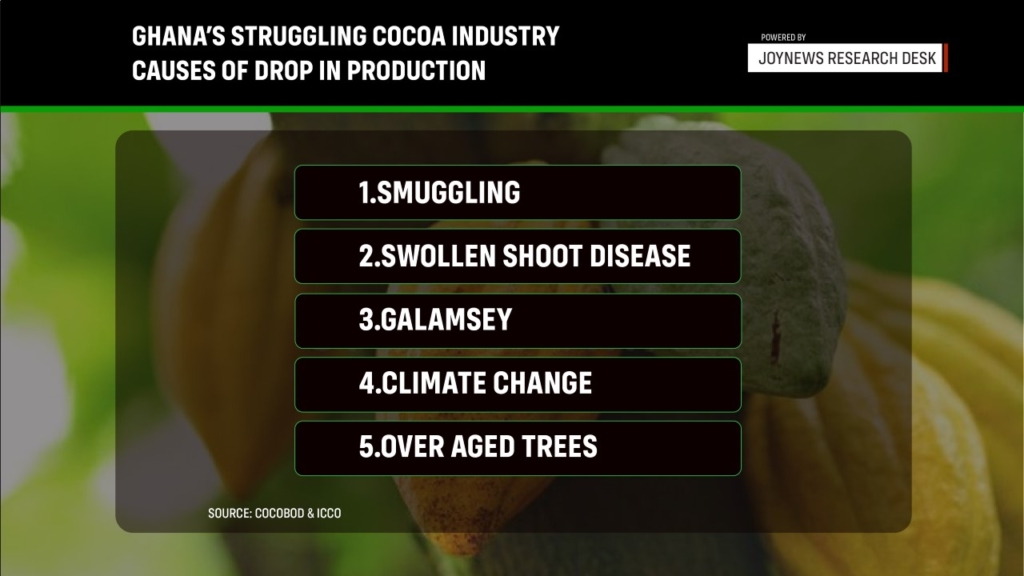
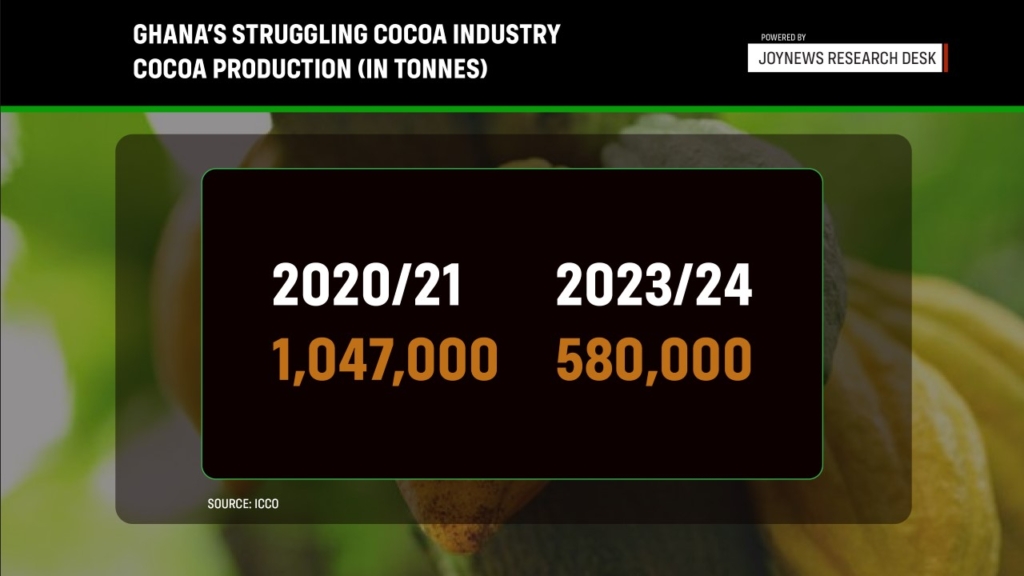
Compounding these issues, galamsey activities plus the sale of cocoa farms to illegal miners by farmers have further threatened Ghana's cocoa yield. This, combined with a significant drop in cocoa yields has led to concerns over smuggling and hoarding, potentially destabilizing the local cocoa market.
In response to the shortage, the management of COCOBOD this year authorized the importation of 3,500 metric tonnes of cocoa beans from Cote d'Ivoire and Nigeria. In Ivory Coast, the Cocoa Council (CCC) has urged cooperatives and buyers to sell their stocks to exporters within 21 days to prevent hoarding, a practice that exacerbates market instability.
COCOBOD and more troubles?
Ghana’s Cocoa Board (Cocobod), the state-owned entity overseeing cocoa production and export monopolies, has been grappling with significant financial setbacks, according to a recent report from the International Monetary Fund (IMF).
This situation has been attributed to various factors, including high rollover costs for outstanding cocoa bills, elevated purchase prices paid to cocoa producers compared to operational costs, and substantial quasi-fiscal activities such as providing fertilizers and developing rural roads, which have added strain to Cocobod’s administrative expenses.
Under Ghana’s ongoing IMF programme, the government has identified Cocobod as one of eight state-owned enterprises facing substantial fiscal risks. This recognition underscores the challenges faced by Cocobod and the urgent need for remedial actions to address its financial sustainability.
The financial performance of Cocobod has been particularly concerning in recent years. Since 2016, Cocobod has reported losses for six consecutive years, with its last profitable year recorded in 2015.
The annual losses have surged from less than GH¢300 million in 2016 to nearly GH¢2.5 billion in 2021, reflecting a substantial escalation in financial strain. Furthermore, Cocobod’s total debt has climbed to approximately 3.8% of the country’s Gross Domestic Product (GDP) in 2021, indicating a significant burden on Ghana’s overall fiscal health.
Are these measures enough?
Government has already told the IMF that it will publish a turnaround strategy, approved by the Cabinet. This strategy according to authorities will include (i) an immediate announcement of joint ministerial supervision of COCOBOD by the Ministry of Finance and the Ministry of Agriculture.
Authorities also informed the fund it will "phase out quasi-fiscal spending of the Board (this will require the announcement of termination of the road concession agreement with the Ministry of Roads, and discontinuation/rationalisation of fertilizer/input subsidy programs including Hi-Tech)."
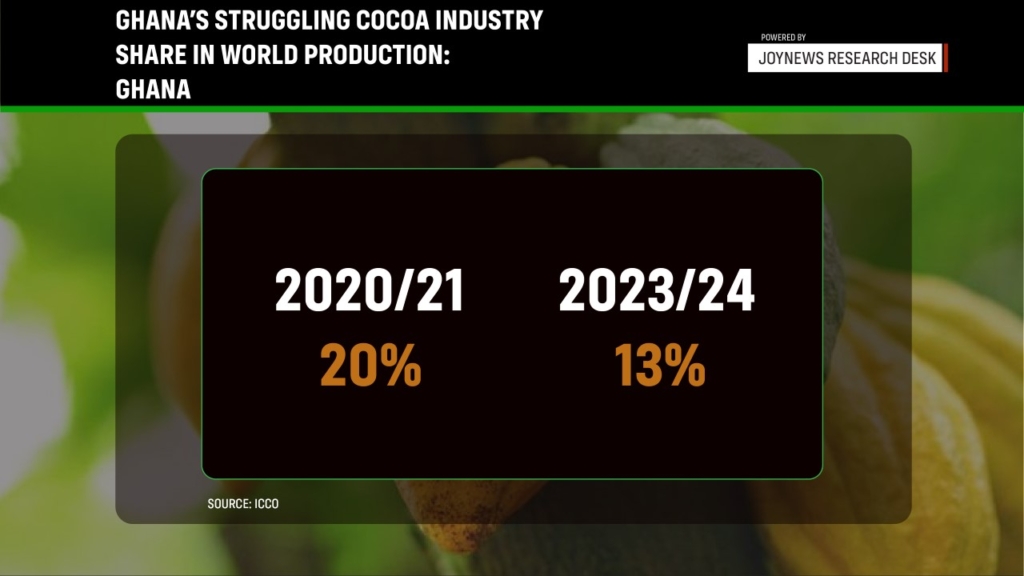
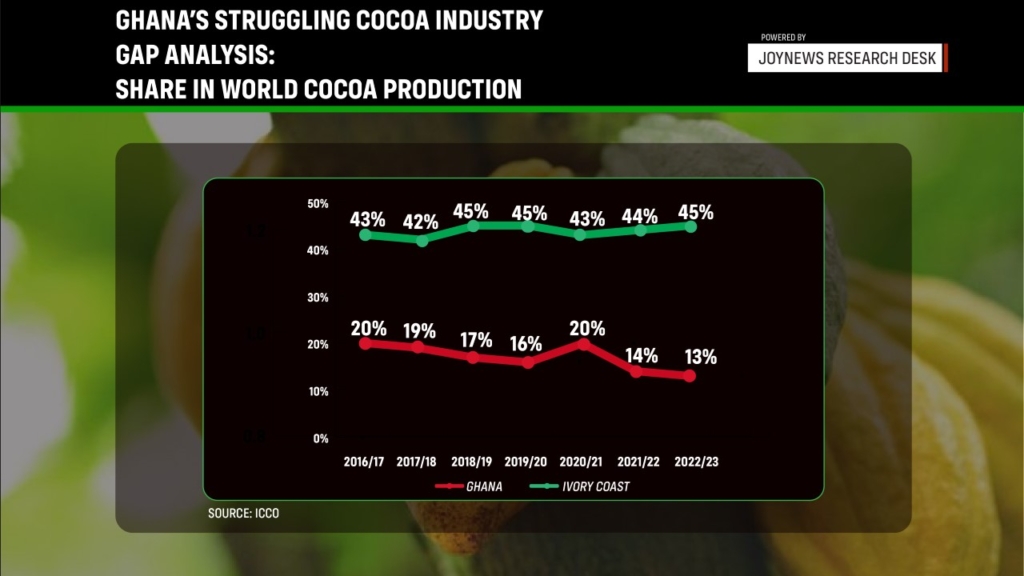
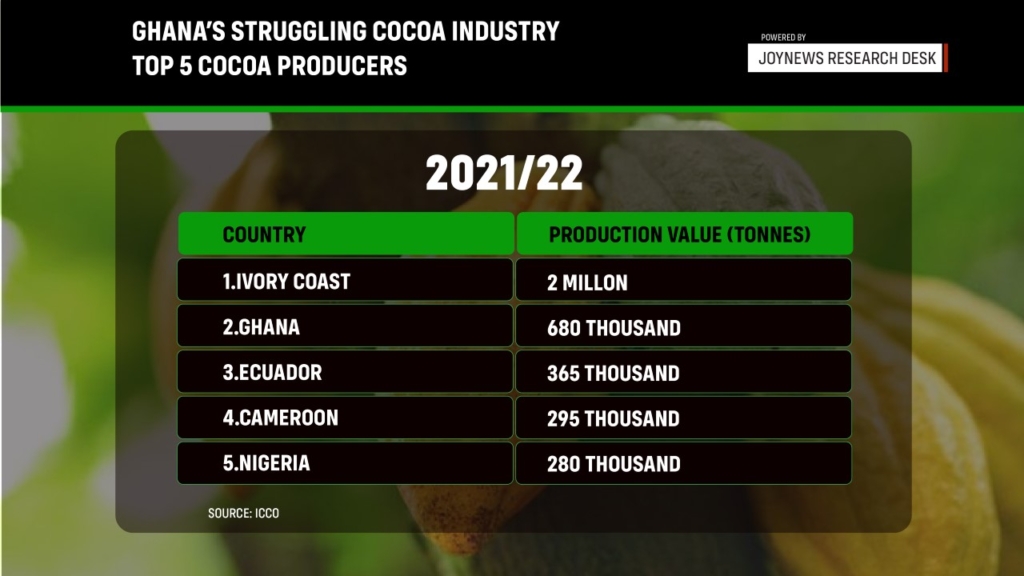
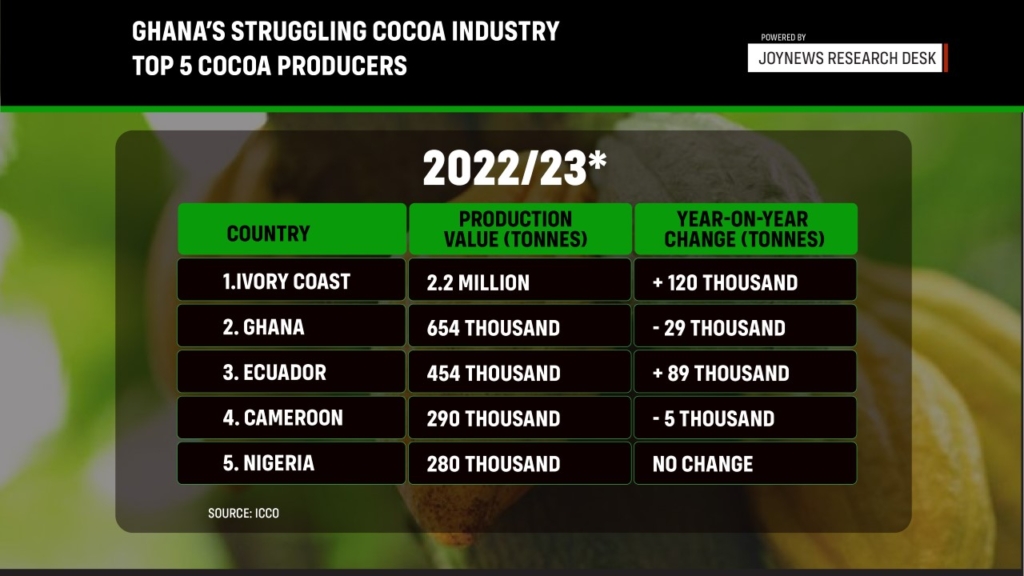
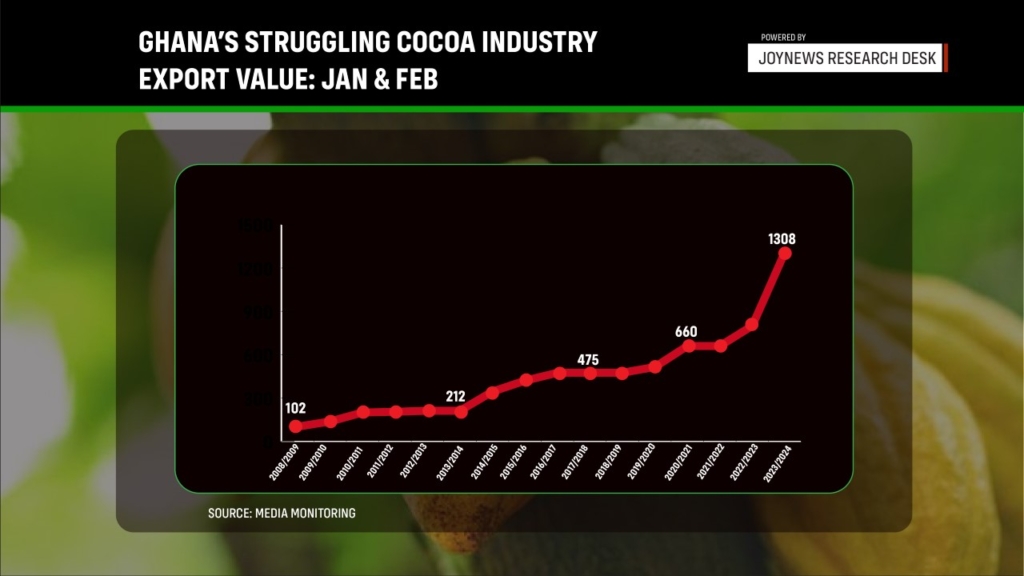
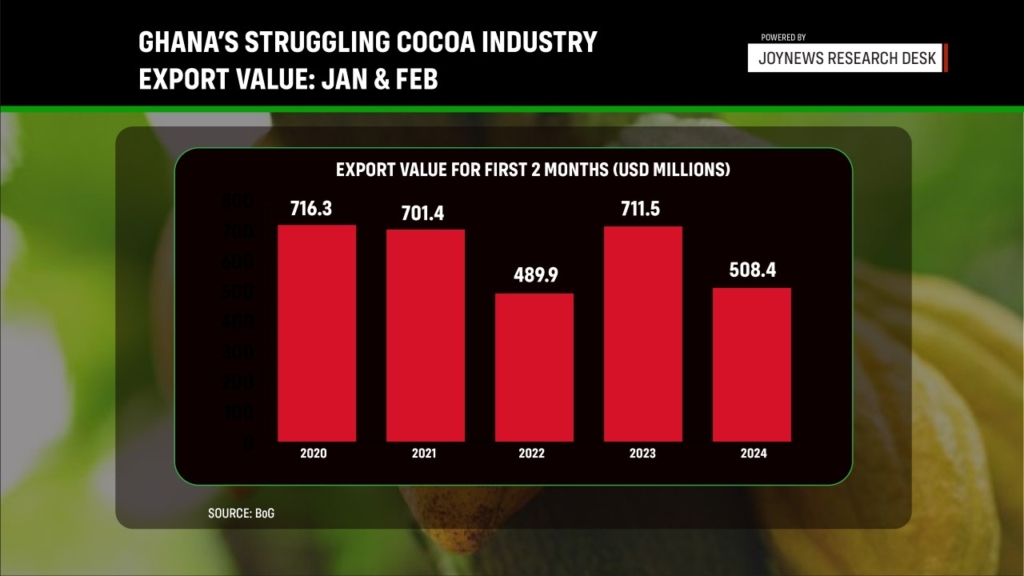
More about Ghana's cocoa industry in graphics

Latest Stories
-
Government procures over 2,000 transformers as Ghana’s electricity access hits 89.13% – Energy Minister
24 minutes -
UTAG-UG threatens strike on October 19 over unpaid allowance
32 minutes -
Let The Constitution direct Chieftaincy to deliver “All Development Is Local”
2 hours -
John Jinapor outlines renewable energy, nuclear power priorities for 2027
2 hours -
Ghana explores centre of excellence for hearing, communication and cochlear implant care
3 hours -
Schizophrenia-related disorders lead mental health cases recorded in Ghana
3 hours -
Dutch authorities enlist Ghana in hunt for fugitive drug lord Bolle Jos
4 hours -
Ghana housing finance conference adopts communiqué to improve affordable housing access
8 hours -
Special Initiatives Minister urges Wa Technical Institute to enrol more girls as EU-backed solar training lab opens
9 hours -
In the matter of my first year at the Bar
9 hours -
ActionAid Ghana calls for an end to child marriage, greater investment in girls’ rights
9 hours -
Newsfile to tackle World Cup visa scandal, beach demolitions, education strikes, BRICS bid
9 hours -
UK-Ghana Trade & Investment Summit: Trade Resource Centre to help businesses maximise UK-Ghana trade opportunities
10 hours -
Embassy of Denmark celebrates World Maritime Day
10 hours -
Linking LEAP to productive inclusion could cut extreme poverty by 2030 – UNICEF
11 hours