

Audio By Carbonatix
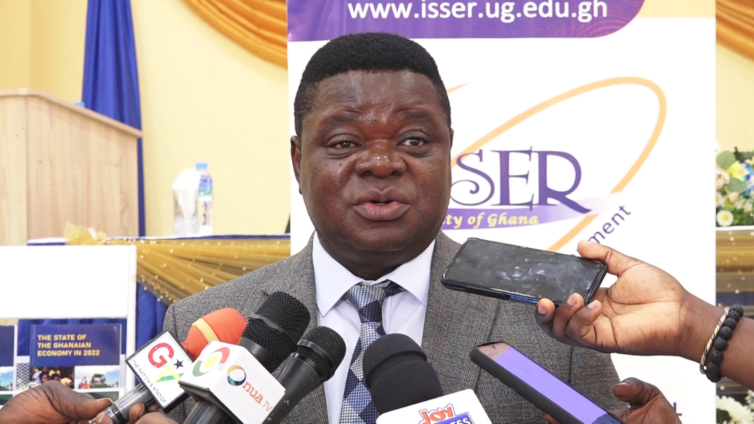
The Institute of Statistical, Social and Economic Research (ISSER) at the University of Ghana has underscored the pivotal nature of the 2024 budget, presenting it as a test case for the nation's financial stability.
The review emphasises that prudent financial management will build upon the relative stability recorded in 2023.
Conversely, ISSER warns that excessive spending in the upcoming year could usher in dire consequences for the economy, impacting variables such as the exchange rate, inflation, and more.
With the majority of the 2024 budget allocated to public sector wages, debt payments, and statutory funds, ISSER's analysis raises concerns about the limited fiscal space available for crucial infrastructure development and service provision.
The allocation of over 90% of domestic revenue to these areas leaves less than 10% to cover essential components like capital expenditures and other government services.
Professor Quartey, the director at ISSER, has called for a careful examination of government spending, emphasizing the importance of value for money in major public procurement contracts.
He further advised the government to actively negotiate with external creditors to restructure debt payments, freeing up fiscal space for vital development projects and service enhancement.
As the 2024 budget projects a fiscal deficit of 4.8% of GDP, Professor Quartey remains optimistic, provided the government adheres to the targets set under the International Monetary Fund (IMF) program.
However, ISSER's warning about the consequences of excessive spending serves as a stark reminder that the decisions made in this crucial year will have lasting implications for the nation's economic stability.
The ISSER review positions 2024 as a decisive period, urging for prudent financial management to capitalize on the groundwork laid in 2023.
Conversely, it serves as a cautionary note, signalling that unbridled spending could lead to detrimental consequences, making it imperative for the government to strike a delicate balance between immediate financial obligations and the long-term economic health of the nation.
Latest Stories
-
Church of Pentecost supports over 2,000 BECE candidates in Obuasi with career guidance seminar
58 minutes -
Brandon Asante and Coventry all but promoted to Premier League despite Sheffield Wednesday draw
1 hour -
GPL 2025/26: Late Kwartemaa strike downs Hearts in Tema
1 hour -
Ghana Faces Sierra Leone Moment as Prosecutorial Powers come under strain
2 hours -
Don’t consume fish or seafood from Tema Shipyard until further notice – FDA warns
2 hours -
Why volunteering might be Africa’s most underrated career accelerator
2 hours -
ActionAid Ghana raises concern over gender gaps in Feed Ghana Programme
2 hours -
Windstorm wreaks havoc in Gushegu, displacing nearly 2,000 residents and damaging schools
2 hours -
Friends of Bridget Bonnie Marks her 35th birthday with donation to Kasseh Model Health Centre
3 hours -
From Ekumfi Kokodo to the Pulpit Stage: Essi Donkor’s gospel journey takes shape
3 hours -
Landfilling waste management creates no value, it’s an economic waste
3 hours -
Photos: Speaker Bagbin Commissions MPs constituency office under parliamentary decentralisation programme
3 hours -
Black Stars technical advisor Winfried Schäfer sacked as GFA shakes up backroom staff
3 hours -
Wenchi water project almost complete, critical to gov’t agenda – GWL MD
4 hours -
Anti-LGBTQ+ bill not part of government’s legislative agenda – Inusah Fuseini
4 hours