

Audio By Carbonatix
In Ghana, major cities are drowning in solid waste, a visible reminder of our waste management failures.
Beyond the stench and health hazards, these overflowing heaps expose something deeper; booming economies and growing cities are choking under the weight of their own consumption, and immediate action must be taken.
But behind the politics lies a million-dollar circular economy waiting to be unlocked through renewable energy, recycling, and green jobs. It is time for Ghana to seize that moment.
It is for this reason that the International Solid Waste Management (ISWA) Africa held its inaugural ISWA Africa Conference under the theme “Charting Africa’s Path to a Wasteless Future: Integrated Strategies for Sustainable Waste Management.”
The conference brought together government leaders, private sector champions, international agencies, and sustainability practitioners to shape the future of Africa’s circular economy.
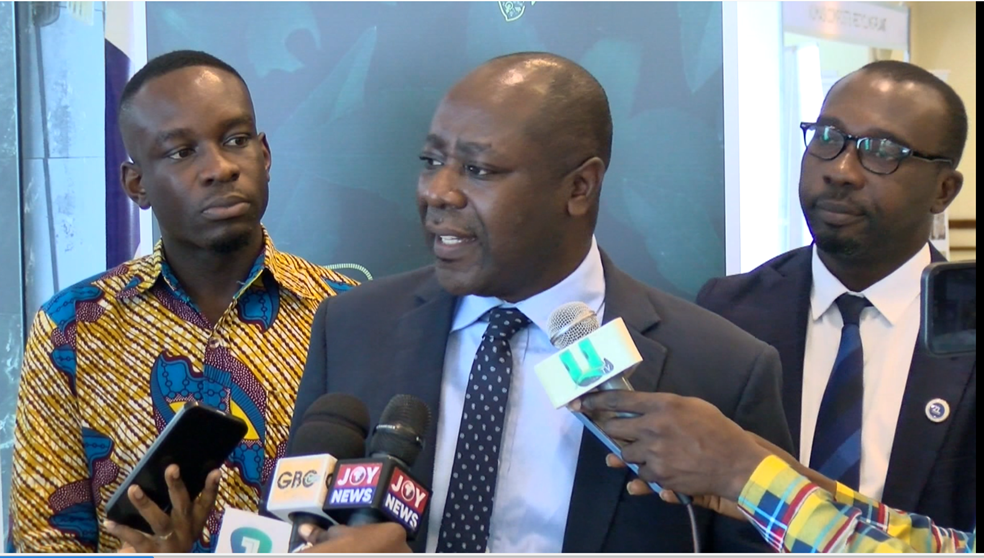
Speaking at the conference, President of Solid Waste Management Ghana, Ernest Kusi, commended the efforts made by government and private waste management organisations.
He stressed the need for businesses that generate waste to take responsibility and support recycling and waste management, rather than leaving the burden on government alone.
“We are calling for extended producer responsibility. There are a lot of companies generating waste but not contributing to recycling the waste they produce. With this, the workload on government and private waste management organizations can be eased,” he said.
The most burdensome solid waste on Ghana’s environment is plastics. Ghana generates approximately 840,000 tonnes of plastic waste annually, yet only about 9.5% of what is collected is recycled.
The rest is indiscriminately disposed of without regard for the environmental impact. Closing this gap is the challenge the Environmental Protection Authority (EPA) is striving earnestly to solve.
With pressure mounting for swift action, Chief Executive Officer of the EPA, Professor Nana Ama Browne Klutse, assured Ghanaians that the battle is being tackled in phases and will ultimately be won.
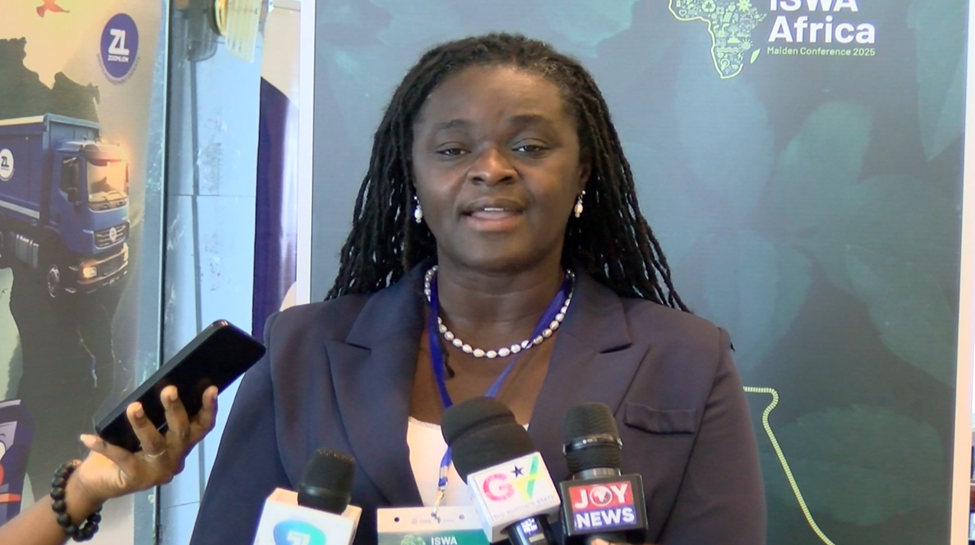
“We are implementing the ban in phases. Our first focus is on plastics that generate the most waste and cannot be recycled. At this stage, we are engaging stakeholders in the plastics industry to agree on sustainable alternatives, ensuring the ban addresses the problem without entirely disrupting their businesses,” she emphasised.
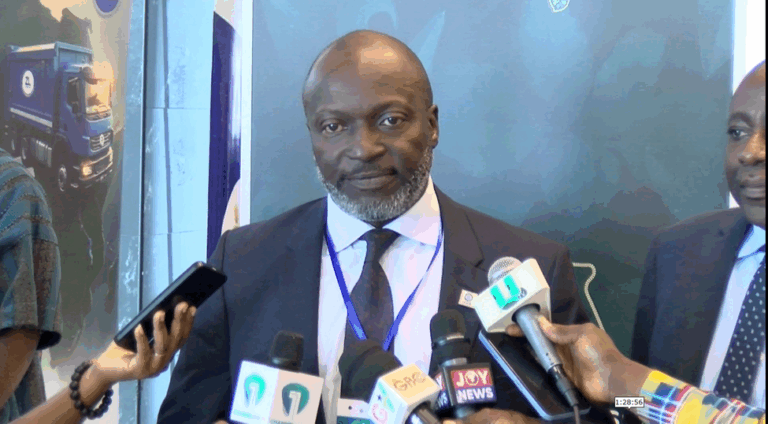
According to the Chair of ISWA’s Technical Committee, Deji Fawole, the era of endless paperwork and lip service must end.
He called on all stakeholders to stop hiding behind politics and join forces with ISWA to drive bold, sustainable solutions that Ghana and Africa desperately need.
“We need sustainable financing solutions and efficient waste management policy reforms to address these challenges. However, we cannot do that if we do not unite, meet, and plan swift measures that can urgently give us the answers we need,” he stated.
The ISWA conference made it clear: Ghana’s waste crisis will not be solved with promises. Only political will, financing, and bold innovation can turn this problem into an opportunity for growth.
Latest Stories
-
Gender Ministry supports Harriet Amuzu in ongoing abuse case
7 minutes -
AG joins plaintiff to scrap OSP ?: We should be mindful of the mischief in this – Bobby Banson
13 minutes -
Samson Lardy Anyenini questions willingness of Attorneys-General to prosecute political colleagues
15 minutes -
It is only fair the OSP is heard in Supreme Court case – Bobby Banson
21 minutes -
Asiedu Nketia resumes Ashanti tour, second leg kicks off on Sunday
30 minutes -
NLA denies salary cut claims, threatens legal action over reports
34 minutes -
BoG Governor honoured for stabilising cedi, improve inflation
36 minutes -
Kyebi Easter Homecoming 2026: A resounding success!
1 hour -
Trade Minister applauds GUTA as a pillar of economic growth; Prez Mahama honoured
2 hours -
President’s brother’s takeover of Damang Mines is ‘untidy’ – Alhassan Tampuli
2 hours -
It’s not true that gov’t decided not to renew the lease for Gold Fields – Bobby Banson
2 hours -
Ghana to boost tomato production with 60-hectare irrigated farms and processing initiatives
2 hours -
E&P’s takeover process of Damang Mines was very clean – Inusah Fuseini
2 hours -
Damang takeover: There is not going to be any job loss; it is a lease change – Bobby Banson
3 hours -
Gold Fields didn’t stop mining at Damang mines; such claims are untrue – Bobby Banson
3 hours