

Audio By Carbonatix
The Centre for Social Impact Studies (CeSIS) is urging government to deliberately adopt strategies to attract, retain and encourage women to actively get involved in the management of natural resources in Ghana.
The group says as a show of this commitment, the Ministry of Lands and Natural Resources should prioritize women in artisanal and small-scale mining (ASM) in the allocation of concessions for the community mining initiative.
It observes regrettably that in spite of their immense contribution to artisanal mining particularly, women have largely remained invisible in the ASM sector.
“…we further appeal to mining companies to provide equal opportunities to women and men regarding conditions of service and take steps to mitigate potential systems, policies and cultural barriers that women face in the sector.”
Executive Director, Robert Ali Tanti said the practice where women miners earn less than their male counterparts should be reviewed immediately.
“It is discriminatory and against the fundamental human rights of the women”.
The statement continues that, “In addition to this important step, the companies must implement deliberate policies that encourage women to ascend the labour hierarchy and occupy top positions in the sector.
We also call on both government and the mining industry to provide more spaces for women to amplify their voices on the key challenges they face in the industry.”
A world where women living in mining communities have their livelihoods protected is possible. A world where women in ASM can have access to mineral concessions is possible. We need to take steps to end the bias and build a sustainable future with women
Statement Continues…
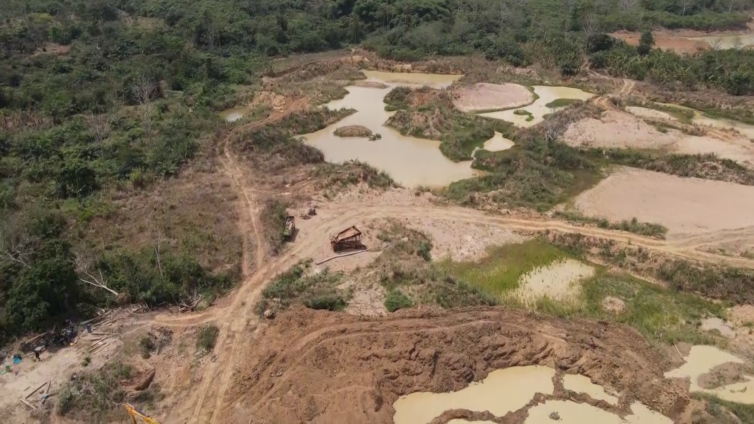
Women in mining communities shoulder the biggest burden of the negative impacts of mining being deprived of their livelihoods, trekking for miles to fetch water and food for the family (because water bodies have been polluted) in addition to catering to the needs of children and the aged in the society.
These responsibilities make it difficult for them to move to places in search of better livelihood opportunities.
Women who work for multinational mining companies also face the glaring discrimination of being paid less than their male counterparts for the same work done.
Such women are also less likely to climb to the top of the corporate ladder as compared to their male colleagues.
Finally, women in the artisanal and small-scale mining (ASM) sector also encounter diverse forms of discrimination including in access to mineral concessions.
It is in our view that without gender equality today, a sustainable future, and an equal future, remain beyond our reach in the extractive sector.
Latest Stories
-
Knights and Ladies of Marshall group backs Catholic Bishops’ stance on anti-LGBTQ+
21 minutes -
Bright Simons writes: All the Filla in the Ibrahim Mahama/E&P – Gold Fields Saga
46 minutes -
Monetise Idiocy In Ghana
53 minutes -
The Ghanaian prophet and the mysterious death of his scottish wife Charmain Speirs
2 hours -
Nearly 400 sentenced in Nigeria for links to militant Islamists
2 hours -
Ghana’s recovery supported by gold strength despite global oil price pressures – Standard Bank Research
2 hours -
Methodist Church hails Mfantsipim@150; calls for “fresh consecration” to excellence
2 hours -
‘Excellence is our inheritance’ – Nana Sam Brew-Butler hails Mfantsipim’s 150-year reign in leadership
3 hours -
Kwaku Azar writes: A-G vs OSP
3 hours -
Mfantsipim–Adisadel rivalry built excellence, not division – Sam Jonah
3 hours -
Vice President launches Mfantsipim’s 150 years of shaping Ghana’s greatest mind
3 hours -
I assure Otumfuo, Mahama will join him to commission KNUST Teaching Hospital by end of this year – Haruna Iddrisu
4 hours -
Barcelona dominate derby to extend La Liga lead
4 hours -
Gov’t to roll out free special education for persons with disabilities from July 1 – Education Minister
4 hours -
Importers and Exporters Association declares full support for Publican AI port system
5 hours