

Audio By Carbonatix
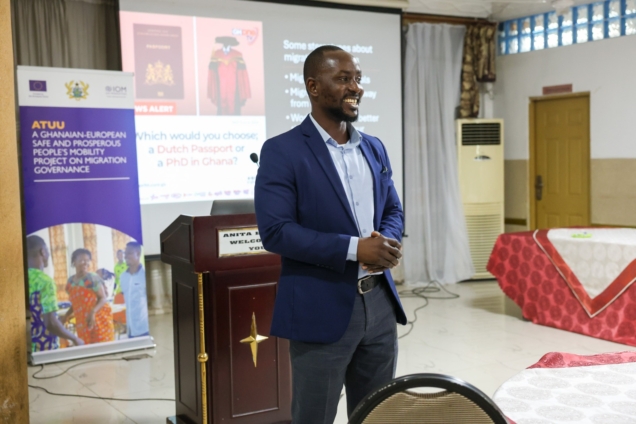
A lecturer at the University of Media, Arts and Communication (UniMAC), Dr. Stephen Tindi, has urged journalists to report migration issues with greater sensitivity and from a rights-based perspective to help shape public understanding and guide policy decisions.
Speaking during a media training on migration, Dr. Tindi said journalists play a crucial role in how society perceives migration and migrants, yet many stories fail to capture the full picture due to limited knowledge or misuse of language.
“Although migration issues exist in our society, we do not hear much about them because journalists have not reported widely on them,” he said. “Most of the migration stories we read show the need to improve journalists’ skills, such as the correct use of terminology and inclusion of diverse voices.”
He explained that the use of inappropriate terms to describe migrants can have lasting consequences, reinforcing stereotypes and discrimination.
“Regardless of the circumstances migrants find themselves in, they are human beings. It is important for journalists to adopt a rights-based approach and tell stories that reflect their humanity, even in irregular situations,” he added.
Dr. Tindi emphasised the need to train journalists to better understand migration terminology and approaches that promote empathy and accuracy. “There is no better way to shape public understanding of migration than by influencing how journalists construct migration narratives,” he said.
The training, organised with support from the International Organization for Migration (IOM), sought to enhance journalists’ capacity to report responsibly on migration issues in Ghana and beyond.
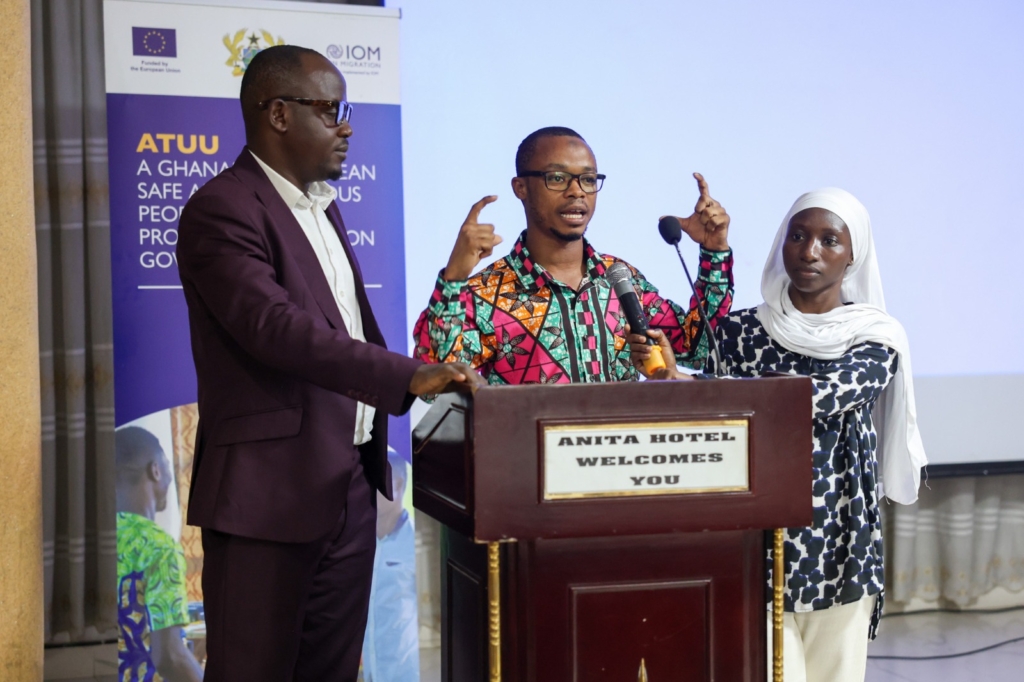
IOM Programme Support Officer, Camilla Taranta, said the session was designed to promote integrity, fairness, and empathy in migration reporting.
“Let us use this opportunity to learn from one another, to challenge assumptions, and to reaffirm our shared commitment to truth, fairness, and the fundamental rights of all people on the move,” she said.
Some participating journalists described the training as insightful and transformative.
A reporter with the Daily Guide, Eric Kombat, said the workshop deepened his understanding of migration reporting and the importance of correct language use.
“It was fascinating learning the right words and terminologies. Until this training, I never knew using words like ‘illegal migration’ was wrong. This is a new chapter in my reporting on migration,” he said.
The media training forms part of ongoing efforts by IOM and its partners to improve migration communication and promote balanced narratives that protect human dignity.
Latest Stories
-
$600m tomato imports undermining Ghana’s economy — Chamber of Agribusiness
19 minutes -
Rainstorm wreaks havoc: Faulty transformers, feeder failures leave parts of 3 regions without power
28 minutes -
CUTS International calls for urgent competition law amid sachet water price hikes
1 hour -
‘I never did this advert’, AI clones hijack Ghanaian identities for profit
1 hour -
25-year-old woman battles trauma after surviving deadly Nkwanta attack
2 hours -
Vice President honoured at Tortsogbeza as South Tongu leaders highlight development needs
2 hours -
Kwahu Business Forum 2026: Corporate citizenship, sustaining African businesses take centre stage with KGL as the case study
3 hours -
Trump seeks $152m to reopen notorious Alcatraz prison
5 hours -
Ex-Chelsea player Oscar retires with heart issue
5 hours -
CA Foundation drives constitutional literacy in Kpone Katamanso municipality
6 hours -
GPRTU to hold talks with Transport Ministry over rising fuel costs
6 hours -
CUTS International urges gov’t to halt sachet water price hike pending cost review
6 hours -
Chief Justice: Efficient Judiciary essential to reducing business costs
6 hours -
Bayern grabs 99th-minute winner to cap superb fightback
6 hours -
Ahmed Ibrahim urges Ghanaians to reflect Easter values in nation-building
6 hours