

Audio By Carbonatix
Journalists have been urged to help turn the page on how society perceives people with disabilities, by using positive language when reporting on such persons.
According to Madam Victoria Oliver from the US Embassy, Ghana, there are over three million Ghanaians living with disabilities but too often their stories, their challenges, and as importantly, their successes go untold.
“Without these stories: a woman in Takoradi may not recognize the persistent challenges her disabled neighbor faces and how she can become an ally;
“A disabled teenager in Accra never sees someone like him portrayed as a successful Ghanaian and is less likely to advocate for himself;
“A business owner in Cape Coast doesn’t understand the impacts his policies have on disabled clients and employees; and
Society as a whole loses out because all of its citizens are not fully engaged economically, socially or civically,” she stated.
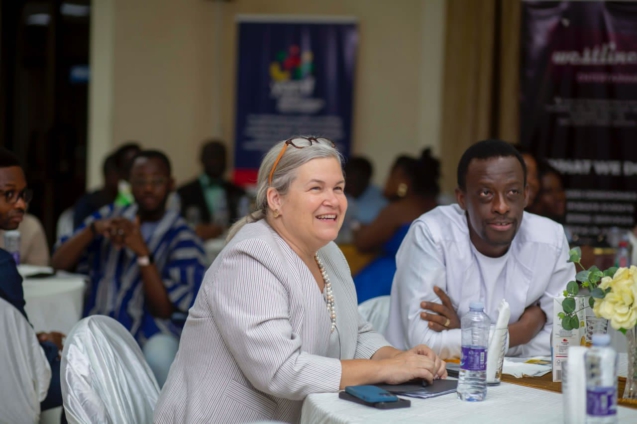
Speaking at the second Media Capacity Building Initiative for Reporting on Disability (MCBIRD) in Takoradi, Madam Victoria Oliver explained journalists have the potential to change the narrative.
“That is where you come in. Free and fair democracies depend on free press and professional journalism to function. Dynamic economies need all of its citizens reaching their full potential. We thrive when all voices – including those from marginalized communities – are represented by factual and balanced reporting.
“I challenge you to take what you have learned here and put it to use as soon as possible. Write the story that helps the reader think differently about the lives of disabled people and hold yourself and your colleagues accountable to using inclusive and positive language in you reporting, But most importantly, I challenged you to truly connect with disabled people and help their voices be heard,” she said.
Madam Oliver stated that this is the ideal time to begin to turn the page on disability reporting and begin to include voices who have been ignored; to begin to tell the stories we all need to hear; and to become more inclusive in our coverage and in our society.
“So why is the United States government, along with the Ghanaian leaders here today, supporting this issue of more inclusive reporting? It is because we recognize the inherent value of people with disabilities as individuals and acknowledge the collective value of their contributions and their participation in schools, workplaces and communities everywhere,” she stated.
Latest Stories
-
Benedict Okyere Yeboah: Ghana’s football problem goes beyond sacking a coach
1 minute -
GPL 2026/27: Darkwah Wiafe’s winner sees All Blacks beat Kotoko
7 minutes -
ITF World Tour : Patel Wins Boys’ Singles Final at J100 Accra
20 minutes -
Ghana must pursue BRICS partnership if it brings economic benefits – Kpebu
23 minutes -
Success and Wright Claims J100 Accra Girls’ Doubles Championship
23 minutes -
ITF J100: America’s Wright wins J100 Accra Girls’ Singles Title
30 minutes -
Expedition hopes to find aviator Amelia Earhart’s plane on remote island
31 minutes -
US seeks changes to rejected $109m health compact with Ghana – Mahama
1 hour -
Nine dead in mass shooting at Pennsylvania home
1 hour -
‘Time for Ukraine to get new president,’ says Trump after Zelensky condemns diesel deal
1 hour -
Hincapie injury adds to Arsenal issues after Guimaraes rescue act
1 hour -
Henderson scores twice as Chelsea thumb Bournemouth
2 hours -
Photos: Mentapulse Africa convenes health and labour summit to address talent retention
2 hours -
Mahama inspects Nkokɔ Nketenkete plant, eyes Bechem as chicken capital
2 hours -
Ghana not seeking full BRICS membership, applying as Partner Country – Ablakwa
2 hours