

Audio By Carbonatix
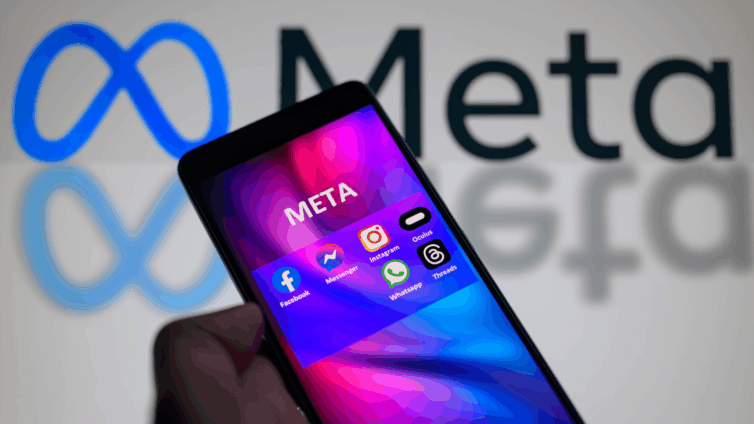
A US district judge in Washington has ruled that Facebook-parent Meta Platforms did not violate antitrust laws with its acquisitions of photo-sharing app Instagram and messaging service WhatsApp more than a decade ago.
The decision hands a defeat to the Federal Trade Commission, the US antitrust watchdog, which sued Meta in 2020, claiming the company secured a monopoly in social media by purchasing its rivals.
"The Court ultimately concludes that the agency has not carried its burden: Meta holds no monopoly in the relevant market," wrote Judge James Boasberg on Tuesday.
The company hailed the decision in a statement provided to the BBC, saying it "recognises that Meta faces fierce competition."
In April, Judge Boasberg presided over a lengthy bench trial that featured testimony from Meta CEO Mark Zuckerberg and former Chief Operating Officer Sheryl Sandberg, who argued that TikTok and YouTube had shaken up the social media landscape.
In his decision, Judge Boasberg noted that the FTC reviewed and approved of Meta's 2012 acquisition of Instagram and the 2014 acquisition of WhatsApp.
The agency had argued that the company overpaid when it purchased Instagram for $1 billion and WhatsApp for $19 billion.
Judge Boasberg described a constantly changing social media landscape, "with apps surging and receding, chasing one craze and moving on from others, and adding new features with each passing year.
Even if Meta enjoyed monopoly power in the past, he said the FTC failed to show "that it continues to hold such power now" as Meta's market share "seems to be shrinking."
In a statement to the BBC, the FTC indicated it wasn't certain whether it plans to appeal.
"We are deeply disappointed in this decision," said Joe Simonson, director of Public Affairs at the FTC, who added the agency was reviewing all of its options.
Simonson also told the BBC that "the deck was always stacked against us with Judge Boasberg," who has clashed multiple times with the Trump administration and is facing an effort by congressional Republicans to have him impeached.
The BBC has asked Judge Boasberg for comment.
With its victory on Tuesday, Meta avoids a potential breakup of the company ,which could have included spinning off Instagram and WhatsApp.
"Our products are beneficial for people and businesses and exemplify American innovation and economic growth," a Meta spokesperson told the BBC on Tuesday. "We look forward to continuing to partner with the Administration and to invest in America."
The decision comes after the Department of Justice won two prior antitrust cases against Google - one alleging a monopoly in online search and the other in advertising technology.
But earlier this year, another district judge in Washington presiding over the online search case declined to force Google to spin off its Chrome browser, a step the Justice Department had suggested was necessary to end the tech giant's search monopoly.
Against that backdrop, Tuesday's ruling against the FTC "does feel like a change in momentum," said Rebecca Haw Allensworth, an antitrust law professor at Vanderbilt Law School.
"I think that's going to influence the likelihood of more cases like this being brought."
But, Allensworth added, the ruling doesn't indicate that the government's efforts to crack down on antitrust behaviour are failing.
"It's a mixed bag," she said.
Many legal observers say that the FTC case against Meta was challenging from the start.
The case "was always a difficult one, particularly given how quickly we have seen changes in the social networking market in recent years," said Laura Phillips-Sawyer, a professor at the University of Georgia School of Law.
Still, she said, the case revealed "a series of statements by Zuckerberg at the time of those acquisitions that looked like a desire to squelch a nascent threat to Facebook's dominance".
Meta's legal entanglements aren't over.
Mr Zuckerberg has been ordered to testify in a landmark trial over the impact of social media on young people.
Last month, Los Angeles County Superior Court Judge Carolyn Kuhl rejected Meta's argument that an in-person appearance in January was unnecessary.
Instagram head Adam Mosseri is also slated to testify at the trial, which stems from accusations that Meta and other social media companies make their apps addictive to young people despite being aware of mental health risks.
Latest Stories
-
Ghana’s economy remains fragile despite recent recovery – Economist
1 minute -
New SIM re-registration to address anomalies in earlier exercises – NCA Director-General
39 minutes -
Mpox no longer classified as public health emergency – Health Minister
40 minutes -
Politics not for ‘dirty people’ but persons with integrity– Biakoye MP
44 minutes -
Hernia is a significant cause of high morbidity in Ghana – Dr Owusu
49 minutes -
Baba Jamal to be sworn in as Ayawaso East MP today
54 minutes -
Constitution review will improve governance – Prof Kwasi Prempeh
1 hour -
War Memorial Hospital to dispose of unclaimed bodies
1 hour -
Committee Chairman pushes for law update to tackle tech challenges
1 hour -
Absence of tenancy agreements causing confusion between landlords, tenants – Rent Department
1 hour -
Lawsuit challenges Trump administration’s ending of protections for Somalis
2 hours -
Gold gains on weaker dollar, easing inflation concerns
2 hours -
Trump says US is waiving certain oil-related sanctions to ensure supply
2 hours -
Five Iranian footballers granted Australian visas after anthem protest
3 hours -
Do not despair, perseverance led to my three PhDs – TTU registrar urges all
4 hours