

Audio By Carbonatix
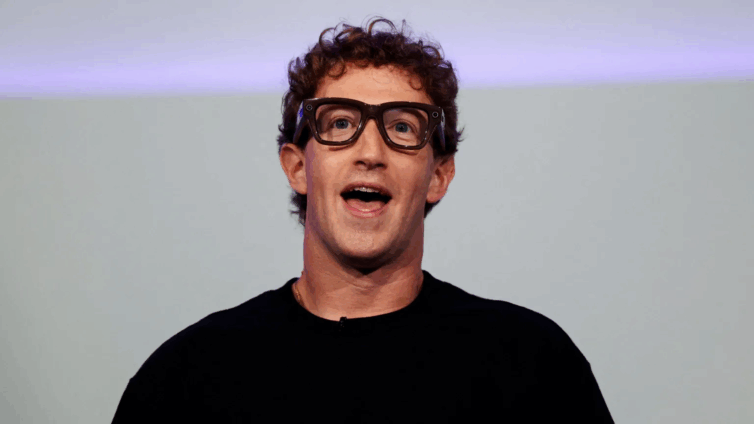
Meta CEO Mark Zuckerberg plans to increase spending on artificial intelligence (AI) projects this year, even as other executives warn of a potential bubble in the industry.
During a call with financial analysts on Wednesday to discuss the Facebook-owner's 2025 financial results, the company said it expects to spend up to $135bn (£97bn) this year, mostly on infrastructure related to AI.
That is nearly twice the $72bn Meta spent last year on AI projects and infrastructure.
In the last three years, the technology giant has spent roughly $140bn to get ahead of the AI boom.
Zuckerberg said on Wednesday that he is expecting "2026 to be the year that AI dramatically changes the way we work."
His comments came as Meta's figures showed expenses rose faster than revenues, squeezing profit margins during the last three months of 2025.
Meta shares were around 6.5% higher in extended trading in New York after the announcement.
In addition to outlining the potential benefits of such a massive AI investment, Zuckerberg's comments suggested further layoffs at the tech giant.
"We're starting to see projects that used to take big teams now be accomplished by a single, very talented person," he said.
This year, Meta has already laid off several hundred workers, mainly in its Reality Labs division, which focuses on its "metaverse" ambitions, hardware products, and AI initiatives.
Zuckerberg said Meta is investing more across the company in AI tools that help employees, like software engineers, complete more work.
As workers use the tools to become "significantly more productive," he said, there is "a big delta between the people who do it and do it well and the people who don't."
"What we were talking about is, I think it's very hard for anyone exactly to predict what the shape of how organisations working is going to feel, but I just think the fact that agents are really starting to work now is quite profound," he added.
Some in the industry warn that such major investments risk creating an AI bubble, similar to the dotcom boom, which peaked in 2000.
Chuck Robbins, chairman and chief executive of Cisco Systems, told the BBC that while AI could end up "bigger than the internet", the current market is probably a bubble and some companies "won't make it".
JPMorgan Chase boss Jamie Dimon has voiced similar concerns, while Google CEO Sundar Pichai said there was some "irrationality" to the AI boom.
Sam Altman, whose company OpenAI helped spark the current AI obsession in the tech industry, was more direct.
"Are we in a phase where investors as a whole are overexcited about AI? My opinion is yes," he said last year.
Latest Stories
-
Police arrest suspect over jewellery theft during fire outbreak
2 hours -
EOCO returns Hanan’s £6,700, GH¢2,750 and devices after defence challenge
2 hours -
Opplift Youth Entrepreneurs Summit 2026 equips entrepreneurs with skills, mentorship and support
2 hours -
Rival clubs want range of punishments for Man City
2 hours -
Tear gas in Paris and Marseille as school protests grow across France
2 hours -
Kane inspires England to win over Czech Republic in UEFA Nations League
3 hours -
Finland orders halt to work on two Google data centres
3 hours -
Substitute Merino scores twice as Spain win in Croatia
3 hours -
Ronaldo wants Portugal ‘punishment’ but not retiring
3 hours -
White House defends Trump comment to let Iran ‘take out’ LA and San Diego
3 hours -
Asos confirms hackers sent ‘unauthorised’ notification to app users
3 hours -
US televangelist Jim Bakker, disgraced from sex scandal and fraud, dies at 86
3 hours -
Congolese-born golfer to represent Ghana at Turkish Airlines World Cup grand final
3 hours -
Amazon wins global rights to stream Emmys in six-year deal
3 hours -
European Film Festival returns to Ghana after a 5-year break
3 hours