

Audio By Carbonatix
When Communications Minister Samuel Nartey George stood before the Fourth Inter-Parliamentary Conference on Family, Values and Sovereignty and announced that Ghana was moving toward mandatory identity verification for pornographic websites, the moral argument was hard to dispute. Children are being exposed to sexually explicit content online.
Something must be done. He was right about the problem.
Experts are questioning whether his proposed solution has any hope of working.
The proposal
Sam George's plan is straightforward in its intent: before any internet user in Ghana can access an adult content website, they must submit a National Identity Card or driver's licence to confirm they are at least 18 years old. The proposal, which the minister says is heading to Cabinet, cites the United Kingdom's age verification regime as its model.
"We are working towards taking this to Cabinet to ensure that before anyone accesses an X-rated site, they must provide either a driver's licence or a national ID card. This will help us identify who is accessing such sites and prevent children from being exposed to that content," Sam George said at the conference.
He framed it in the language of African family values and intergenerational duty, a responsibility to shield the current generation of Ghanaian children from harms that, in his telling, adults were once shielded from by the structures of the African home.
"The fight against Africa is not against those of us sitting in this room. We were a lost cause. The fight is against our children," he said.
The sentiment resonated. Ghana's Cybersecurity Act, Act 1038, already recognises the stakes — sections 62 and 63 are specifically dedicated to child online protection.
Nobody in the expert community is arguing that the minister's instinct to protect children is wrong. They argue that this particular mechanism is technically broken before it begins.
What ordinary Ghanaians think
Away from the technical debate, the proposal appears to have struck a chord with a section of the general public, even if the reasoning is sometimes contradictory.
Speaking to Myjoyonline.com, several residents offered their views on the minister's plan, and the responses revealed a public broadly sympathetic to the goal of protecting children, even if personal attitudes toward adult content itself are more complicated.
"I think it's a good idea. The youth are like they've been too exposed to pornographic material," one resident said. In our days, when I was in my twenties, it was not easy to access. At that time, we were not using phones the way we do now. But now you just pick up someone's phone, and it's there."
Another resident was candid about the dual tension many adults feel, acknowledging personal use while supporting restrictions for younger people.
"Porn is our agyenkwa some of us who are not married," he said, using the Twi word for a secret indulgence, before adding: "But on the most serious note, I think it's a good idea. I'm not a fan of pornographic materials, and I think implementing those kinds of laws would be very helpful."
The Ghana card logic that minors cannot hold a national identity card and therefore cannot pass the verification check emerged as a key reason residents found the proposal appealing.
"If you are not 18 years, you can't have a Ghana card. So it's very difficult for them to go online to watch pornography," one person reasoned.
"These days, all manner of people watch pornography on social media anyhow they want. So I think this is a good idea."
A fourth resident framed it in terms of moral influence on the younger generation. "Due to this thing, it has influenced a lot of youth to spoil too much," he said.
"I think it's a good idea when you submit your Ghana card details to access pornographic videos. I think it will prevent so many people from getting it."
The public sentiment captures something important: the proposal has intuitive appeal because it maps onto familiar real-world logic. You need an ID to buy alcohol. You need an ID to vote. Why not access adult content online?
That logic, however, is where the technical reality begins to diverge sharply from public expectation.
Two paths, two problems
Abubakar Issaka, President of the Cybersecurity Experts Association of Ghana, walked Myjoyonline.com through the technical anatomy of what Sam George's proposal would actually require in practice and identified a critical dilemma at its core.
For age verification to work at a national level, there are really only two viable infrastructure models. The first would have the government build its own verification portal, hosted within the networks of Ghana's telecommunications companies. Any internet user in Ghana attempting to access an adult website would be redirected to this government portal, where they would confirm their identity before being granted access.
"The NCA will have to collaborate with these telcos so that they provide what we call a government interface to these adult websites," Issakah explained.
"If someone within our jurisdiction who has a public IP within the confines of Ghana is trying to access adult content, they will then be redirected to the government portal to verify themselves."
It is technically coherent. It is also, Issakah says, extraordinarily expensive, requiring significant investment in infrastructure that does not currently exist and would need to be built, maintained, and operated in collaboration with the country's mobile network operators.
The second model is more dangerous.
It would involve giving the adult websites themselves access to Ghana's national identity database through an application programming interface, essentially allowing foreign platforms to query whether a person submitting their Ghana card details is who they say they are, and whether they are of legal age.
"This will raise a huge data protection concern for the citizens," Issakah said. "It means we have to provide what we call an API connectivity from this adult website to our national database."
The implications are considerable. Ghana's national identity data would, under this model, be accessible to private foreign entities whose data handling standards, legal jurisdiction, and commercial incentives are entirely outside the government's control. Issakah described it plainly as handing over sovereignty.
The bypass problem
Even if the government chose the expensive but domestically controlled first option and built the verification infrastructure from scratch, a far more fundamental problem remains: it can be circumvented by anyone motivated enough to try.
Virtual private networks, software tools that mask a user's real location and route their internet traffic through servers in other countries, are widely available, often free, and increasingly familiar even to teenagers. With a VPN active, a user in Accra appears, to any network monitoring system, to be browsing from London or New York. The government's verification gateway never sees them.
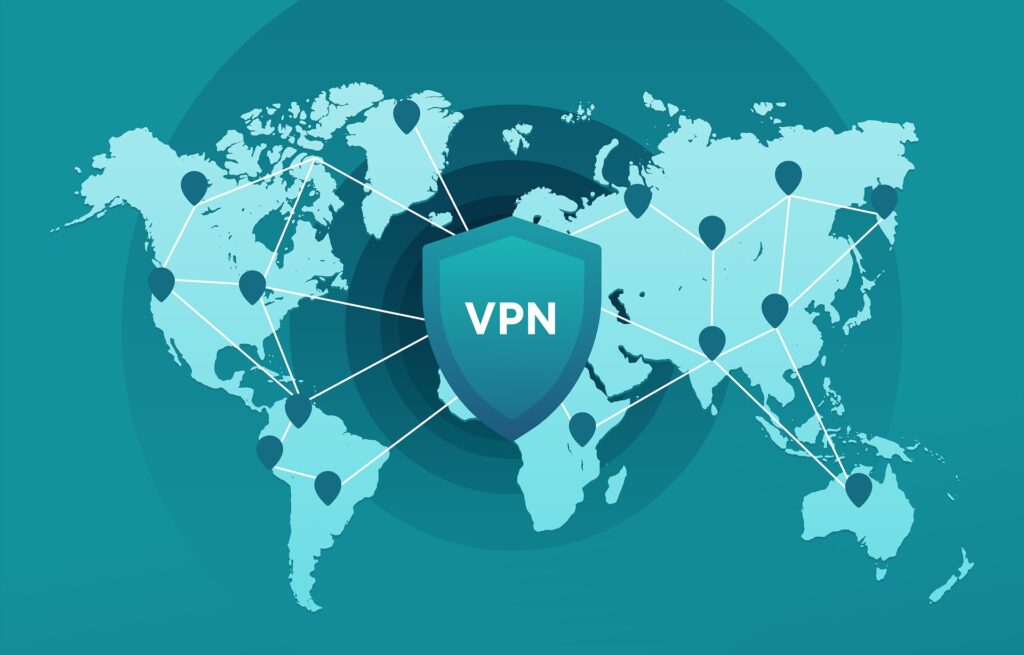
"With a VPN and stuff like that, once you are anonymous, your telcos will not be able to identify whether you are even operating within their jurisdiction," Issaka said.
"You can use VPN and set your location to the United States. That means you bypass these sets."
And dedicated adult websites are not even where most young people encounter explicit content anymore. Issaka's observation on this point is perhaps the most damaging to the policy's underlying logic: the internet has moved on.
The assumption that pornographic content is primarily accessed through dedicated adult platforms reflects a rapidly outdated picture of how content actually circulates online.
"The website currently constitutes about half of the adult content. Much of it is now on the social media platforms," he said.
"Every day on Telegram, people are sharing nudes. People are sharing adult content. People are doing live streams of adult content on Instagram."
Twitter, now rebranded as X, has long permitted adult content in certain configurations.
Telegram operates largely beyond content enforcement. WhatsApp groups among school students have been documented sharing explicit material with no algorithmic filter in sight.
"If I can easily access it on Telegram, and you are protecting it on www.something.com, I will not go there. I will simply go to Telegram and access it," Issaka said.

The UK lesson Ghana is choosing to ignore
Sam George cited the United Kingdom as the model for Ghana's proposed policy. It is worth examining what the UK's experience actually shows.
In 2019, the UK government attempted to implement its own age verification system for adult websites under the Digital Economy Act. The plan required users to verify their age before accessing pornographic content — using credit card details, official ID, or third-party verification services. After years of delays, the policy was scrapped entirely before it took effect.
Among the reasons: privacy concerns, implementation complexity, and precisely the kind of bypass loopholes that Issakah is now flagging in Ghana's context.
"Looking at the UK's case study, you realise that when it was implemented in 2019, they had to withdraw and go back to the drawing board. They went back because they did not pay attention to key loopholes," Issaka told Myjoyonline.com.
The UK has since reoriented its approach to the Online Safety Act, passed in 2023, which uses a broader and more platform-centred framework, and the contemporary policy conversation in Britain is dominated by parental controls and platform-level accountability rather than gateway verification.
"Even currently, the UK is talking about parental controls, implementation of parental controls, much more than implementation of restrictions in visiting these websites," Issakah noted.
What should happen instead?
Issakah's alternative framework has several components, and none of them requires a new law.
The starting point, he argues, is the Cybersecurity Act, Act 1038 itself. Sections 62 and 63 of the Act already address child online protection. The Act is currently undergoing an amendment process that has not yet gone to Parliament.
The Electronic Transactions Act, Act 775, is simultaneously under review. Both of these processes provide natural legislative vehicles for strengthening child protection online without generating an entirely new regulatory instrument.
"There should not even be a new law or a new regulation. This is becoming one too many regulations," he said.
"My recommendation is that they include this regulation in the child online protection aspect of Act 1038."
At the implementation level, his emphasis falls on parental controls, and he draws on a recent government programme to illustrate the missed opportunity. When the government distributed tablets to senior high school students, no technical restrictions were placed on what the devices could access. The consequences were predictable.
"The SHS students were viewing pornography on these tablets. The SHS students were listening to music instead of learning with it. We need to implement parental controls at that level," he said.
Google's Family Link, a free parental control platform, is already available to Ghanaian parents, but Issaka notes that awareness of such tools remains extremely low, a problem he traces to Ghana's broader deficits in cybersecurity capacity and public digital education.
The ITU's Global Cybersecurity Index places Ghana low on capacity-building metrics. That ranking, Issaka says, reflects a country whose citizens — and whose parents in particular — lack the digital literacy to make informed decisions about how their children use the internet.
"That suggests that we are not even aware of the dangers. Therefore, we need to invest in capacity building. We need to invest in awareness creation," he said.
A minister who needs better advice
Issakah was measured but pointed in his assessment of the minister himself. Sam George, he acknowledges, is motivated by a genuine concern for Ghanaian children. But good intentions cannot substitute for technical grounding.
"He needs to consult properly. You need to be properly advised because you are not a tech guy," he said. "If you are being advised by some level of tech guys, you need to have a broader consultation so that you can have a complete perspective of how to channel this."
He expressed doubt that the proposal, in its current form, would survive the Cabinet process — and suggested that was not necessarily a bad thing.
"I doubt even if this is the proposal that will be sent to the Cabinet. I doubt that it will even be tabled for discussion," he said.
What comes next
The proposal is yet to go before the Cabinet. Whether it survives that process and in what form remains to be seen.
Issaka says he doubts the current version will make it that far. "I doubt even if this is the proposal that will be sent to the Cabinet. I doubt that it will even be tabled for discussion," he said.
The Cybersecurity Act, Act 1038, remains under amendment.
The Electronic Transactions Act, Act 775, is also under review. Both processes, according to the cybersecurity association, provide the government with existing legislative vehicles through which child online protection measures could be strengthened without the costs, data risks, and enforcement gaps that the proposed age verification system carries.
What is clear is that the conversation is not going away. Parental controls, platform accountability, digital literacy, and the adequacy of existing law are all threads that policymakers, civil society, and the technology community will have to work through with or without a Cabinet-approved age verification policy.
Latest Stories
-
Schizophrenia-related disorders lead mental health cases recorded in Ghana
15 minutes -
Dutch authorities enlist Ghana in hunt for fugitive drug lord Bolle Jos
38 minutes -
Ghana housing finance conference adopts communiqué to improve affordable housing access
5 hours -
Special Initiatives Minister urges Wa Technical Institute to enrol more girls as EU-backed solar training lab opens
5 hours -
In the matter of my first year at the Bar
6 hours -
ActionAid Ghana calls for an end to child marriage, greater investment in girls’ rights
6 hours -
Newsfile to tackle World Cup visa scandal, beach demolitions, education strikes, BRICS bid
6 hours -
UK-Ghana Trade & Investment Summit: Trade Resource Centre to help businesses maximise UK-Ghana trade opportunities
6 hours -
Embassy of Denmark celebrates World Maritime Day
7 hours -
Linking LEAP to productive inclusion could cut extreme poverty by 2030 – UNICEF
8 hours -
Trade Ministry backs use of creative arts to rehabilitate prison inmates
8 hours -
Negotiations with government to continue despite strike suspension – GNAT
8 hours -
‘Ghana cannot afford to waste public resources; every cedi has a job’ – Ato Forson
8 hours -
Ghana expects economic boost as World Assemblies of God Congress brings 10,000 delegates to Accra
8 hours -
Joy in Nayilifong as Farouk Aliu Mahama donates 100kVA transformer to improve power supply
8 hours