

Audio By Carbonatix
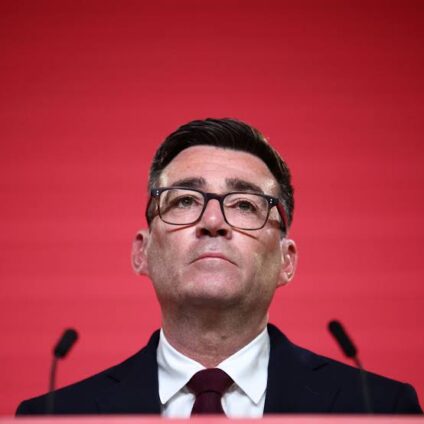
The United Kingdom enters a new chapter of leadership today as Andy Burnham prepares to assume office as Prime Minister. The 56-year-old politician will formalise his appointment on Monday following a traditional audience with King Charles III at Buckingham Palace. His ascent marks a significant shift for the governing Labour Party after the sudden resignation of Keir Starmer.
A Familiar Transition of Power
The political climate in London remains volatile. Burnham serves as the seventh Prime Minister in a decade and the fifth to hold the office in just four years. The transition follows intense instability within the Labour Party, which saw Starmer step down last month after a series of electoral defeats, policy U-turns, and internal scandals. Starmer holds the distinction of being the shortest-serving Labour prime minister in history.
Because the United Kingdom’s parliamentary system permits governing parties to replace leaders mid-term, Burnham secures the premiership without a general election. He officially assumed the role of Labour Party leader this past Friday. Starmer is scheduled to deliver a final farewell address outside 10 Downing Street before travelling to the palace to formally tender his resignation. Upon his departure, the King will invite Burnham to form a new government in a constitutional tradition known as “kissing hands.”
Promises of Radical Reform
Upon returning to Downing Street, the incoming Prime Minister is expected to deliver a landmark speech outlining his national vision. Burnham, often dubbed the “King of the North,” has signalled a sharp departure from the status quo. In a speech delivered Friday, he vowed to reshape the country’s governing philosophy.
“Let’s have the courage to fix the big things that politics has neglected,” Burnham stated, emphasising his intent to reverse structural changes initiated in the 1980s. He argued that the nation has suffered since the era when “political power was centralised, and economic power was privatised.” His stated mission is “to pass power from the authorities to ordinary people” and “to build a new politics — the country is crying out for it.” He intends to offer the British public “more breathing room” while championing a more “stable and responsible” style of governance.
An Urgent Domestic Agenda
Burnham inherits a government under severe socioeconomic pressure. His inbox contains systemic challenges, including a persistent cost-of-living crisis and the ongoing struggle to revive the ailing National Health Service. Beyond domestic infrastructure, he must manage contentious debates regarding immigration and the country’s post-Brexit relationship with Europe.
Political survival will require balancing these domestic priorities against a surging opposition. The Reform UK party, led by Donald Trump ally Nigel Farage, currently leads in national opinion polls. While Burnham prepares to navigate these external threats, he already contends with internal friction. Cabinet formation has sparked immediate disagreement, highlighted by the resignation of Prisons Minister Lord Timpson earlier today. Reports suggest the new administration may explore an income tax cut to stimulate the economy, though precise details of his legislative agenda remain the subject of intense speculation in Westminster.
Whether Burnham can bridge these deep-seated partisan divides and stabilise the economy remains the defining question of his premiership. As he moves from the campaign trail to the dispatch box, his ability to deliver tangible results—rather than just rhetoric—will determine if he can restore public trust or if the United Kingdom’s era of revolving-door leadership will continue.
Latest Stories
-
Power restoration fault suspected in Kumasi Central Market fire
3 hours -
The 7-foot giant of Ngleshie Amanfro: Seven-foot Ghanaian Ephraim Saawa dreams of joining the national basketball team
3 hours -
Government promises support for Kumasi Central Market fire victims
4 hours -
Vibes The Movie: Big Ghun’s Ghanaian film earns five nominations at 2026 REFFA
4 hours -
MamaCare CEO warns unresolved conflicts among health workers could undermine maternal and neonatal care
4 hours -
Health professionals urged to translate medical knowledge into practice to save mothers
5 hours -
Conflicts among care providers linked to maternal, neonatal deaths – Expert
6 hours -
GIS marks 10th TIME conference, champions improved teaching practices
6 hours -
BRICS Or Balance? What Ghana’s bid really means
7 hours -
GPRTU wants full TRAFFITECH-GH implementation to start in 2027
7 hours -
Mahama announces plans to import electric wheelchairs for PWDs
7 hours -
KGL U17 Colts 2026: Western beat Prempeh Elite Academy to set up final final with Greater Accra Region
7 hours -
Late Solanke strike salvages 10-man Spurs draw at Man United
8 hours -
Gender Ministry to monitor welfare of Nana Akua Addo’s children amid domestic violence case
8 hours -
Benedict Okyere Yeboah: Ghana’s football problem goes beyond sacking a coach
8 hours