

Audio By Carbonatix
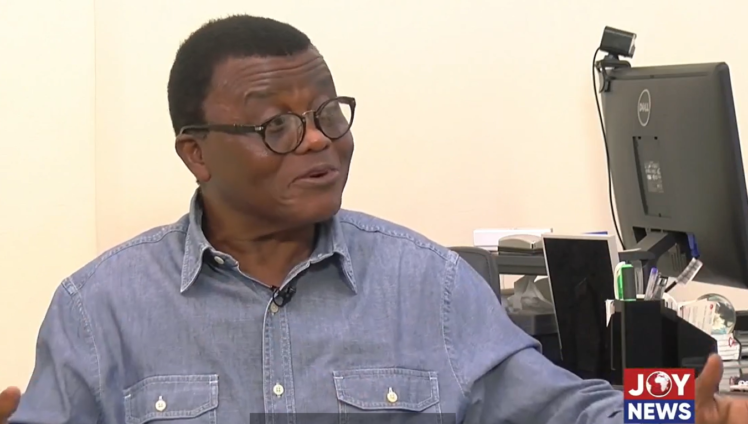
Former UN Senior Governance Advisor, Prof. Baffour Agyeman-Duah, has criticised suggestions that government should disregard petitions presented by demonstrators, describing petitions as an important pillar of democratic governance.
His comments come after the Deputy Director of Operations at the Presidency, Mustapha Gbande, indicated that government would not pay attention to a petition submitted by the New Patriotic Party (NPP) following its demonstration against what it describes as politically motivated arrests of its members.
Speaking on Joy FM’s Top Story on Thursday, August 6, Prof. Agyeman-Duah said while demonstrations and the competing political narratives surrounding them are nothing new, dismissing petitions outright undermines democratic engagement.
"I think petitions are part of politics. Petitions are part of seeking resolution to conflicts. Petitions are part of addressing issues.
"So, if you make a blanket statement that the government is not going to look at it, then I think we need to reconsider that," he stated.
According to him, Ghana's Constitution guarantees the right to demonstrate, making public protests a legitimate means of expressing grievances and seeking redress from the state.
He observed that both the NPP and the governing National Democratic Congress (NDC) have reduced the ongoing debate over the arrest of opposition figures to partisan politics, even though the issues raise legitimate governance concerns.
Prof. Agyeman-Duah acknowledged concerns over freedom of expression and complaints about high bail conditions imposed on some suspects, saying such matters deserve attention.
At the same time, he stressed that politicians should not be shielded from accountability simply because they belong to a political party.
"If there's a real case of corruption or stealing of state resources, and there's evidence for that, the proper thing is to secure the arrest, follow the necessary protocols, allow the person to be tried and let judgment be given," he said.
He criticised what he described as the tendency of both the NPP and NDC to treat every legal action against one of their members as an attack on the entire party.
According to him, this approach clouds public understanding of criminal proceedings and weakens efforts to hold public officials accountable.
"Politicians are somehow creating the impression that they do no evil, which is not true," he said.
Latest Stories
-
GRA blames system failure for delay in issuing receipt over passenger’s customs duty
18 minutes -
Livestream: Newsfile discusses World Cup visa scandal, beach demolitions, education strikes, BRICS bid
22 minutes -
NC-PTAs welcomes end of teachers’ strike, urges parents to prepare children for Monday
32 minutes -
Government procures over 2,000 transformers as Ghana’s electricity access hits 89.13% – Energy Minister
58 minutes -
UTAG-UG threatens strike on October 19 over unpaid allowance
1 hour -
Let The Constitution direct Chieftaincy to deliver “All Development Is Local”
2 hours -
John Jinapor outlines renewable energy, nuclear power priorities for 2027
3 hours -
Ghana explores centre of excellence for hearing, communication and cochlear implant care
4 hours -
Schizophrenia-related disorders lead mental health cases recorded in Ghana
4 hours -
Dutch authorities enlist Ghana in hunt for fugitive drug lord Bolle Jos
4 hours -
Ghana housing finance conference adopts communiqué to improve affordable housing access
9 hours -
Special Initiatives Minister urges Wa Technical Institute to enrol more girls as EU-backed solar training lab opens
9 hours -
In the matter of my first year at the Bar
9 hours -
ActionAid Ghana calls for an end to child marriage, greater investment in girls’ rights
10 hours -
Newsfile to tackle World Cup visa scandal, beach demolitions, education strikes, BRICS bid
10 hours