

Audio By Carbonatix
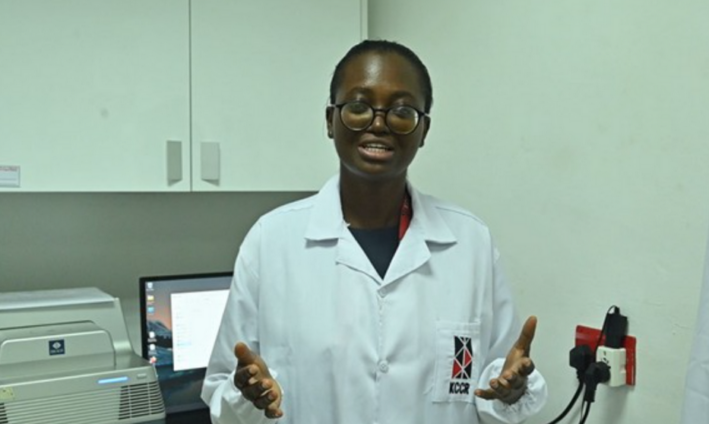
When a critically ill patient fails to respond to treatment, doctors often turn to their last resort drugs, one of which is carbapenem. However, this fallback is becoming less reliable for Senam Ahadzie, a researcher at the Kumasi Centre for Collaborative Research in Tropical Medicine (KCCR).
Her recent study revealed that one in ten Enterobacterales bacteria in her sample showed resistance to carbapenems
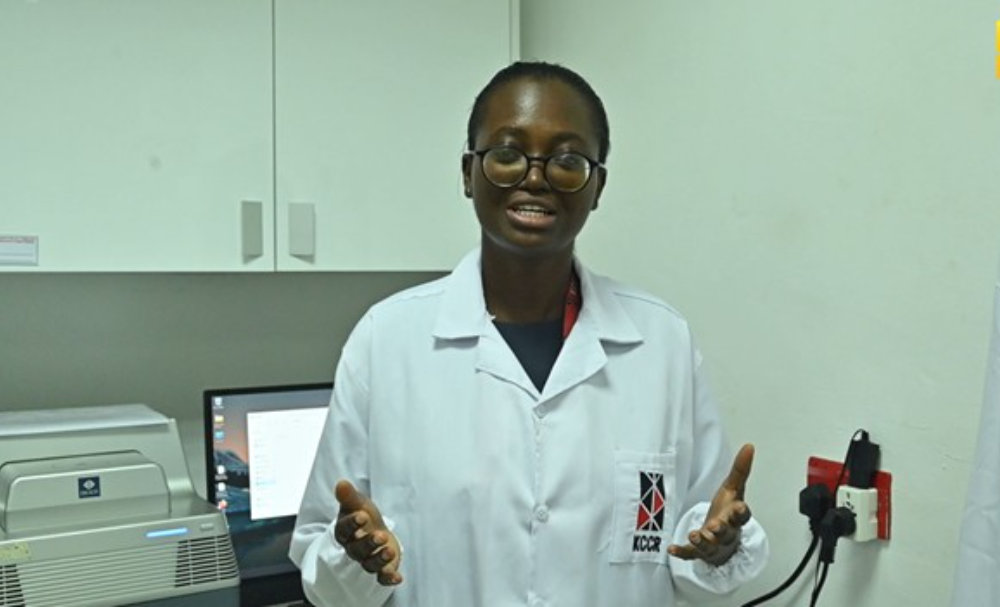
Senam is a Research Assistant with the Global Health and Infectious Diseases Group at KCCR, where she works as a Clinical Microbiologist. Her interest began with a simple fascination. “I’m intrigued by microorganisms,” she said. “It’s interesting how they cannot be seen but their impact can be seen and felt around us.”
With support from her masters’ supervisor, Senam focused her research on a group of bacteria known as Enterobacterales. Enterobacterales are a group of bacteria that mostly live in the gut. Some are harmless and help us digest food, but others can cause infections, especially when they get into places they shouldn't, like the blood or bladder.
Between January and August 2021, Senam collected and studied 139 bacteria samples from a hospital in Kumasi. Out of these, 14 were found to be resistant to carbapenems. This means about 1 in every 10 samples (10.1%) could survive even the strongest antibiotics.
Her study also found that many of the bacteria were no longer responding to other commonly used antibiotics like cefotaxime (84.2% resistance), cefuroxime (83.5%), and ciprofloxacin (71.2%). However, one drug, amikacin, still worked against most of them, with only 7.9% resistance.
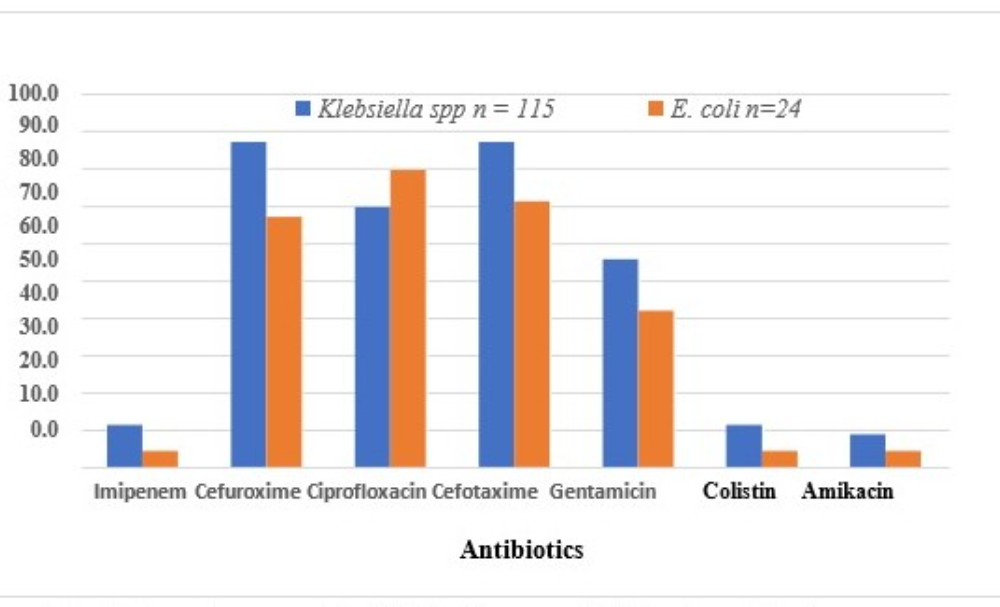
Nearly half of the bacteria samples could resist more than one type of antibiotic, and 13 of the 14 carbapenem-resistant samples could resist multiple drugs.
Senam also used real-time polymerase chain reaction (PCR), a method used to make many copies of a small piece of DNA, so it can be studied more closely. She found that all the resistant bacteria shared one thing: the blaNDM-1 gene, which helps them survive strong antibiotics.
Senam’s findings echo the need for stronger measures to control antibiotic use.
“If we do not act now, resistance to carbapenems will increase, and our options for treating serious infections will shrink,” she warned.
The path to completing her research wasn’t smooth. The COVID-19 pandemic delayed ethical approvals, and the high cost of molecular testing added pressure. However, with her institution's support, she was ankle to complete the work.
Senam hopes her research will lead to more awareness, better regulation of antibiotic use, and stronger surveillance systems. Her goal is to make the issue of resistance clearer to the public and to help shape policies that can slow its spread.
To those starting out in research, she offers this advice: “No matter how motivated or capable you are, challenges will come. A support system and your willingness to ask for help make all the difference.”
Latest Stories
-
GIADEC CEO rebuts VALCO union’s privatisation claims, insists investor partnership is national interest policy
1 minute -
Traders protest high shop fees at Santasi Market, call for government intervention
13 minutes -
Cassona supports Muslim communities across Ghana ahead of Ramadan
19 minutes -
Enterprise Insurance, MoMAG renew partnership to boost financial inclusion and insurance access
20 minutes -
Unemployed teachers picket GES over delayed payments, staff IDs
33 minutes -
UG emerges highest-ranked university in Ghana and Sub-Saharan Africa
33 minutes -
Authorities take steps to avert future looting of Mampong Cemetery
38 minutes -
Ahafo-Ano Premier Rural Bank commissions six boreholes to address water crisis in local communities
41 minutes -
NPP releases nationwide reorganisation schedule from March to September 2026
42 minutes -
Mother, 2 sons die in violent family feud at Barekese-Achiase
58 minutes -
GES faces criticism over missing documents and payroll delays for recruited teachers
60 minutes -
Baby stolen from Mamprobi Polyclinic recovered; suspect arrested
1 hour -
Caffeinated coffee and tea could help protect you against dementia. Even a few daily cups
2 hours -
Former US NPP coordinator Alhaji Ali Suraj declares for National Nasara organizer
2 hours -
Peasant Farmers Association calls for food self-sufficiency after traders killed in Burkina Faso
2 hours