

Audio By Carbonatix
By the time the waves retreat, there is little left to save in Salakope and nearby coastal communities in Ketu South. Homes have fallen. Canoes lie broken. Families are scattered. What remains is fear, hunger, and a growing sense that the sea is slowly pushing people away from the land they were born on.
For Ruben Ativi Batizu, a 33-year-old fisherman, the sea is the only classroom he has ever known.
“I did not continue my education, so I work on the sea,” he says quietly.
But even that work is no longer certain. For years, tidal waves have pounded the shoreline, destroying homes and cutting off livelihoods. When the waves grew stronger, fishing from Salakope became impossible.

“When the tidal waves hit our shore, all the canoes on our side could no longer go to sea,” Ruben explains. “So we moved to Adina to join others to fish.”
Fishing is the only source of income for the youth in the community. Now, they must travel to neighbouring towns just to earn a little money.
“This is our main problem,” Ruben says. “I even built a temporary structure to live in, but the sea destroyed it.”
Not far away, Nyegbe Galley sits with a child on her lap. The ground beneath her is damp. She says even this spot is not safe.
“The sea has caused us so much suffering,” she says. “Sometimes, when we are cooking, the sea splashes into the fire and puts it out.”
Mats and clothes are often soaked with seawater. Each morning begins with drying what could not be saved the night before.
This process is known as coastal erosion — where waves, currents, and rising sea levels gradually remove land. In West Africa, erosion rates are among the fastest in the world.
“Our mats and clothes get wet, and we dry them the next day,” she explains. “We have been through a lot.”
Nyegbe once sold porridge to support her family. She borrowed money to start the business, but the sea swept everything away.
“Now I owe people, and they refuse to lend to me again,” she says. “Most times, we do not even have money to buy food. We go hungry.”
Her most urgent need is shelter.
“Where we live now, we share the place with rodents,” Nyegbe adds, lifting her hand. “A mouse even bit the back of my hand. Sometimes, all I can do is cry.”
SLEEPING IN A CHURCH
For Akweley Sabutey, displacement has become a way of life. She now sleeps in a church with her grandchildren.
“This is where I was born, in Salakope,” she says. “My father’s house has now been taken by the sea.”
After the waves destroyed her family's home, they moved to her grandfather’s house. That building also collapsed. From there, they moved again, and again.
“I noticed the foundation of the next building was also being eaten away by the sea,” Akweley recalls. “So my children moved my things to Denu.”
Later, officials from the National Disaster Management Organisation (NADMO) asked them to move to a safer place—the church premises.
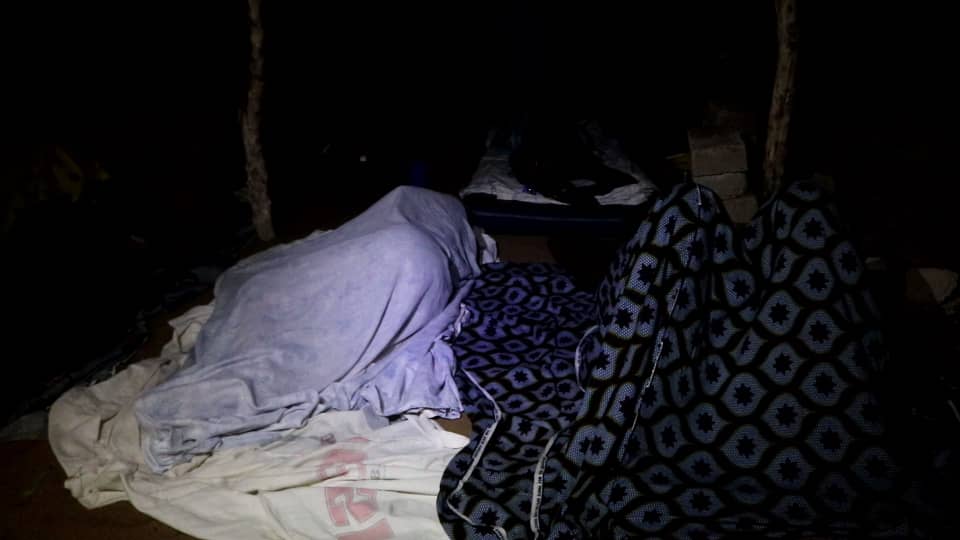
“I now live in the church with two of my grandchildren,” she says. “When relatives visit, we all sleep there.”
Every Sunday, she packs her belongings out before church service and brings them back after. On weekdays, she shifts her things aside during prayer meetings, then returns to sleep.
“This is where I worship,” Akweley says. “The church is called Life in the Lord.”
Ill health has forced her to stop fish mongering. She now sells sachet water by the roadside, but business is slow because many people have left the area.
“Sometimes, I sell just two bags in a day,” she says.
Relief items come only once in a while, and her knee pain often prevents her from reaching distribution points on time.
“What I need most is food,” Akweley says. “My grandchildren also need to go back to school.”
A HOME SWALLOWED BY THE SEA
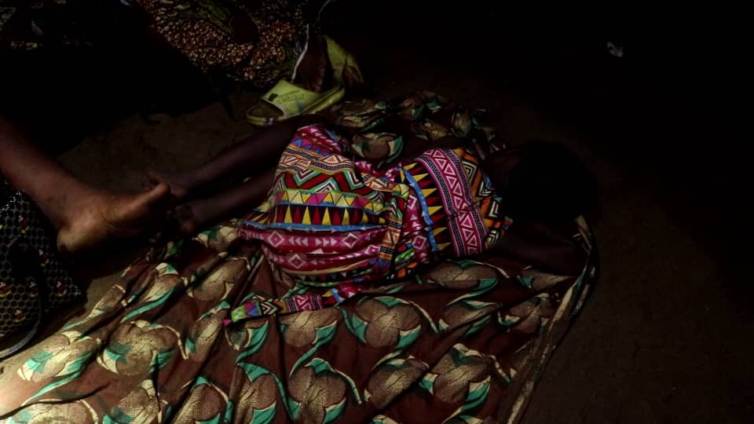
For Angelina Segbedzi Adade, even memories have lost their landmarks.
“Our house used to be close to the sea,” she says. “Now the place is inside the sea. I cannot even point to it.”
After the first destruction, her family relocated. Then the waves came again and washed everything away. She received a tent, but survival remains difficult.
Before the disaster, Angelina sold bofrot (buff loaves), investing 200 Ghana cedis and making a small profit. Today, the customers are gone.
“Many people have been displaced, so sales are no longer good,” she explains. “Sometimes, I spend both the capital and the profit before I finish selling.”
Her family is now scattered. Some children are in Abidjan. Others are in school in Keta. One child was sent away during exams because school fees were unpaid.
“I will be grateful if I get support to start trading again,” Angelina says. “That was how I took care of my home.”
Standing on the shoreline, Gideon Tettey, a unit committee member, gestures toward the open water.
Research shows that Ghana’s coastline is retreating by about two metres every year due to a combination of sea level rise, wave energy, and human activity.
“The community where I am standing used to be here,” he says. “Now it is about 500 metres into the sea.”
That lost land once held homes, event grounds, and even the community’s borehole.
“This was where our borehole water came from,” Gideon explains. “The same source supplied our piped water.”
The affected area had no school or clinic—only houses. Now, even those are gone.
FISHING STOPPED BY FEAR
At the centre of the crisis is Togbe Emmanuel Anumu Tetteh, the Chief Fisherman of Salakope. He says the sea has been advancing for 15 years, but the last five have been the worst.
“The authorities have known about this for a long time,” he says. “They have seen it themselves.”
He explains that coastal protection work reached nearby communities but stopped before Salakope.
“That decision destroyed the entire community,” he says.
Fishing families now face deadly risks. Broken houses lie beneath the water, turning the sea into a trap.
Warmer ocean temperatures are also affecting fish populations. As waters heat up, many fish species move away or decline, making coastal livelihoods even more uncertain.
“If you send fishermen to the sea now, you are risking their lives,” Togbe warns. “They can hit their heads on debris and die.”
For safety reasons, he ordered all fishing to stop. Nets were withdrawn. Canoes and outboard motors were destroyed during the worst waves.
“My own canoe is here, about 20 metres away,” he says, pointing to the wreckage. “We cannot use them again.”
Once, 72 people worked under his fishing business, many of them women supporting families. Today, they are scattered across different towns, struggling to survive.
Despite everything, the community is not only asking for relief—they are calling for protection.
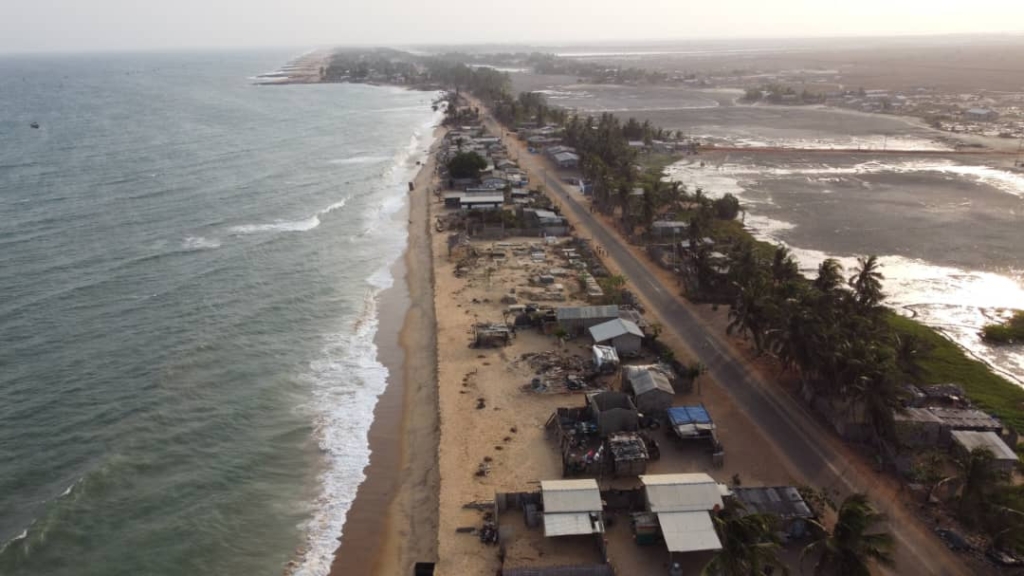
“What we are advising the government to do is to dredge the area,” Togbe says. “If the front of the sea is dredged, it will lose its strength.”
He believes dredging the shoreline will allow fishing to return and stop the forced migration, tearing families apart.
“I was born into fishing,” he says. “Even last night, I dreamt my nets caught a lot of fish.”
Agavedzi, Salakope and Amutsinu are among the hardest-hit communities in Ketu South.
Tidal waves have swept away homes, displaced families, and pushed seawater and sand—up to 12 centimetres deep—onto the main road. Schools, clinics and public facilities now stand at the edge of collapse.
Over 300 people have been displaced this year alone, 51 households destroyed, and 800 metres of coastal land washed away.
Salakope is not alone.
Scientists explain that coastal communities like Salakope are experiencing “relative sea level rise,” caused by global warming. As ocean temperatures increase, seawater expands, and melting ice from glaciers adds more water to the oceans — pushing the sea further inland.
Across Ghana’s south-eastern coast—including Dzita, Keta, Horve, Blekusu and Adina—sudden and powerful waves have destroyed more than 10,000 structures, including homes, schools and churches. Livestock, fishing gear and small businesses have also been lost, often overnight.
Ghana’s coastline is shrinking rapidly. Experts say the sea moves inland by about two metres every year. In Fuveme, about 37 percent of coastal land was lost between 2005 and 2017 due to flooding and erosion, according to a University of Ghana coastal scientist writing for UNESCO.
Research shows that changing weather patterns are a major driver. Rising sea levels, stronger storms and shifting winds are making waves more violent and frequent. Human activity has worsened the damage.
In the past, thick coastal forests protected Ghana’s shoreline. Over the years, sand mining, deforestation, mineral extraction and unplanned construction removed these natural barriers. As a result, places like Salakope are sinking—slowly but steadily.
Ghana has tried to fight the sea before. The Keta Sea Defence Project, built between 1999 and 2000 for US$100 million, protected parts of the Volta coast. However, experts say it also accelerated erosion eastward, resulting in more than a 50 per cent increase in damage near the Ghana–Togo border.
Environmentalist Joel Degue explains: “When you block the waves in one place, they hit harder somewhere else.”
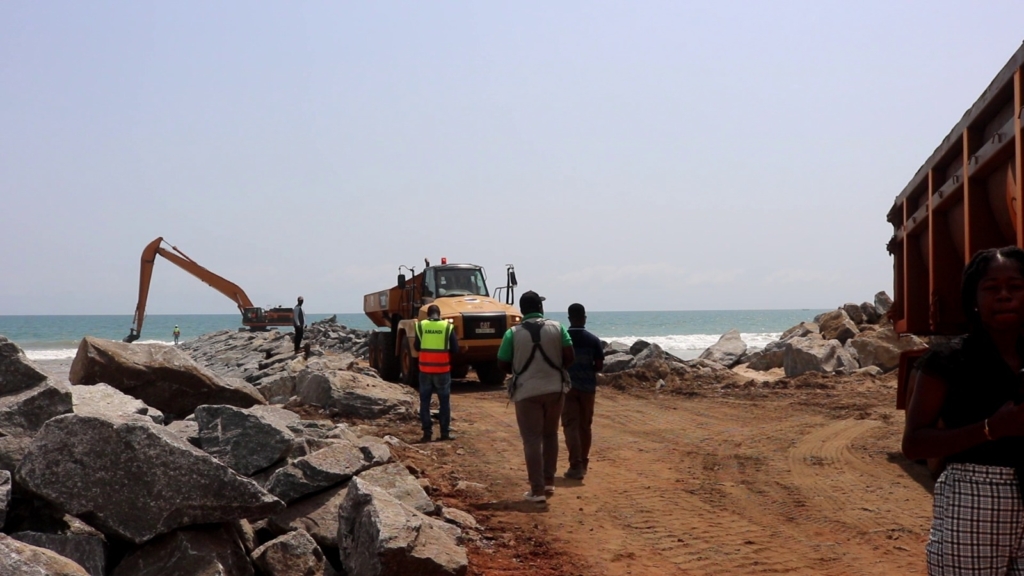
The West Africa Coastal Areas Management Program (WACA), of which Ghana is a part, estimates that US$1.14 billion would be needed to fully protect the country’s most vulnerable coastal communities.
Experts warn that relying solely on sea walls is not sustainable.
“We should work with nature, not fight it,” says Bright Mawunyo Adzagba, founder of the Keta Ramsar Centre. “Dredging, tree planting and wetland protection can weaken wave energy and restore fish livelihoods.”
A LAST CHANCE TO STAY
In Ketu South, hope has returned—cautiously.
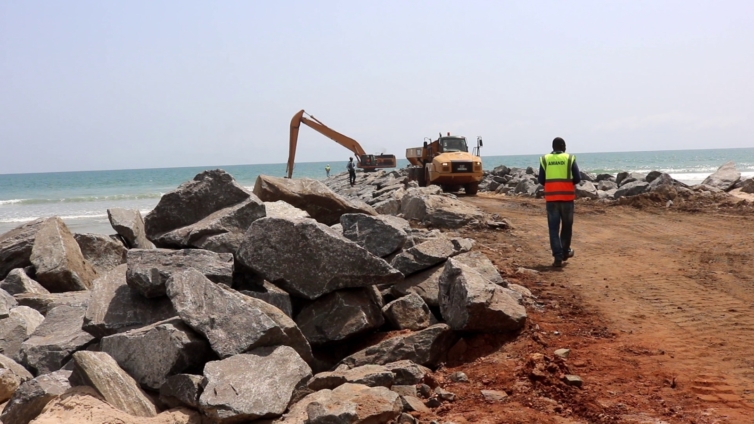
In July 2025, Phase II of the Blekusu Coastal Protection Project finally began. The four-year project will protect eight kilometres of coastline, covering Blekusu, Agavedzi, Salakope, Amutsinu and Adina.
President John Dramani Mahama, who launched the project, promised funding and support.
“This project is about restoring dignity and keeping families in their homes,” Works and Housing Minister Kenneth Gilbert Adjei said.
The project includes erosion control structures, dune restoration, shoreline stabilisation, a fish market, cold storage and processing facilities, a lorry park, public toilets and a solid waste disposal system.
“These facilities will help promote economic growth, sanitation and social protection within the beneficiary communities,” he added.
Phase I, completed in 2015, protected 4.3 kilometres of coastline. Phase II—stalled after 2017—will now protect an additional eight kilometres.
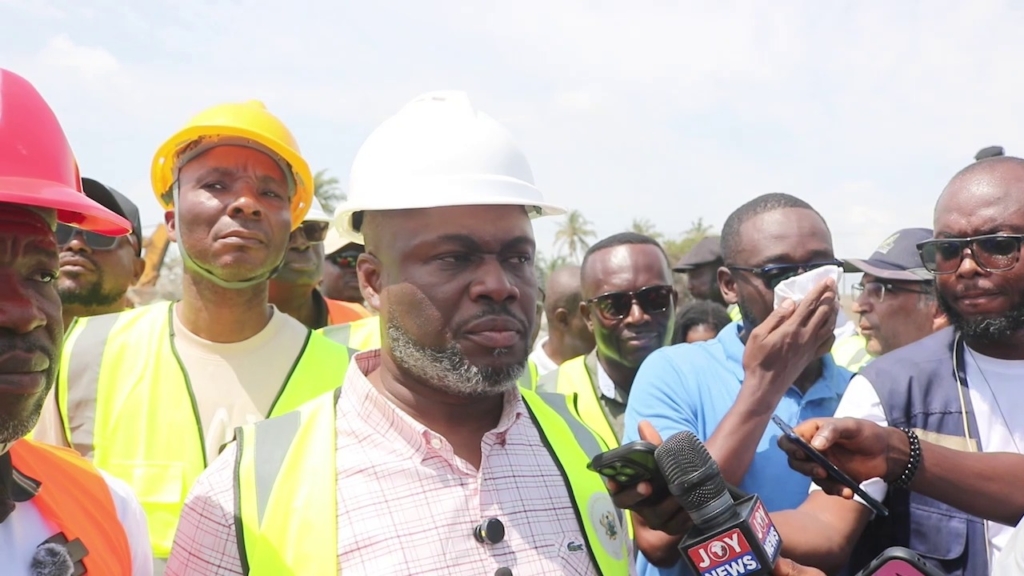
Government has secured an 83-million-dollar loan to support the work. The WACA Programme will further extend protection from Blekusu to Aflao.
However, residents remain afraid of delays. Local authorities fear the next disaster could trigger the largest internal migration the municipality has ever seen.
As of 2018, nearly half of the world’s population lived close to a shoreline. Scientists warn that by 2100, hundreds of millions could lose their homes to rising seas.
For the people of Salakope, Amutsinu and neighbouring communities, this future is already here. They are only asking for the chance to stay, fish, work and live safely on the land they call home.
Without protection, the sea will decide for them. And once again, it will not ask for permission.
This is a JoyNews-CDKN-University of Ghana C3SS project, funded by the CLARE R4I Opportunities Fund.
Latest Stories
-
Brandon Asante and Coventry all but promoted to Premier League despite Sheffield Wednesday draw
10 minutes -
GPL 2025/26: Late Kwartemaa strike downs Hearts in Tema
16 minutes -
Ghana Faces Sierra Leone Moment as Prosecutorial Powers come under strain
26 minutes -
Don’t consume fish or seafood from Tema Shipyard until further notice – FDA warns
31 minutes -
Why volunteering might be Africa’s most underrated career accelerator
37 minutes -
ActionAid Ghana raises concern over gender gaps in Feed Ghana Programme
39 minutes -
Windstorm wreaks havoc in Gushegu, displacing nearly 2,000 residents and damaging schools
42 minutes -
Friends of Bridget Bonnie Marks her 35th birthday with donation to Kasseh Model Health Centre
1 hour -
From Ekumfi Kokodo to the Pulpit Stage: Essi Donkor’s gospel journey takes shape
2 hours -
Landfilling waste management creates no value, it’s an economic waste
2 hours -
Photos: Speaker Bagbin Commissions MPs constituency office under parliamentary decentralisation programme
2 hours -
Black Stars technical advisor Winfried Schäfer sacked as GFA shakes up backroom staff
2 hours -
Wenchi water project almost complete, critical to gov’t agenda – GWL MD
3 hours -
Anti-LGBTQ+ bill not part of government’s legislative agenda – Inusah Fuseini
3 hours -
Anti-LGBTQ Bill: Forget the rumour mongers, I’m a man of action, and will pass the bill – Speaker
3 hours