

Audio By Carbonatix
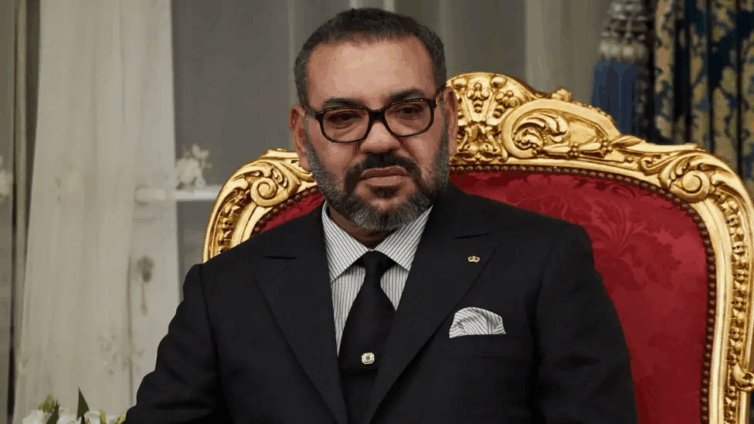
Morocco's King Mohammed VI chaired a Council of Ministers at the Royal Palace in Rabat on Sunday.
The session focused on the 2026 Finance Bill, key legislative reforms, military decrees, international cooperation agreements, and several high-level appointments.
The Minister of Economy and Finance presented the main outlines of the 2026 Finance Bill, developed under the High Royal Instructions and guided by the King’s recent Throne Day and legislative opening speeches.
Despite global uncertainty, Morocco’s economy is projected to grow by 4.8%, with inflation contained at 1.1% and the budget deficit expected to fall to 3.5% of GDP.
The new Finance Bill is anchored on four strategic priorities: economic consolidation and investment mobilisation, integrated local development, reinforcement of the social state, and continued structural and financial governance reforms.
The Council also approved four draft organic laws. These include an electoral reform bill that bars individuals with criminal convictions from parliamentary candidacy, provides 75% campaign cost reimbursement for youth under 35, and reserves regional seats for women.
A political party reform bill was endorsed to modernise governance and promote transparency, while the constitutionality challenge law empowers courts to refer unconstitutional laws to the Constitutional Court.
A separate reform will streamline appeal procedures and limit replacement terms for Constitutional Court members.
Two draft decrees concerning the military were approved. One establishes a special status for civil servants within the National Defence Administration’s Directorate of Information Systems Security, enabling flexible recruitment and performance-based incentives.
The other aligns the Royal School of Military Health Service with national health reforms and creates a Scientific Research Council to guide and coordinate research priorities.
To strengthen Morocco’s international partnerships, the Council approved 14 cooperation agreements — ten bilateral and four multilateral — aimed at consolidating the Kingdom’s global and continental presence.
Under Article 49 of the Constitution and upon the proposal of the Head of Government, the King also made several appointments, including new Walis and Governors within the Territorial Administration.
King Mohammed VI further appointed Tarik Senhaji as President of the Moroccan Capital Market Authority.
Latest Stories
-
We spoke to the man making viral Lego-style AI videos for Iran. Experts say it’s powerful propaganda
2 minutes -
Hungarians vote in big numbers on whether to end Orbán rule and elect rival
2 minutes -
At least 30 feared dead in crush at Haitian tourist site
3 minutes -
Boxing: Abdul Ahmed wins WBA Africa Cruiserwight title after dispatching Nigeria’s Eradeye
16 minutes -
Nearly 2,000 displaced, schools damaged as windstorm wreaks havoc in Gushegu
35 minutes -
Ghana’s Derrick Kohn to work under Marie-Louise Eta as she becomes first woman to coach men’s Bundesliga team
39 minutes -
Accra Open Championships conclude with strong performances ahead of African Championships
47 minutes -
Ghana to begin camping with 12 athletes after Accra Open Championships – Bawa Fuseni
1 hour -
Anthony Joshua declines showdown with Tyson Fury but admits they ‘probably’ clash next
1 hour -
Tyson Fury dominates Makhmudov, calls out Joshua next
2 hours -
I have supported highway authority financially to fix roads in my constituency – A Plus
3 hours -
US, Iran fail to reach peace agreement after marathon talks in Pakistan
3 hours -
ECG kicks off Phase Two of transformer upgrades at Lashibi; brief outages expected
4 hours -
Port crises loom as 11,000 drivers threaten four-day strike
5 hours -
A source of excellence across generations – Vice President Opoku-Agyemang lauds Mfantsipim
5 hours