

Audio By Carbonatix
Scientific discoveries and research outcomes with the potential to impact society often do not get to the public space due to a hitch in communication between researchers and the consuming public.
Scientists and researchers in most African countries, including Ghana, are faced with the challenge of communicating their findings for public consumption.
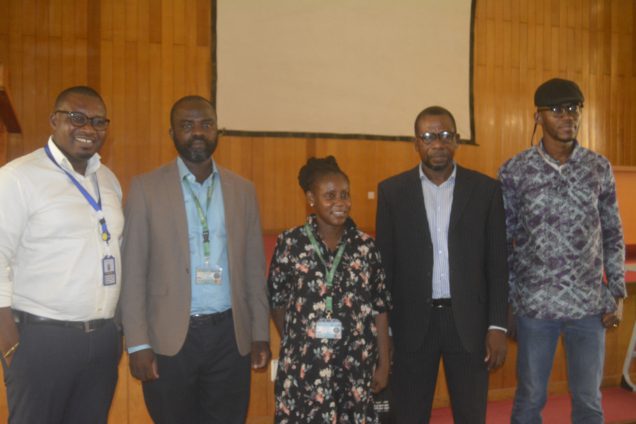
To reverse the trend, the Faculty of Mechanical and Chemical Engineering at the Kwame Nkrumah University of Science and Technology is empowering its lecturers with communications skills in disseminating research.
The Research Communications seminar is aimed at building the capacity of researchers to better communicate their findings to the public.
Dean of the faculty of Mechanical and Chemical Engineering, Prof. George Yaw Obeng, acknowledged some scientists and students of science in Ghana lacked relevant skills and knowledge for effective communication.
“Do ordinary Ghanaians benefit from our research findings? Are our students well trained for interviews? Are our researches visible and accessible to Ghanaians? Sadly, we are not sure our answer is simply yes or no,” Prof. Obeng said.
Professor Obeng indicated “having the skills to communicate research in an effective manner will have a positive impact on both the researchers and the public”.
He is confident the acquisition of effective communication skills would enable researchers to ultimately impact society.
Scientists and researchers in most African countries, including Ghana, are faced with the challenge of communicating their findings for public consumption.
The researchers were equipped with skills in writing for broadcasts, preparing for interviews, media visibility, and importantly how to disseminate their research findings.
Resource persons from the Kumasi unit of The Multimedia Group, Kofi Adu Domfeh and Kwasi Debrah, took participants through practical skills in effective research communication.
Associate Professor at the KNUST’s Brew-Hammond Energy Centre, Professor Francis Kemausuor, acknowledged the training would help scientists to stay relevant in both the public and scientific spaces.
“KNUST as an institution is striving to be one of the best in Africa, this means we researchers must be visible to project the school.
“This exercise is very helpful to us as an institution to help make researchers in the school more visible in both public and scientific spaces.
“Media visibility also promotes the school to be ranked as the best globally,” he said.
Latest Stories
-
Demand and savings deposits decreased in August 2026, but currency outside banks increased by 4%
1 minute -
Fiscal policy implementation poses downside risk to inflation – BoG
35 minutes -
Organised Labour should seek fair adjustment, not excessive pay rise – Labour consultant
39 minutes -
BoG maintains medium-term inflation target of 8 ± 2%
46 minutes -
Sammi Awuku urges NPP Germany to unite ahead of 2028 elections
1 hour -
The Inconvenient Truth: We cannot pray for the cure while protecting the disease
2 hours -
MTN Ghana trains civil society organisations on artificial intelligence
3 hours -
GoldBod FX framework aims to make dollar supply predictable – Acheampong
3 hours -
How does a Ghanaian team make it to the BAL?
3 hours -
Ghana’s investment climate presents opportunities for industrial growth and job creation.
3 hours -
‘I paid thousands to a company for jobs that never came’
4 hours -
SSNIT intensifies informal sector enrolment drive with Techiman float
4 hours -
Ghana seeks long-term mining investments that benefit local communities – Armah-Kofi Buah
4 hours -
GHATOF demands compensation for 85 businesses affected by La Pleasure Beach demolition
4 hours -
Bono Regional Minister calls for investor education to drive economic growth
4 hours