

Audio By Carbonatix
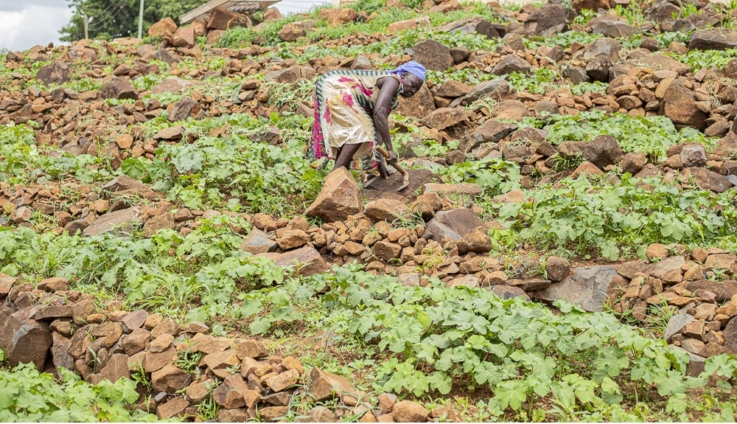
The Trans-Sahara Project has officially begun with a reconnaissance visit to Bolgatanga, Tamale and surrounding communities in Ghana’s Northern region.
The purpose of the visit was to explore the suitability of selected communities for integrated interventions, assess existing local efforts that the project can build on, and identify environmental, social, and institutional conditions that may affect implementation.
Speaking during the visit, Dr. Joana Ameyaw, Deputy Lead of the project and team leader for the reconnaissance mission, highlighted the importance of this first step.
“This visit is very important to the project because it opens our eyes to the situation we have on the ground. We need an entry point into the community so that the project can continue even after it is completed. For this, we need to familiarize ourselves with the stakeholders and the people who are already working on similar projects,” she said.
She also mentioned that “the findings will help guide detailed planning and design and shape pilot activities that aim to improve farming, water use, and energy access in the region,” she said.
The project focuses on developing innovative methods for establishing an agroforestry plot referred to as a living lab. This plot will serve as a demonstration site for testing and promoting sustainable practices in land use, water management, and renewable energy.
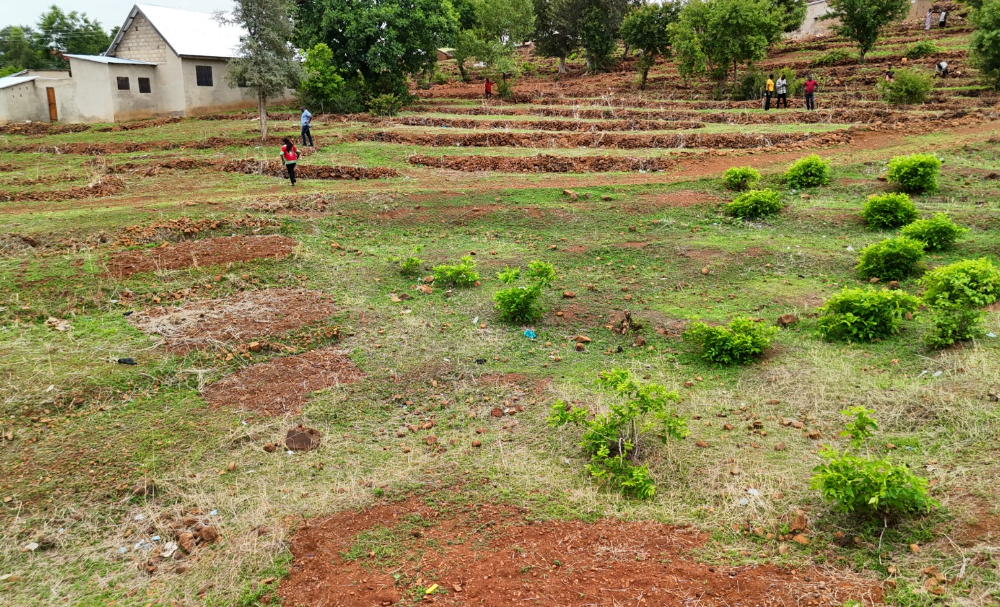
Project implementing partner and founder of the Forum for Natural Regeneration, Mr. Saaka Sumaila Seidu, explained why these communities were selected for the project’s living lab.
“The choice of the communities toured was based on several factors, including the nature of the landscape, the eagerness of the people to adopt agroforestry practices, and other local conditions. The three communities each have unique landscapes that make them strong candidates for the establishment of the living lab, where sustainable farming and land management techniques can be tested and scaled,” he said.
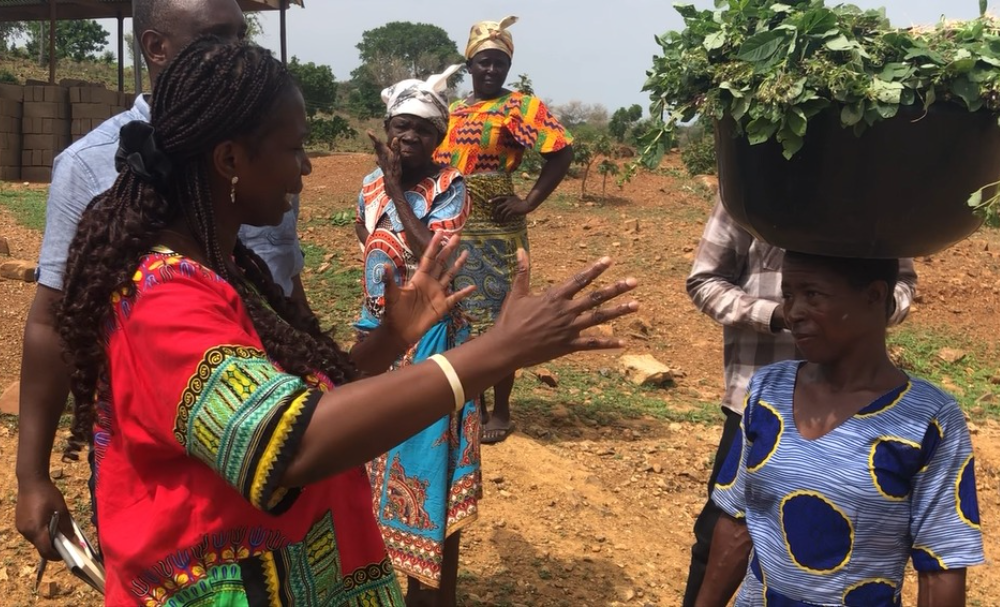
He also spoke on the contributions that the project is likely to make in the lives of the farmers.
“The Trans Sahara project if undertaken in this side of the Northern Region will make a lot of impact on the lives of the people. It will solve the water problems that the people in the communities have and ensure that farming is no longer seasonal hence farmers can plant all through the year because of water. This in turn will improve food security and the standard of living of the community members,” he said.
Students from C.K. Tendam University of Technology and Applied Science, University for Development Studies (UDS), and the Kwame Nkrumah University of Science and Technology (KNUST) will collaborate with the local community to improve the standard of living of its members through research and practical interventions.
The Trans- Sahara project is a consortium led by the Technische Universität München (TUM) under the leadership of Dr. Daphne Gondhalekar and funded by the European Union under the Horizon Europe Framework Programme which aims to advance agroforestry management in the Greater Northern African Region through a Water-Energy-Food Ecosystem (WEFE) Nexus-based approach.
In Ghana, the project is implemented by the Kwame Nkrumah University of Science and Technology (KNUST) through the Technology Consultancy Centre (TCC) under the leadership of the Director General, Prof. Francis Davis.
Principal Investigator, Dr. Ing. Alexander Boakye Marful, emphasized that the initiative represents a strategic response to the interconnected environmental, socio-economic, and climatic challenges facing Africa’s arid and semi-arid regions, highlighting KNUST’s strong commitment to community development.
The project is expected to run for three years, giving enough time to test, refine, and scale up the proposed solutions for sustainable farming and land management.
Latest Stories
-
Drug bust: Genuine Ghanaian exporters may face heightened foreign inspections – Lawyer
10 seconds -
Drug cartels may be seeing Ghana as easy route – Lenin Anane Agyei
36 minutes -
Ghana risks gaining notoriety as drug-trafficking hub – Bobby Banson
45 minutes -
Government dismissed my drug trafficking warning, then tried to arrest me – Ntim Fordjour
47 minutes -
Day Two: 3rd Republic Bank-JoyNews Habitat Fair Clinic underway at Junction Mall
47 minutes -
NACOC addressing inherited gaps in fight against drug trafficking – Deputy Director-General
60 minutes -
Taekwondo goes to school as GTF launches five-region youth campaign
1 hour -
The issues Mourinho is struggling to fix at Real Madrid
1 hour -
Hundreds throng EducationUSA College Fair in Kumasi in pursuit of abroad studies
1 hour -
Drug bust: NACOC should be part of port inspection team – Twum-Barimah
1 hour -
Ward appointed Liverpool’s sporting director
1 hour -
This isn’t the first cocaine bust; NPP must stop the politicisation – NACOC deputy boss
1 hour -
Drug bust case: Only Customs officers, MPS officials in scanning room – NACOC
2 hours -
I don’t mind being insulted; I have a crocodile skin – President Mahama
3 hours -
Samson’s Take: Verify the badge – and verify the story
3 hours