

Audio By Carbonatix
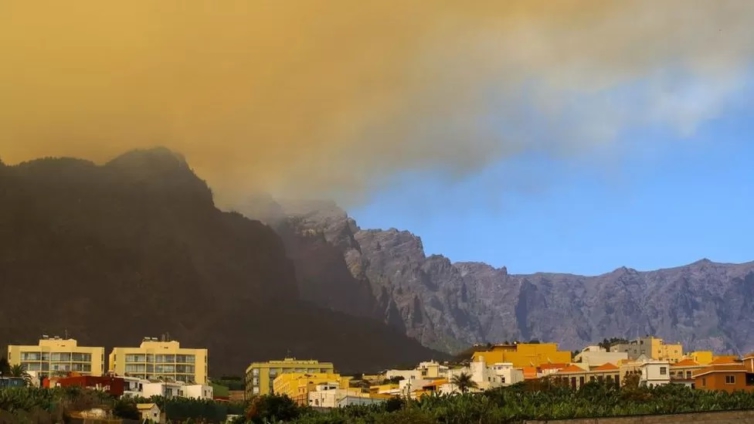
Thousands of residents of La Palma in the Canary Islands have been urged to leave their homes as emergency workers try to bring a wildfire under control.
The blaze began early on Saturday and has already consumed 4,500 hectares (11,100 acres) of land and at least a dozen homes.
Around 400 troops from various agencies are on the ground tackling the blaze.
Officials said some 4,255 people had been evacuated but that others were declining to leave.

It comes less than two years after a volcano erupted on the island, destroying thousands of homes.
President of the Canary Islands regional government, Fernando Clavijo, said there was "resistance to abandoning the houses" but that the priority had to be saving lives.
"People come first, then the houses, and then [extinguishing the fire]," he said.
The blaze began in the area of El Pinar in the north-western municipality of Puntagorda, before spreading south towards the town of Tijarafe.
Mr Clavijo attributed its quick spread to "the wind, the climate conditions as well as the heatwave that we are living through."
Late on Saturday, he said its progress had slowed but that it remained out of control.
A seaplane was used to tackle the fire before nightfall. A second will join the operation on Sunday, local media have reported.
The Spanish army has deployed 150 of its firefighters and a further unit is expected to follow. The Red Cross has also set up a facility to assist evacuees.
Writing on Twitter, Spanish president Pedro Sánchez said he had spoken to Mr Clavijo to convey his "solidarity with the people affected" by the fire and put "all the necessary means" at the disposal of La Palma's authorities.
Speaking to the BBC World Service, resident Leon Barreto expressed a reluctance to evacuate.
"The civil guard comes here and wants to force you to leave your home," he said.
"They want to force you to lose everything you have worked for all your life, and to leave and let it burn because it's protocol. But then they don`t have the protocol to act the way they should act."
The fire comes amid a heatwave that has brought soaring temperatures to much of southern Europe and which is expected to continue into the coming week.
Periods of intense heat occur within natural weather patterns, but globally they are becoming more frequent, more intense, and are lasting longer due to global warming.
Latest Stories
-
NPP behind every monumental agenda in Ghana – Miracles Aboagye
7 minutes -
Ho Airport not a misplaced priority — GACL Board Chair
9 minutes -
Nationwide sensitisation of haulage truck drivers ahead of Axle Load Enforcement
9 minutes -
Vice President backs community tourism at Vodza Regatta 2026
12 minutes -
Tree Crops Development Authority says media reports on rubber exports are misleading, demands apology
20 minutes -
Kotoko suffer shock 2-1 defeat to Samartex in Kumasi
30 minutes -
Scrap sanitation levy amid fuel price hikes — Miracles Aboagye
30 minutes -
Rapper Offset injured in shooting near Florida casino, officials say
39 minutes -
Sporting CP vs Arsenal Champions League preview: Where to watch, predicted line-ups, form, coaches’ thoughts
53 minutes -
Real Madrid vs Bayern München Champions League preview: Where to watch, predicted line-ups, form, coaches’ thoughts
59 minutes -
CIB Ghana Post-MPC policy seminar urges action to turn macroeconomic stability into jobs
1 hour -
Maguire signs one-year contract at Man Utd
1 hour -
GACL chairman says airport levy to fund projects, completion targeted within 24 months
1 hour -
Sugar sacks now used to bag cocoa under Mahama government – Annoh-Dompreh raises concerns
1 hour -
President Mahama will sign LGBTQ Bill when it reaches him — NDC’s Wonder Madilo
1 hour