

Audio By Carbonatix
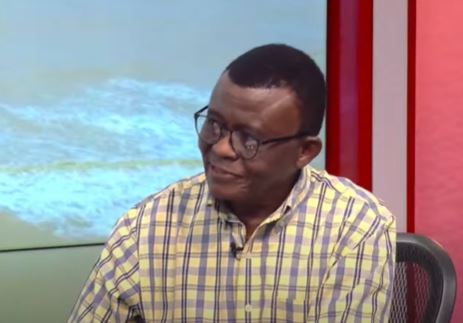
A former UN Senior Governance Advisor, Professor Baffour Agyeman-Duah, has expressed concern about the government’s perception of the illegal mining (galamsey) crisis in the country.
He pointed out that while the public and various organisations are making efforts to combat galamsey through public statements, the government's understanding of the crisis appears to differ significantly.
Speaking on UpFront on Wednesday, September 11, Prof Agyeman-Duah voiced his disappointment with the statement issued by the Ministry of Lands and Natural Resources regarding the galamsey menace.
According to him, the government's statement failed to convey the gravity of the situation and questioned whether government officials are aware of the pollution of river bodies and destruction of lands.
"I wonder if these people do drive on our ways and they are alerted and they see the river bodies over which we drive on the bridges.
“...So for the government to issue this statement is a non-starter in my humble view. The problem is huge and I think the government has been lacking the nerves to tackle it over the years to a point where it has completely gone out of control,” he said.
His comment follows the statement issued by the Lands Ministry on Wednesday, September 11, reiterating the government's commitment to promoting sustainable and legal mining practices in Ghana.
The ministry stressed that responsible mining remains a priority to protect the environment and ensure the well-being of communities impacted by mining activities.
The statement further noted that following a high-level meeting on Wednesday, stricter guidelines were issued to all Regional Ministers and their security councils to strengthen the fight against illegal mining.
In light of this, Prof Agyeman-Duah criticised the government's approach of fighting against galamsey by working through regional ministers as “useless.”
He argued that the country’s centralised governance system has been ineffective in resolving the crisis.
“We have a centralised government and it’s what the government or the president wants is what the ministers will do in the region. They represent the president, the same with the District Chief Executives and that tells you how this centralised governance system we have is failing us.
“Those in the districts and the regions are almost powerless in enforcing measures unless the national government takes the action so this statement that you just read, for me it’s a non-starter,” he said.
Latest Stories
-
Mustapha Abdul-Hamid declares bid for NPP National Vice Chairman
3 minutes -
NRSA boss defends planned closure of garages involved in illegal left-to-right steering conversions
8 minutes -
Invite more investors to explore Ghana’s oil and gas potentials – PIAC to gov’t
17 minutes -
Ghana, Egypt move to deepen cooperation in border security, counter-terrorism, cybersecurity
26 minutes -
Guggisberg Fiagbenu enters race for Central Tongu NPP Chairmanship in Volta region
40 minutes -
Today’s Front pages: Thursday, April 9, 2026
1 hour -
“Black Stars have what it takes to win the World Cup” – Sports Minister Kofi Adams
2 hours -
Bank of Ghana Governor to perform official tee-off at 3i Africa Invitational Tournament
2 hours -
Chamber of Bulk Oil Distributors urges caution amidst Special Prosecutor’s petroleum probe
2 hours -
NDC elections: Nat Tetteh eyes Eastern Regional Deputy Secretary position
2 hours -
Ablakwa highlights Ghana-France cooperation, praises Macron on reparatory justice
2 hours -
Protect people, not prices – Joe Jackson rejects fuel tax cuts and subsidies
3 hours -
Finance Ministry, BoG clarify false claims about Databank’s bond market specialist status
3 hours -
Lawyer petitions President to halt Terminal 2 refurbishment over value-for-money concerns
3 hours -
Sunyani Market traders urge government action amid surging ginger prices
3 hours