

Audio By Carbonatix
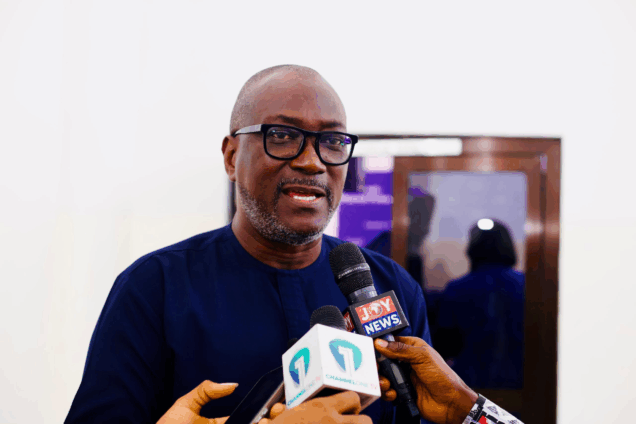
Chairman of the Constitution Review Committee, Prof Henry Kwasi Prempeh, says fears about young presidents are misplaced and should not stand in the way of democratic choice.
Speaking on Joy News, Prof Prempeh said Ghana’s own constitutional history shows that age limits have never been fixed or sacrosanct.
“The age issue is interesting. You look at our system demographically, we’ve had 35 years before in the 1960 Constitution, it was 35 years,” he said.
He pointed to parliamentary systems as the most useful comparison. “The most interesting comparison actually is with parliamentary systems,” he said.
According to him, those systems allow young people to exercise executive power once they meet basic parliamentary requirements.
“In parliamentary systems, anybody who can become an MP can become the Prime Minister,” he said.
Prof Prempeh recalled Ghana’s experience under the 1969 Constitution. “In 1969, the age was 21,” he said.
He noted that this allowed young leaders to hold high office. “President Kufuor was Deputy Foreign Minister at 20-something years,” he said.
He added that even though leaders were often older, the constitutional threshold was low. “Busia was above that age, but all he needed to be at that time was 21,” he said.
According to Prof Prempeh, Ghana has already lived under systems where very young people could exercise executive authority.
“We’ve had systems where effective executive power has been exercised by people who only had to be 21,” he said.
He stressed that lowering age barriers is about inclusion, not outcomes. “All we’re saying is that if you have a population that is largely youthful, you have to at least, even if it’s symbolic, signal that they are important,” he said.
Prof Prempeh rejected claims that this would automatically produce very young presidents. “It doesn’t mean that we are going to elect a 30-year-old to be president,” he said.
He said leadership choices would still depend on political parties and voters. “It depends if the party finds that this is the person we want to elect,” he said.
He also left room for independents. “Or if an independent candidate pops up at 30 who has accomplished and Ghanaians have trusted that person, why not?” he asked.
Prof Prempeh said democracy already has safeguards. “It takes at least, there’s a filter. There’s the election filter,” he said.
Ultimately, he said, the decision must rest with voters. “The citizens will make that decision,” Prof Prempeh said.
Latest Stories
-
Ghana to begin camping with 12 athletes after Accra Open Championships – Bawa Fuseni
3 minutes -
Anthony Joshua declines showdown with Tyson Fury but admits they ‘probably’ clash next
16 minutes -
Tyson Fury dominates Makhmudov, calls out Joshua next
35 minutes -
I have supported highway authority financially to fix roads in my constituency – A Plus
2 hours -
US, Iran fail to reach peace agreement after marathon talks in Pakistan
2 hours -
ECG kicks off Phase Two of transformer upgrades at Lashibi; brief outages expected
3 hours -
Port crises loom as 11,000 drivers threaten four-day strike
3 hours -
A source of excellence across generations – Vice President Opoku-Agyemang lauds Mfantsipim
4 hours -
(Photos) Mfantsipim School launches historic 150th anniversary
5 hours -
Knights and Ladies of Marshall group backs Catholic Bishops’ stance on anti-LGBTQ+
6 hours -
Bright Simons writes: All the Filla in the Ibrahim Mahama/E&P – Gold Fields Saga
6 hours -
Monetise Idiocy In Ghana
6 hours -
The Ghanaian prophet and the mysterious death of his scottish wife Charmain Speirs
7 hours -
Nearly 400 sentenced in Nigeria for links to militant Islamists
7 hours -
Ghana’s recovery supported by gold strength despite global oil price pressures – Standard Bank Research
7 hours