

Audio By Carbonatix
The Deputy Minister of Gender Children and Social Protection (MoGCSP) has urged stakeholders in the tourism industry to join hands with the Ministry to take collective actions to combat human trafficking and promote responsible tourism in Ghana.
Francisca Oteng-Mensah said, “It is imperative that we collectively work towards a brighter future for Ghana, where tourism flourishes alongside human rights and dignity.”
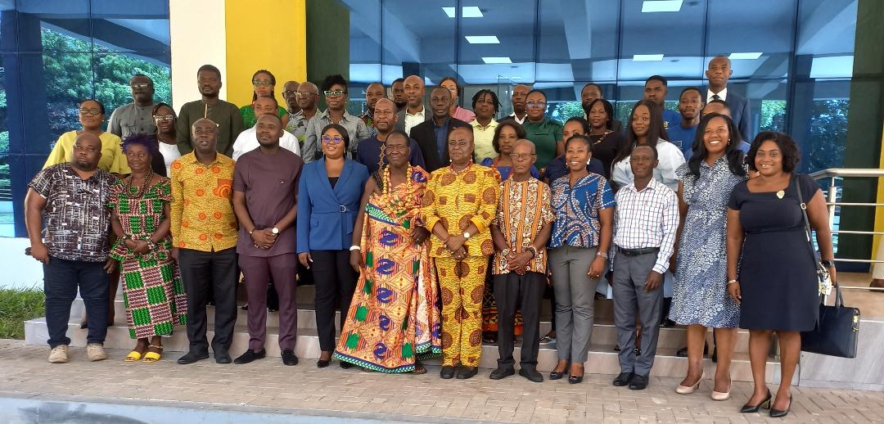
She made the call at the opening of a sensitisation programme to raise awareness on the dangers of human trafficking for travel and tour operators and tourism trade associations, organised by the MoGCSP in partnership with Expertise France Group AFD, on Tuesday, in Accra.
She said human trafficking was a modern-day form of slavery that violated human rights and exploited individuals for various purposes such as forced labour, sexual exploitation, and organ harvesting.
It is a global problem that affects millions of people, and Ghana is unfortunately not immune to this grave issue.
The Deputy Minister said tourism on the other hand was an important driver of economic growth in Ghana, the third-largest contributor to the GDP and a recipient of increasing levels of foreign investment each year.
She said tourism also had the potential to create jobs, promote cultural diversity, and foster social development, however, tourism could also have negative impacts on human trafficking if not regulated and monitored properly.
She noted that some of the risks associated with tourism and human trafficking include increased demand for sexual services and exploitation of vulnerable groups; use of children to work in chop bars, drinking spots and exposing them to the risk of sexual abuse and moral corruption.
"Child labour is where their school contact hours are affected and exploitation through servitudes in these areas. Also, some travel agencies and agents recruiting and facilitating the trafficking of our girls to the gulf countries.”
Mrs Oteng-Mensah said tourism could serve as a cover for traffickers to operate discreetly, targeting vulnerable individuals who were seeking better opportunities or falling prey to false promises.
“These victims are lured with the prospect of good jobs, education, or a chance to escape poverty. Tragically, they often find themselves trapped in a vicious cycle of exploitation, suffering unimaginable abuse and trauma.”
She noted that it was imperative to take collective action, raise awareness and educate each other about the signs and consequences of human trafficking.
“We need to report any suspicious activities or cases of human trafficking to the authorities, support victims and survivors and provide them with adequate care and assistance, advocate and support law enforcement agencies to punish human trafficking offenders and protect the rights of the victims.”
The Deputy Minister added that as stakeholders, they must collaborate with other stakeholders to coordinate efforts and share best practices to tackle the issue effectively.
“The tourism industry itself must take responsibility and adopt strict policies and codes of conduct to prevent the involvement of businesses in human trafficking. Hotels, travel agencies, and tour operators must implement stringent measures to ensure they are not unknowingly supporting this heinous crime. They should also train their staff to identify and report suspicious activities.”
Associate Prof. Eunice Fay Amissah, Department of Hospitality and Tourism Management, University of Cape Coast, said the relative anonymity, confidentiality and privacy in the tourism and hospitality industry allowed trafficking victims to slip by unnoticed in hotels and airports, while the use of unskilled labour created increased vulnerability for labour trafficking within the industry.
She said the tourism and travel industry has both direct and indirect connections with human trafficking, including sex, and labour trafficking.
Prof. Amissah noted that industry had a moral, ethical and social responsibility to counteract human trafficking.
“We must educate ourselves on the warning signs and red flags and be vigilant and report any suspicious activities to the appropriate authorities.”
“Human trafficking and tourism are two interconnected issues that we must address as a society, and we must join hands to fight and end it in all forms.”
Dr Afisah Zakariah, Chief Director for MoGCSP, said as a country known for its rich culture, history, and vibrant tourism sector, it is crucial to recognise the presence of human trafficking and child labour and take proactive steps to combat it hence the programme to raise awareness, deepen understanding, and foster a sense of responsibility among stakeholders involved in the tourism industry.
Latest Stories
-
Iran war lands ‘triple blow’ to flood-ravaged Sri Lankans
26 minutes -
Gunmen kill at least 11 people at Afghanistan picnic spot
40 minutes -
Woman, 25, in court for stealing baby at Bogoso
41 minutes -
Trump unveils giant gold-accented victory arch design for US capital
44 minutes -
We spoke to the man making viral Lego-style AI videos for Iran. Experts say it’s powerful propaganda
49 minutes -
Hungarians vote in big numbers on whether to end Orbán rule and elect rival
49 minutes -
At least 30 feared dead in crush at Haitian tourist site
50 minutes -
Boxing: Abdul Ahmed wins WBA Africa Cruiserwight title after dispatching Nigeria’s Eradeye
1 hour -
Nearly 2,000 displaced, schools damaged as windstorm wreaks havoc in Gushegu
1 hour -
Ghana’s Derrick Kohn to work under Marie-Louise Eta as she becomes first woman to coach men’s Bundesliga team
1 hour -
Accra Open Championships conclude with strong performances ahead of African Championships
2 hours -
Ghana to begin camping with 12 athletes after Accra Open Championships – Bawa Fuseni
2 hours -
Anthony Joshua declines showdown with Tyson Fury but admits they ‘probably’ clash next
2 hours -
Tyson Fury dominates Makhmudov, calls out Joshua next
2 hours -
I have supported highway authority financially to fix roads in my constituency – A Plus
4 hours