

Audio By Carbonatix
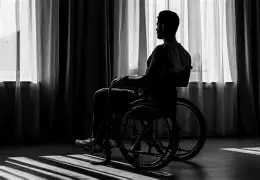
The Acting Deputy Director-General of the Ghana Health Service (GHS), Dr Caroline Reindorf Amissah, has advised staff of its service to treat all clients right, with particular attention to persons with disabilities (PWDs).
She said there were attitudinal barriers among health workers regarding persons with disability, a situation that was wrong and needed to be worked on.
“So, sometimes as health workers, we are the major culprits. We know the challenges. We are even well aware that these challenges among persons with disabilities are health challenges, but we are the same people who would not treat them the way that we are preaching to other people to recognise.
“So, I think it is some of these negative perceptions that go far to increase or deepen the stigma that these people face or the challenges they face when they try to access healthcare,” she noted.
Dr Amissah gave the advice at the commemoration of the International Day of Persons with Disability by the GHS, in partnership with the Ghana Federation of Disability Organisations, the National Council on PWDs, the World Health Organisation and Sightsavers, on the theme “Building Inclusive Health Service Delivery for Social Progress.”
She reiterated, “Some of the barriers are our favourite stigma and discrimination, so we refuse to acknowledge or accept persons with disabilities as part of us.
“We tend to discriminate against them. When we have a crowd of patients and we want to try and see who should be seen first, I doubt disability is on our mind. We do not look there at all,” she said.
The 2023 Disability Inclusive Health Landscape Review conducted by the Health Promotion Division of the Service, she said, highlighted some major barriers faced by PWDs, such as knowledge barriers, thus limited understanding of persons with disability among health staff, and lack of sign language interpreters in health facilities.
Moreover, there are financing barriers, which make it difficult for PWDs to access assistive facilities.
Dr Amissah noted that the GHS had, however, developed guidelines to remove the physical communication and attitudinal barriers to ensure that no Ghanaian was denied or discouraged from accessing health services because of his or her disability.
“We have also tried to build some capacity for our staff. I must say that we have trained some frontline staff, but to me, this is woefully inadequate, and we need to do more.
“We have launched an e-learning course on disability inclusion, but there remain some gaps because people do not see the importance of it.
They do not attach that importance to it. So, probably their courses are there, but people are not registering and signing on for these programmes,” she lamented.
The Acting Deputy Director-General called for a budget line for disability inclusion within the Service to ensure that there were funds to support disability inclusion.
“Disability inclusion, for me, is not a charity at all. We are not having mercy on anybody. We could all be disabled at any point in our lives,” she added.
A Disability Inclusion Advisor, GFD Dorcas Efe Mensah, in a speech delivered on her behalf, said health was a right and not a privilege; therefore, this year’s theme reminded all that the strength of the nation’s health system was measured not by how it served the majority but by how it embraced those who had long been excluded.
“And more importantly, we realise that in disaster scenarios, we find a number of cases that need urgent responses, but by leveraging solutions for persons with disabilities in such times of crisis, we are able to deliver at a faster rate and an efficient rate to ensure that no one is left behind,” she added.
To single out a few of the key interventions, the disability decks and sign language integration into the nursing training institutions, she said, were more relevant because technology failure would certainly be met with well-equipped health professionals who were able to assist in real time, on time, and prevent delay while ensuring improved efficiency to eventually save lives.
The Executive Secretary of the National Council on PWDs, Edwin Kweku Andoh, said key challenges included limited accessibility in some healthcare facilities, exclusion from health policy decision-making processes, stigma and discrimination against persons with disabilities, and insufficient training for healthcare professionals on the key challenges.
He appealed for disability-inclusive health guidelines and service delivery to be strengthened, and for the capacity of staff to be enhanced through training on disability-inclusive care.
Latest Stories
-
Health Ministry launches World Health Day 2026, urges science-based action
12 minutes -
MMFL anchors MTN Group’s fintech push in Ghana
21 minutes -
Ghana’s economy shows recovery signs, but risks persist – S&P maintains stable outlook
37 minutes -
SWAG commemorates its 8th anniversary with a public lecture
40 minutes -
Ibrahim Mahama claims Police Commander failed to stop alleged assault
43 minutes -
Damang lease award to E&P followed due process — Minerals Commission
54 minutes -
Today’s Front pages: Wednesday, April 8, 2026
56 minutes -
Julian Opuni reaffirms Fidelity Bank support for industry-led skills training at DTI Berekuso campus
1 hour -
CAF President arrives in Dakar to meet Senegalese President, football authorities over AFCON title saga
1 hour -
Pastor arrested over viral threats against Vice-President
1 hour -
2026 Success Africa Summit: MTN’s Adwoa Wiafe challenges youth to act with purpose, not just pursue titles
1 hour -
Nurse laureate launches Cancer Care Africa Foundation to tackle late diagnosis, workforce gaps
2 hours -
Ghana to lose GH¢18.15bn in revenue by 2027 from abolishing Covid levy, E-levy – CPS study
2 hours -
Reintroduce scrapped taxes to close revenue gap – Tax expert
3 hours -
GRA applauds CPS study, urges continuous policy scrutiny
3 hours