

Audio By Carbonatix
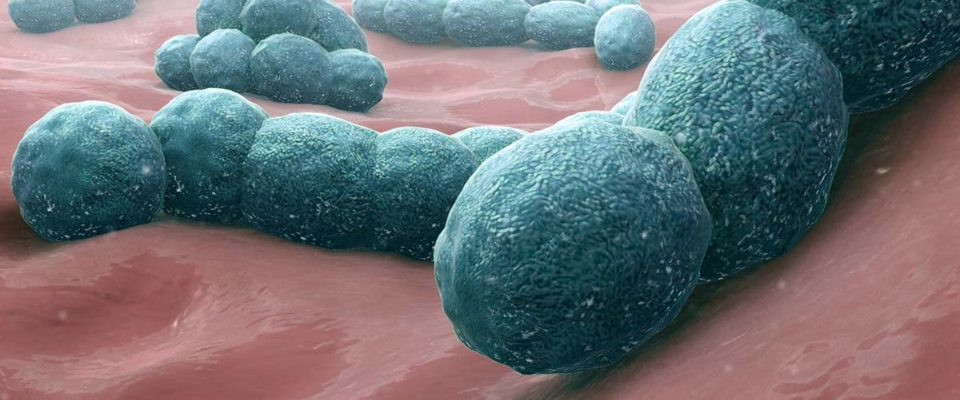
The Ministry of Health, in collaboration with the Ghana Health Service (GHS), has issued a fresh public alert urging heightened vigilance over a possible meningitis outbreak, particularly in communities within the country’s meningitis belt.
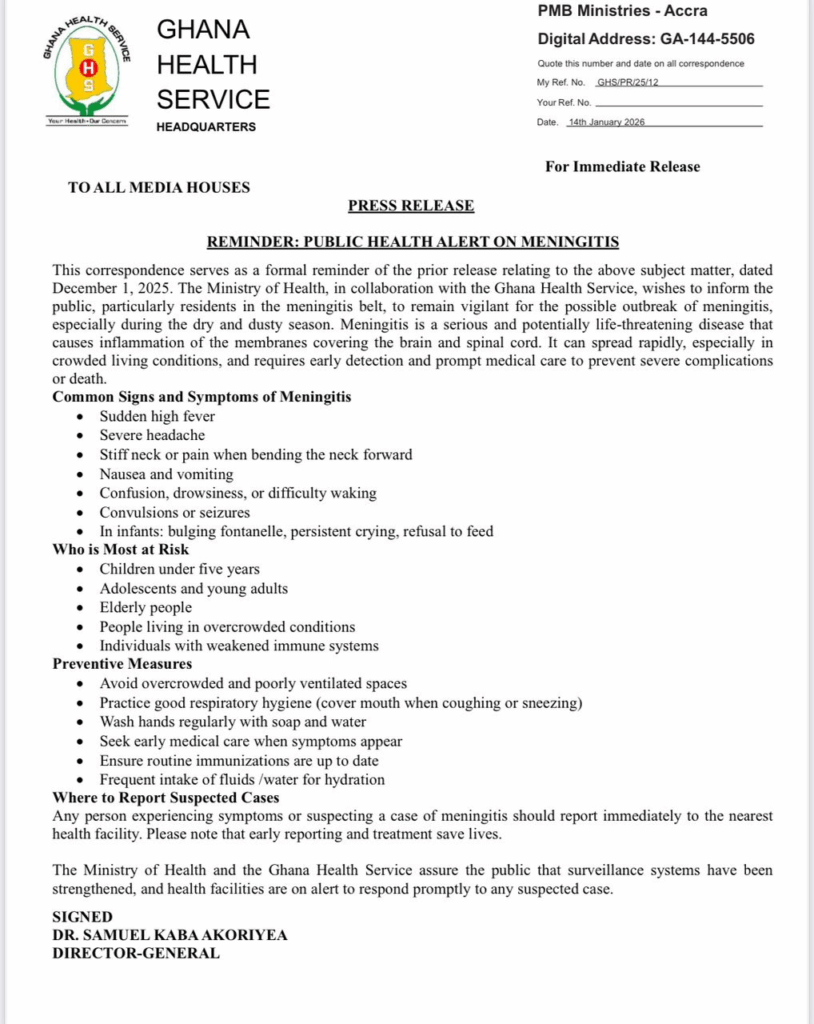
In a press release issued on Wednesday, the Ministry said: “This correspondence serves as a formal reminder of the prior release relating to the above subject matter, dated December 1, 2025.”
The statement described meningitis as a “serious and potentially life-threatening disease that causes inflammation of the membranes covering the brain and spinal cord,” warning that it “can spread rapidly, especially in crowded living conditions, and requires early detection and prompt medical care to prevent severe complications or death.”
Symptoms and high-risk groups
The Ministry outlined key signs and symptoms to aid early detection, including sudden high fever, severe headache, stiff neck or pain when bending the neck forward, nausea and vomiting, confusion, drowsiness, and convulsions. In infants, symptoms may include a bulging fontanelle, persistent crying, or refusal to feed.
Those considered at higher risk include children under five, adolescents and young adults, elderly persons, people living in overcrowded conditions, and individuals with weakened immune systems.
Preventive measures
To reduce the risk of infection, the Ministry urged the public to “avoid overcrowded and poorly ventilated spaces,” practise good respiratory hygiene by covering the mouth when coughing or sneezing, and “wash hands regularly with soap and water.”
Additional preventive measures include keeping routine immunisations up to date, seeking early medical care when symptoms appear, and maintaining adequate hydration through frequent fluid intake.
Reporting suspected cases
The statement stressed the importance of early reporting, noting: “Any person experiencing symptoms or suspecting a case of meningitis should report immediately to the nearest health facility. Please note that early reporting and treatment save lives.”
The Ministry assured the public that surveillance systems have been strengthened nationwide and that health facilities are “on alert to respond promptly to any suspected case,” calling for cooperation from communities to protect vulnerable groups and prevent the spread of the disease.
Latest Stories
-
Conflicts among care providers linked to maternal, neonatal deaths – Expert
1 hour -
GIS marks 10th TIME conference, champions improved teaching practices
1 hour -
BRICS Or Balance? What Ghana’s bid really means
2 hours -
GPRTU wants full TRAFFITECH-GH implementation to start in 2027
2 hours -
Mahama announces plans to import electric wheelchairs for PWDs
2 hours -
KGL U17 Colts 2026: Western beat Prempeh Elite Academy to set up final final with Greater Accra Region
2 hours -
Late Solanke strike salvages 10-man Spurs draw at Man United
2 hours -
Gender Ministry to monitor welfare of Nana Akua Addo’s children amid domestic violence case
3 hours -
Benedict Okyere Yeboah: Ghana’s football problem goes beyond sacking a coach
3 hours -
GPL 2026/27: Darkwah Wiafe’s winner sees All Blacks beat Kotoko
3 hours -
ITF World Tour : Patel Wins Boys’ Singles Final at J100 Accra
3 hours -
Ghana must pursue BRICS partnership if it brings economic benefits – Kpebu
3 hours -
Success and Wright Claims J100 Accra Girls’ Doubles Championship
3 hours -
ITF J100: America’s Wright wins J100 Accra Girls’ Singles Title
3 hours -
Expedition hopes to find aviator Amelia Earhart’s plane on remote island
3 hours