

Audio By Carbonatix
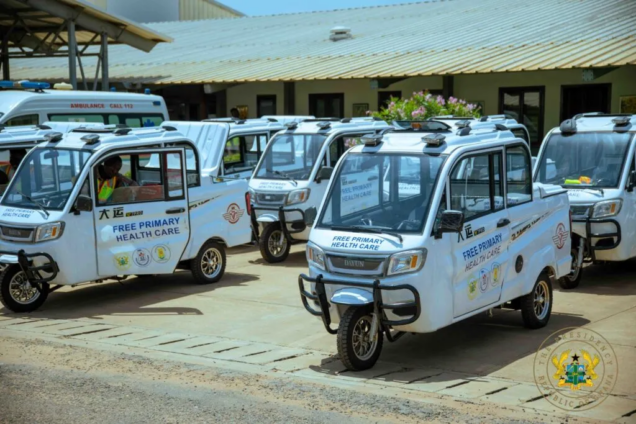
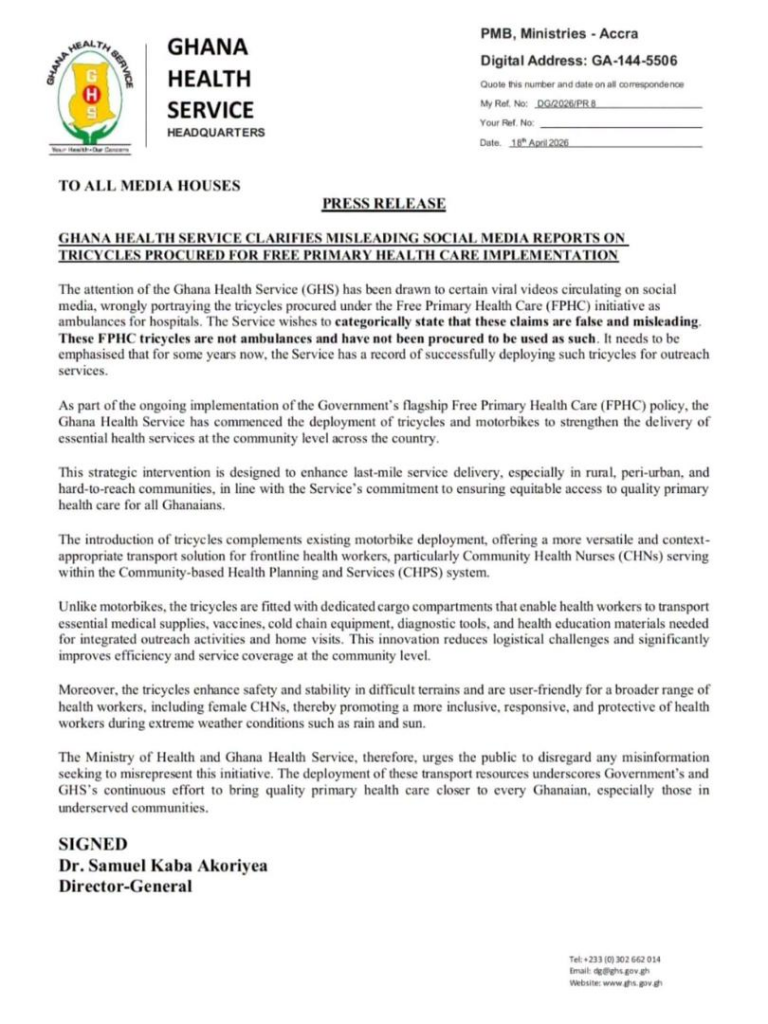
The Ghana Health Service (GHS) has issued a clarification regarding the viral circulation of videos on social media, which have mistakenly portrayed tricycles procured under the Government’s Free Primary Healthcare (FPHC) initiative as ambulances for hospitals.
The GHS has rejected these claims, stating that the tricycles are not intended as ambulances, and their purpose has been misrepresented.
In a statement released issued on Saturday, April 18, the GHS explained that the tricycles are part of the ongoing implementation of the Government's flagship Free Primary Healthcare policy, which is designed to strengthen the delivery of essential health services at the community level, particularly in rural and hard-to-reach areas.
The introduction of the tricycles forms part of a strategic effort to enhance last-mile service delivery. This initiative is particularly vital for reaching remote, peri-urban, and difficult-to-access communities where health service provision has traditionally been a challenge.
GHS stressed that the deployment of these tricycles and motorbikes is a response to the need for more versatile and context-appropriate transport solutions for frontline health workers, particularly Community Health Nurses (CHNs).
GHS highlighted the significant advantages the tricycles bring to the health service delivery process.
Unlike motorbikes, the tricycles come with dedicated cargo compartments, allowing health workers to transport essential items like vaccines, cold chain equipment, and medical supplies more efficiently.
The design of the tricycles aims to improve logistical capacity, enabling health workers to serve more people in more remote areas.
The tricycles are also seen as a solution to improving safety and stability, especially in challenging terrains. This is crucial, given the varied landscape across the country, where motorbikes are often not sufficient for transporting goods and medical supplies, particularly during extreme weather conditions like heavy rain or intense heat.
GHS pointed out that the tricycles offer a safer and more inclusive option for a broader range of health workers, including female Community Health Nurses, ensuring that they can carry out their duties with increased security and comfort.
The tricycles are more stable and accessible than motorbikes, making them suitable for all health workers, regardless of gender, and providing a more protective work environment.
The Free Primary Health Care initiative, which includes the deployment of tricycles and motorbikes, aligns with the Government’s ongoing commitment to ensuring equitable access to quality healthcare for all Ghanaians. The initiative aims to address the disparities in healthcare access between urban and rural areas, ensuring that even the most underserved communities receive the essential health services they need.
The GHS reiterated that this effort is part of a broader national strategy to improve primary healthcare across the country. The tricycles, alongside the motorbikes, are just one component of a larger effort to provide integrated healthcare services that reach every corner of the nation.
“The deployment of these transport solutions reflects the Government’s commitment to enhancing healthcare delivery in Ghana,” the GHS statement continued.
“By providing health workers with the means to reach more communities and deliver healthcare more efficiently, we are making significant strides towards improving the health and well-being of all Ghanaians.”
The Ghana Health Service called on the public to disregard the misinformation circulating about the tricycles.
Latest Stories
-
“NSA did not tell us of any embassy arrangement” – Kofi Adams
21 minutes -
Glasner suffers loss on Selhurst return as Palace beat Forest
2 hours -
WAFU B U17: ‘We won but I expected more from my boys’ – Kassim Ocansey
2 hours -
Man City cruise to statement win over 10-man Liverpool
2 hours -
Be careful with cross-border lending, foreign currency exposures – BoG to financial institutions
5 hours -
GPL 2026/27: Medeama go three clear as Hearts of Oak recover and Bechem stage stunning comeback
5 hours -
Ntiamoah Foundation launches “BEYOND 20” anniversary campaign
5 hours -
Credit Risk Management Directive: BoG to begin implementation for banks, others from July 1, 2027
5 hours -
Ghana Brands Awards 2026: Leading brands, business trailblazers to shine on November 20
6 hours -
T-bills auction: Demand improves as government exceeds target by about 76%; interest rates soften
6 hours -
Ziope undertakes initiative to build a technologically inclined community, commissions self-help ICT lab
6 hours -
ECG announces power outage in parts of Tema, Central Region due to network fault, maintenance
7 hours -
When the Gospel Becomes a Weapon: The church, blackmail and the abuse of faith
7 hours -
JoyNews’ Jacqueline Ansomah Yeboah selected for UK Media Excellence for Emerging Technologies Fellowship
7 hours -
Mental Health Alliance urges government to operationalise Mental Health Fund
7 hours