
Audio By Carbonatix
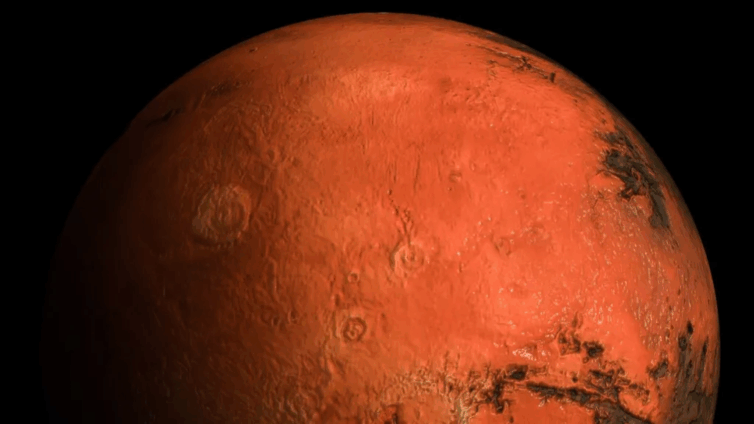
Scientists believe they have recorded electrical activity in the Martian atmosphere for the first time, suggesting the planet is capable of lightning.
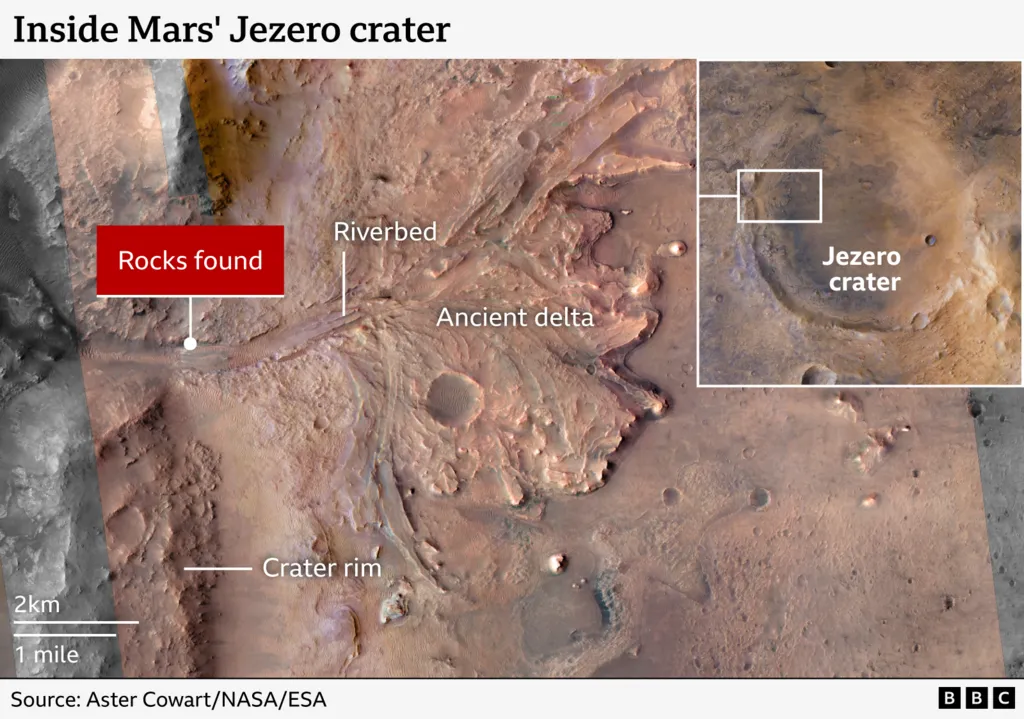
Nasa's Perseverance rover, which touched down on Mars in 2021, was sent to search for signs of biology and has spent the last four years exploring the Jezero Crater region.
Electrical discharges nicknamed "mini lightning" were picked up from audio and electromagnetic recordings made by the rover's SuperCam instrument.
Scientists hope new instruments for measuring atmospheric discharges and more-sensitive cameras could be sent to Mars to try to confirm the findings.
A team of researchers from France analysed 28 hours of microphone recordings made by the Nasa rover over two Martian years (or 1,374 Earth days).
They found that electrical discharges were normally associated with dust devils and dust storm fronts.
Dust devils are small whirlwinds that form from hot air rising from the ground, and their internal movements can give rise to electrical discharges.
Lead author of the research Dr Baptiste Chide told news agency Reuters: "These discharges represent a major discovery, with direct implications for Martian atmospheric chemistry, climate, habitability and the future of robotic and human exploration."
He and other scientists at the Institute for Research in Astrophysics and Planetology in France believe that Mars now joins Earth, Saturn and Jupiter as planets known to have atmospheric electrical activity.
Particle physicist Dr Daniel Pritchard wrote in scientific journal Nature that, although the recordings would "provide persuasive evidence of dust-induced discharges", because the discharges were only heard and not seen, "some doubt will inevitably remain as to whether this really was Martian lightning".
He added: "Given the history of this field, the debate is likely to continue for some time."
In September this year, scientists found rocks with unusual markings on Mars.
The intriguing markings, nicknamed leopard spots and poppy seeds, contain minerals produced by chemical reactions that could be associated with ancient microbes.
It is possible the minerals were produced by natural geological processes, but Nasa said the features could be the clearest signs of life ever found.
Today, Mars is a cold and arid desert. But billions of years ago there is evidence that it had a thick atmosphere and water, making it a promising place to look for past life.
Perseverance was dispatched to the Jezero Crater because it showed qualities that may have meant it was once conducive to life, including signs it was once a delta when Mars could sustain liquid surface water.
Latest Stories
-
GCB Bank MD Farihan Alhassan nominated to Mastercard Africa Leadership Council
1 hour -
Morocco walkout: Guinea seeks review of 1976 AFCON title
3 hours -
Wenchi chieftaincy dispute still unresolved – Sɔfoase Yɛfretete family
3 hours -
Mfantsipim launches 150th anniversary with new cloth, song unveiling and fundraising ceremony
4 hours -
Agribusiness Chamber unveils 12-month plan to end Ghana’s tomato import dependence
4 hours -
Day 1 of Joy Ghana Fest 2026 closes on a high note, more thrills await on Day 2
4 hours -
TOR emerges 2nd best institution in MoF’s Financial Management Compliance League Table
4 hours -
TOR thanks staff, stakeholders for PFM compliance success
5 hours -
Bel Beverages donates assorted drinks to support Muslims in Kumasi
5 hours -
Identity before connectivity: Why Ghana’s SIM registration will succeed — and what telecoms must learn from the banking sector
5 hours -
Why Wendy Shay is the definitive 2026 TGMA Artiste of The Year
5 hours -
Agribusiness Chamber urges gov’t to activate tomato emergency strategy within 30 days
5 hours -
Ghana Music Awards-USA @ 7 heads to Princeton with FIFA World Cup-themed celebration
5 hours -
Only 7 SOEs are highly compliant with PFM Act -Finance Ministry
6 hours -
Suspected robber killed, others hunted after police operation at Ejura
7 hours