

Audio By Carbonatix
The Alliance to End Plastic Waste has announced a partnership with the ASASE Foundation to support women entrepreneurs working to reduce plastic litter in the community.
The initiative called 'Closing the Loop' uses a circular economy model, to enable local communities to benefit from discarded plastic waste by collecting, reprocessing, and reselling it.
Launched by ASASE Foundation in 2018, the 'Closing the Loop' initiative seeks to provide seed money to equip plastic waste reprocessing plants as well as provide technical and business management training for women entrepreneurs to run the recycling plant for profit.
The project has already created eight jobs within the community as well as diverted 35 (metric) tons of plastic from wastes in the first twelve months.
By partnering with the Alliance, the capacity of the processing plant is expected to increase to divert 2,000 (metric) tons of plastic waste per year and create even more jobs.
“A key pillar of ending plastic waste in the environment is the sustainable impact it will bring to the well-being of local communities.
This is why our partnership with ASASE is especially meaningful because 'Closing the Loop' is the right step towards a circular economy model. It directly benefits those living in areas which don’t have access to plastic waste collection and sorting systems.
"This initiative is a simple but scalable action that benefits the environment but supports the inspiring women of Ghana who are building their communities on the path towards ending plastic waste in the environment, ” President and CEO of Alliance to End Plastic Waste, Jacob Duer said.
Adding to this view, Founder and Managing Director of ASASE Foundation, Dana Mosora said “what we value most in our partnership with the Alliance to End Plastic Waste is the access to the expertise in waste management which we can leverage now in our project, effectively multiplying the impact of the funding provided by the Alliance to our project.”
The partnership has also opened the possibility to bring in expertise from an academic partner, the Swiss Federal Institute of Technology.
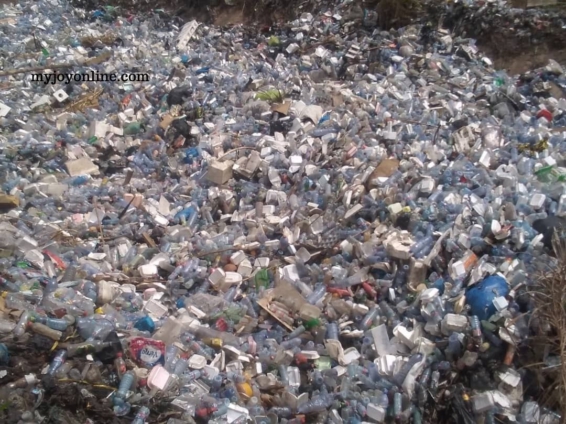
The newly established recycling plant processes a range of plastic waste from water sachets to shampoo and detergent bottles and large cooking oil containers; converting them into regrinds.
The regrinds are then sold to recyclers to make items such as pavement blocks, sheets for construction, basins and liners, most of which goes back into the community.
Latest Stories
-
African Union Chair urges dialogue amid rising tensions in Somalia
7 minutes -
African Union mourns passing of former Algerian President Liamine Zeroual
8 minutes -
Howo trailer crash on Kpeve–Asikuma road
49 minutes -
Heavy rains sweep across Ghana, parts of Accra flooded
2 hours -
Asantehene urges swift completion of KNUST Hospital following Parliamentary approval
2 hours -
Three Lebanese journalists killed in Israeli strike, say broadcasters
2 hours -
Antonelli wins to become youngest title leader
2 hours -
Impakers Creative Hub CEO Freda Cudjoe inducted into Corporate Ghana Hall of Fame 2026
2 hours -
See the areas that will be affected by ECG’s planned maintenance today, Sunday, March 29
4 hours -
Flood alert: GMet warns of dangerous downpours across Ghana today
5 hours -
‘Groundbreaking but an uphill struggle’ – Amanda Clinton breaks down UN slavery resolution
6 hours -
Otumfuo demands year-end completion for stalled KNUST hospital
6 hours -
Sir Sam Jonah slams political interference in insurance industry
7 hours -
Yemen’s Houthis enter Iran war with attacks on Israel, while US Marines arrive in region
8 hours -
Potential Houthi threat to Red Sea shipping could further damage global economy
9 hours