

Audio By Carbonatix
Madagascar is on the brink of experiencing the world's first "climate change famine", according to the United Nations.
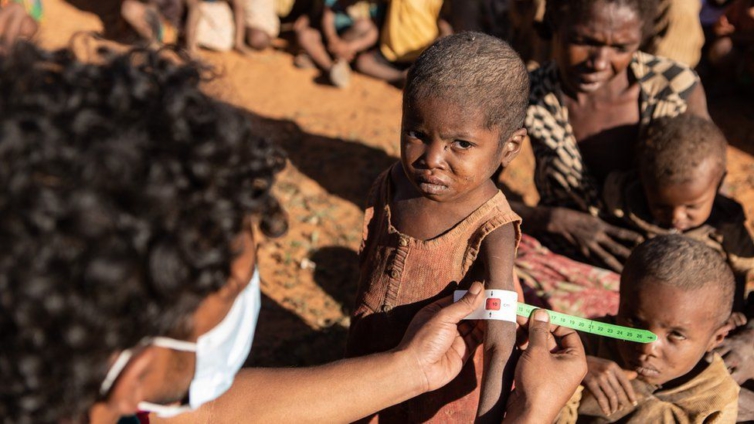
Tens of thousands of people are already suffering "catastrophic" levels of hunger and food insecurity after four years without rain.
The drought - the worst in four decades has devastated isolated farming communities in the south of the country, leaving families to scavenge for insects to survive.
"These are famine-like conditions and they're being driven by climate, not conflict," said the UN World Food Programme's Shelley Thakral.
The UN estimates that 30,000 people are currently experiencing the highest internationally recognised level of food insecurity - level five - and there are concerns the number affected could rise sharply as Madagascar enters the traditional "lean season" before harvest.
"This is unprecedented. These people have done nothing to contribute to climate change. They don't burn fossil fuels… and yet they are bearing the brunt of climate change," said Ms Thakral.
In the remote village of Fandiova, in Amboasary district, families recently showed a visiting WFP team the locusts that they were eating.
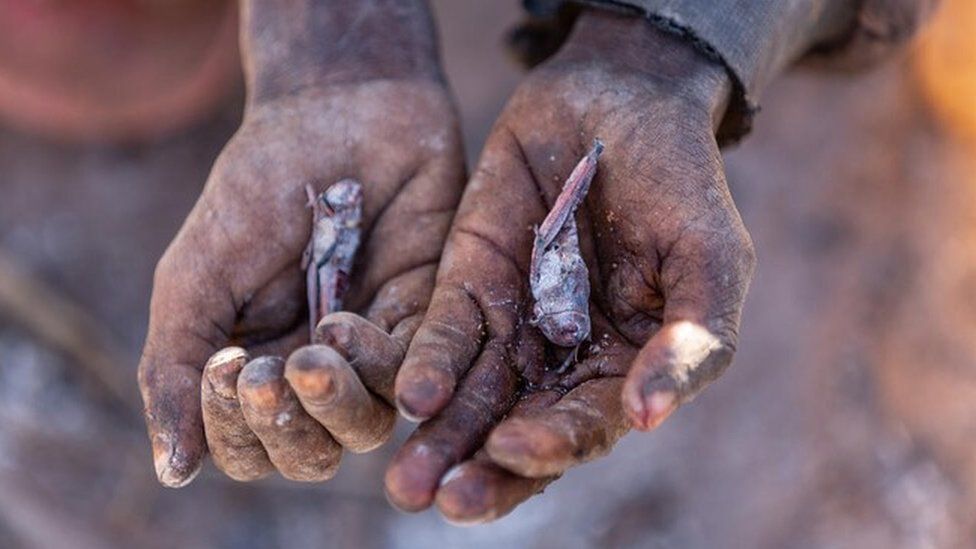
"I clean the insects as best I can but there's almost no water," said Tamaria, a mother of four, who goes by one name.
"My children and I have been eating this every day now for eight months because we have nothing else to eat and no rain to allow us to harvest what we have sown," she added.
"Today we have absolutely nothing to eat except cactus leaves," said Bole, a mother of three, sitting on the dry earth.
She said her husband had recently died of hunger, as had a neighbour, leaving her with two more children to feed.
"What can I say? Our life is all about looking for cactus leaves, again and again, to survive."
Improve water management
Although Madagascar experiences frequent droughts and is often affected by the change in weather patterns caused by El Niño, experts believe climate change can be directly linked to the current crisis.
"With the latest IPCC report, we saw that Madagascar has observed an increase in aridity. And that is expected to increase if climate change continues.
"In many ways, this can be seen as a very powerful argument for people to change their ways," said Dr Rondro Barimalala, a Madagascan scientist working at the University of Cape Town in South Africa.
Viewing the same atmospheric data at Santa Barbara University in California, director of the Climate Hazards Center, Chris Funk, confirmed the link with "warming in the atmosphere", and said the Madagascan authorities needed to work to improve water management.
"We think there's a lot that can be done in the short term. We can often forecast when there's going to be above normal rains and farmers can use that information to increase their crop production. We're not powerless in the face of climate change," he added.
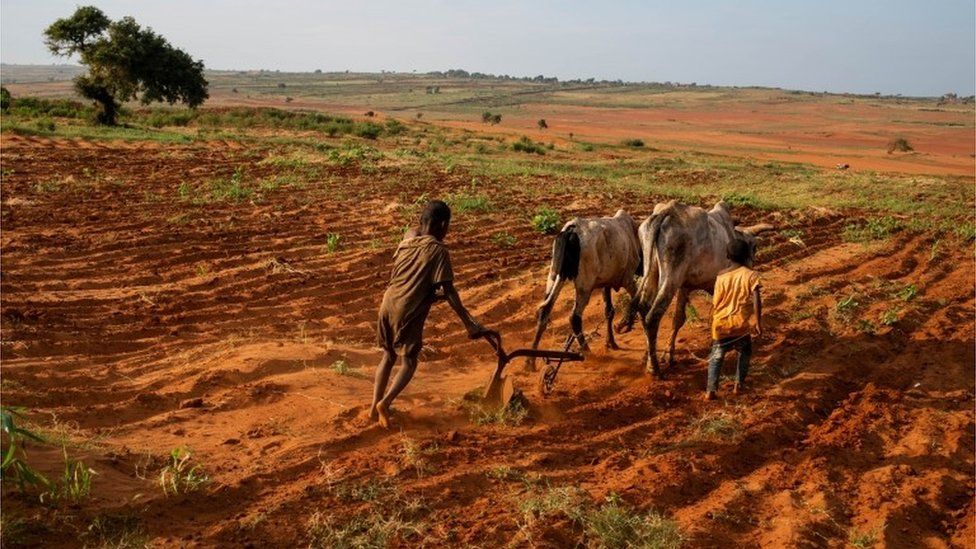
The current drought's impact is now being felt in larger towns in southern Madagascar too, with many children forced to beg on the streets for food.
"The prices in the market are going up - three or four times. People are selling their land to get some money to buy food," added Tshina Endor, who works for a charity, Seed, in Tolanaro.
Her colleague, Lomba Hasoavana, said he and many others had taken to sleeping in their cassava fields to try to protect their crops from people desperate for food, but this had become too dangerous.
"You could risk your life. I find it really, really hard because every day I have to think about feeding myself and my family," he said, adding: "Everything is so unpredictable about the weather now. It's a huge, huge question mark - what will happen tomorrow?"
Latest Stories
-
Mobile Money Fintech LTD, UMB train hairdressers and beauticians
1 hour -
Asylum votes show people want help, says Kemi Badenoch
2 hours -
Badenoch welcomes expanded grooming gangs inquiry
2 hours -
GACL MD sues Samuel Buabeng over alleged Facebook defamation
2 hours -
Christa Pike in critical condition after surviving two lethal injections, lawyer says
2 hours -
Kemi Badenoch backs face covering ban at protest
3 hours -
Man City not ‘above the rules’, says No 10 after backlash to Burnham remarks
3 hours -
Real Madrid submit ‘substantial’ dossier in Barca payments case
3 hours -
Messi completes purchase of second Spanish club
3 hours -
Government must engage horticulturists on tomato crisis – GhIH
3 hours -
King Promise’s ‘Can’t Tame Us’ becomes official Chelsea anthem
3 hours -
Afenyo-Markin demands Baffour Awuah’s release from EOCO’s custody, end to alleged political intimidation
3 hours -
Rapper Rick Ross arrested on domestic violence charges
3 hours -
Minority demands security review of Ghana-Colombia visa waiver and port deals
4 hours -
Pursue drug kingpins, not persecute political opponents – Afenyo-Markin tells EOCO
4 hours