

Audio By Carbonatix
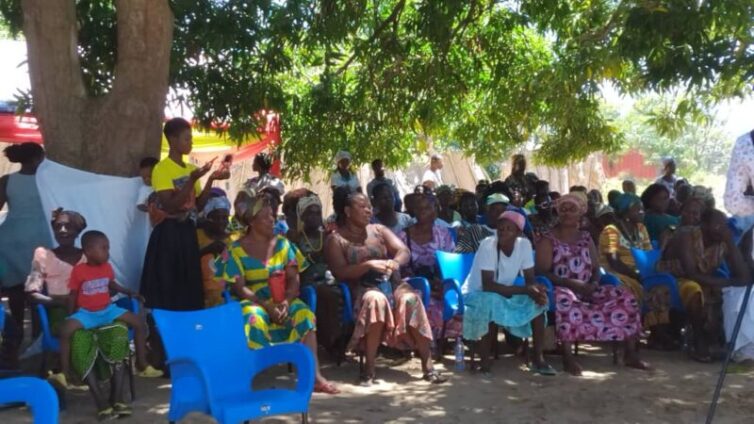
As part of the International Day of Rural Women, the Strengthening Investments in Gender-Responsive Climate Adaptation (SIGRA) Project, led by Cowater International and funded by the government of Canada, took center stage in Dzita Agblwdomi in Ghana’s Volta Region.
The event, a celebration of the resilience of rural women in the face of climate change, brought together community members, government officials, and development partners.

In her keynote address, Lauren Intven, Team Lead for the SIGRA project, emphasized the unequal impact of climate change on rural women. "We’re all feeling the effects of climate change, but the impacts are not equal. They differ from community to community and from person to person, depending on resources like land and access to finance. Rural women face some of the heaviest burdens of climate change," she said.

Resilience and Innovation in the Face of Adversity
The celebration focused on sharing the unique challenges rural women face in a changing climate and recognizing their ongoing efforts to support their families and communities.
Throughout the day, women showcased their innovative approaches to tackling climate-related issues, demonstrating their leadership in climate adaptation strategies.

The SIGRA project has been a crucial driver in these efforts. Funded by Global Affairs Canada, SIGRA is working across five districts in Ghana, including the Volta Region’s Anloga and Akatsi North Districts. The project aims to increase access to climate finance and ensure that women and marginalized groups are at the forefront of adaptation initiatives.
Through partnerships with women-led civil society organizations, SIGRA helps local governments incorporate the specific needs of vulnerable groups into their climate resilience strategies.
Intven highlighted that SIGRA is working closely with the Anloga District Assembly to conduct climate vulnerability assessments, leading to the prioritization of fish farming in Fuveme and potable water extension in Agbledomi for the first year of the project’s three-year grant funding. “Climate impacts are local, and so must be the solutions,” she stressed, commending the Tegbi cultural group for their community-driven efforts.
A Call for Greater Support for Rural Women

Mrs. Thywil Eyra Kpe, Volta Regional Director of the Department of Gender, underscored the significance of rural women’s roles in food security, stating that women make up 52.3% of the region’s population, and the majority live in rural communities. “Rural women are the backbone of our agricultural value chain, and their contributions are critical for national food security and economic growth,” Kpe remarked. Despite their vital roles, she noted that rural women continue to face daunting challenges, including limited access to land, financial resources, and agricultural inputs.
The District Chief Executive (DCE) for Anloga, Seth Yormewu, applauded the hard work of rural women in agriculture and highlighted the role of the SIGRA project in helping alleviate some of their challenges. However, he acknowledged that the road ahead is not without obstacles and urged greater support from the government, organizations, and individuals to help women overcome financial constraints and improve their businesses.

A Vision for the Future
The celebration marked a significant moment in the ongoing efforts to recognize the invaluable contributions of rural women to their communities and climate adaptation.
As Ghana faces increasing climate-related risks, projects like SIGRA play a vital role in empowering women, especially those in rural areas, to build resilience against the impacts of climate change.
The International Day of Rural Women, first observed in 2008, continues to highlight the critical role rural women play in agricultural development, food security, and poverty eradication. As climate change intensifies, their role in shaping a sustainable future becomes even more crucial.
The event concluded with a shared commitment to build stronger partnerships and invest in local solutions to climate challenges, ensuring that women’s voices and needs remain at the forefront of Ghana’s climate adaptation efforts.
Latest Stories
-
President Mahama ends Resetting Ghana tour of Ahafo Region
1 hour -
African negotiators seek delivery of climate commitments at COP31
1 hour -
BoG develops AI rules for financial sector
1 hour -
‘Big Push’: Government assures contractors of prompt payments
1 hour -
Court fines miner for breaking into gold buying shop
1 hour -
Tarkwa court jails labourer for three years over GH¢123,000 theft
2 hours -
GAEC must retain nuclear scientists for Ghana’s nuclear ambitions – Minister
3 hours -
Man reportedly mistaken for game and shot by hunter dead in forest
3 hours -
19-year-old mason jailed 15 years for defiling seven-year-old pupil
3 hours -
Ghana’s banking sector assets rise 20.47% to GH¢500.2bn – BoG Governor
3 hours -
22 injured as Sprinter bus overturns at Sege after tyre burst
3 hours -
UN housing expert urges Ghana to strengthen Rent Control Department amid housing affordability concerns
3 hours -
Delta-BCI partnership reaches 166,000 people with breast cancer education
3 hours -
Power restoration fault suspected in Kumasi Central Market fire
8 hours -
The 7-foot giant of Ngleshie Amanfro: Seven-foot Ghanaian Ephraim Saawa dreams of joining the national basketball team
9 hours