

Audio By Carbonatix
The 2026 Budget Statement revealed a powerful directive from President Mahama aimed at supporting Ghana's agricultural sector and ensuring market stability for local farmers.
Finance Minister Dr. Cassiel Ato Forson announced that the President has mandated all public schools, from basic to tertiary levels, to exclusively purchase staple food items produced within Ghana.
This initiative, dubbed a "Buy Ghana, Eat Ghana" security measure, is designed to create a reliable, captive market for local producers, thereby guaranteeing their income and encouraging increased domestic food production.
The Presidential Order
Minister Forson confirmed the strict mandate issued by the highest office:
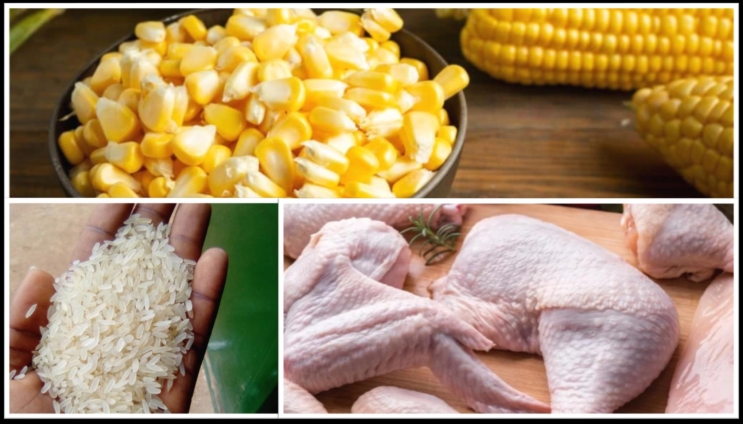
"President Mahama has also directed all schools, from basic to secondary, to purchase rice, maize, chicken and eggs produced in Ghana only."
This directive covers a significant portion of the national food budget, impacting the supply chain for thousands of educational institutions, including primary schools, junior high schools (JHS), and senior high schools (SHS) participating in the Free SHS Programme.
Agencies Tasked with Strict Compliance
To ensure the policy is not merely aspirational but is rigorously enforced, the directive explicitly names five key governmental and educational agencies responsible for oversight and execution:
- The Ministry of Education
- The Ghana Education Trust Fund (GETFund)
- The School Feeding Programme
- The Free Secondary Education Secretariat
- The National Food Buffer Stock Company (NAFBC)
These institutions have been "accordingly directed to ensure strict compliance" with the local sourcing policy. NAFBC, in particular, plays a critical role as the national food aggregator and storage facility, positioning it to facilitate the bulk purchase and distribution of locally produced rice and maize to schools.
Economic Impact on Farmers
This policy represents a crucial form of non-cash subsidy and market intervention for Ghanaian farmers, providing stability for four key commodities:
- Rice and Maize: Ensures that local grain farmers have a ready buyer, mitigating price volatility caused by imports and reducing the risk of harvest gluts.
- Chicken and Eggs: Provides a guaranteed market for Ghana's poultry farmers, a sector that has long struggled against cheap, imported frozen poultry products.
By guaranteeing demand for these locally produced goods, the government aims to boost production volumes, reduce the nation's reliance on costly food imports, and stabilize the livelihoods of food crop and poultry farmers.
Latest Stories
-
Catholic Bishops say moral values must match economic priorities in Anti-LGBTQ+ debate
19 minutes -
IGP Yohuno urges merit and hard work ahead of Police Academy exams
32 minutes -
Queendalyn Yurglee releases debut album ‘Clouds of Glory’
1 hour -
UDS moves to clear MPhil student wrongly linked to robbery case
1 hour -
Vodza Regatta 2026: Prof Audrey Gadzekpo rallies investors for coastal tourism growth
1 hour -
Introduction of 100 new Metro Mass buses won’t affect transport unions – GPRTU
2 hours -
Deputy Transport Minister backs Yellow Line traffic initiative
2 hours -
MTN Ashanti-Fest music concert set to hit Kumasi on Saturday
2 hours -
Authorities probe discovery of dead fish at Tema shipyard
2 hours -
Minority welcomes fuel tax cuts, demands accountability for GH¢1 levy
2 hours -
It remains a priority — Sam George on Anti-LGBTQ bill
2 hours -
Police arrest Nigerian national seen in viral videos wearing police uniforms
2 hours -
Free golf training empowers underprivileged girls in Accra
2 hours -
Why SIGA’s reset is not a market sin, but a national necessity
3 hours -
SIGA Directive: Beyond the theatre of institutional displacement
3 hours