

Audio By Carbonatix
Civil society organisations (CSOs) in Ghana have intensified efforts to combat corruption through the Open Parliament Partnership (OPP), an initiative designed to strengthen collaboration with Parliament in promoting transparency and accountability.
CSOs, including Transparency International Ghana and the Ghana Coalition Against Corruption, emphasised that tackling corruption requires the collective commitment of all stakeholders.
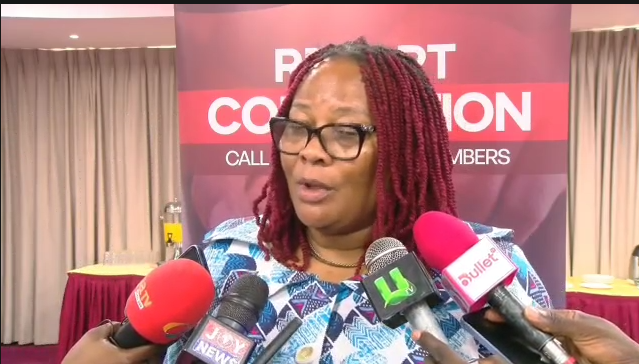
Speaking during a quarterly CSOs–Parliament engagement in Accra on March 11, Executive Director of Transparency International Ghana, Mary Addah, said the initiative would deepen citizen participation and accelerate the fight against corruption.
“The approach will deepen citizen participation and help accelerate the fight against corruption,” she said.
Ms Addah highlighted key oversight measures, including asset declaration and the Conduct of Public Officers Bill (COPO Bill), as part of broader efforts to strengthen accountability mechanisms.
“You know the issues around oversight are one key area where we talk about corruption, and so you realise we have commitments like asset declaration, and it's the COPO Bill, the Conduct of Public Officers Bill,” she said.
Addressing sector-specific concerns, Ms Addah noted that significant gaps remain in tackling corruption within the oil and gas value chain and in public procurement.
“We have elements around oil and gas, and within the value chain, there are serious issues or gaps when it comes to fighting corruption within those sectors. There are issues of procurement; either there is over-invoicing or a lot of other issues that we cannot be talking about here, but these commitments ensure that the citizen is aware,” she said.
She stressed the importance of citizen involvement, noting that active public participation strengthens accountability.
According to her, citizens must demand accountability and be proactive in speaking out, rejecting and reporting wrongdoing whenever it occurs. She added that public trust in elected representatives increases when leaders act responsibly.
Ms Addah further explained that the Open Government Partnership framework promotes the use of technology to make information accessible to citizens across various digital platforms, a step she described as critical to strengthening transparency and combating corruption.
Speaking on the impact of the initiative, Member of Parliament for Ho West and Chairman of the Open Parliament Partnership Caucus, Emmanuel Bedzrah, said the programme would make government more open and accessible to the public.
“This will make the government open to all of us. If you have citizens participating in governance, and if you have us being accountable to the people, and if people know exactly what goes on, that is what we are looking for, and that is what every democratic government is all about,” he said.
Mr Bedzrah explained that the engagement was organised to review commitments outlined in the National Action Plan 5 under the Open Government Partnership framework.
“The OGP Caucus in Parliament, in collaboration with civil society organisations, is organising this stakeholder engagement to take us through all the commitments that have been made in the National Action Plan 5, for us to know exactly what we should be looking for when we come to Parliament,” he said.
On Parliament’s oversight responsibilities, he stressed the need for strong legislative review and budget oversight to curb corruption.
“If there’s a need for us to support budget oversight or undertake legislative review, we must do so. We all know corruption is endemic, and we’re doing everything in our power as members of Parliament to make sure we fight it,” he said, adding that he also works with the African Parliamentarians Network Against Corruption (APNAC).
He also disclosed that the government has established a working group to develop the next National Anti-Corruption Action Plan (NAP2), following the completion of NAP1.
“Currently, the government has put a working group together to come up with NAP2. We’ve finished with NAP1. We are moving to NAP2, which is the National Action Plan on anti-corruption, and I’m sure very soon it will be laid before the House for all segments within government to know what they are supposed to do and what they are not supposed to do,” he said.
The initiative underscores growing collaboration between civil society and Parliament to enhance citizen participation, promote transparency and hold public officials accountable in Ghana’s ongoing fight against corruption.
Latest Stories
-
Ghana lose Morocco friendly as Atlas Lions turn to Mali
2 hours -
2026/2027 GPL: Kelvin Nkrumah strike sends Medeama top of league table
2 hours -
Emmanuel City crowned champions of maiden Global Game Scouting Tournament
2 hours -
Thomas Partey loses father Jacob Teye Partey
2 hours -
Martin Kpebu explains when EOCO can arrest Manhyia South MP after securing court warrant
2 hours -
EOCO’s reasons for seeking Manhyia South MP arrest warrant not justified – Kpebu
3 hours -
MTN Ghana warns SMEs against sharing PINs amid digital fraud risks
3 hours -
Yendi nursing students warn restricted access to skills lab could affect their training
3 hours -
Minority awaits formal notice of arrest warrant for Manhyia South MP – Annoh-Dompreh
3 hours -
LTIF announces 2026 Pan-African edition in Accra from October 6-7
3 hours -
Mfantsipim needs broader funding partnerships to bridge infrastructure gap – Prof Baiden
3 hours -
MP status must not shield anyone from law enforcement – Kwakye Ofosu
3 hours -
EOCO had tactical team ready to arrest Baffour Awuah – Felix Kwakye Ofosu
3 hours -
Afoko can unite NPP’s factions, says Charles Owusu Juanah
3 hours -
Guardiola backing Man City after guilty verdicts
3 hours