

Audio By Carbonatix
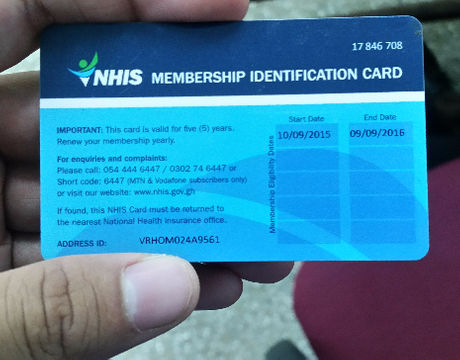
The Alliance for Reproductive Health Rights (ARHR), has asked the government to widen the population coverage of the National Health Insurance Scheme (NHIS) by absorbing the cost of registration and renewal for the poor.
This is because most poor people keep falling off the scheme due to extreme poverty, a situation, which will make it impossible for Ghana to attain Universal Health Coverage (UHC).
Policy and Advocacy Coordinator, ARHR, Leonard Shang-Quartey, said on Tuesday that since the UHC roadmap developed by the Ministry of Health (MOH) would rely on the NHIS to make quality healthcare accessible to all, it was prudent for Government to assist people who were unable to enrol on the scheme due to economic reasons.
He was speaking at a news briefing in Accra by the Alliance to commemorate the second anniversary of the “Declaration of Astana to strengthen Primary Health Care” in Accra.
The Astana Declaration was made by world leaders in October 25th and 26th in Astana Kazakhstan.
They committed themselves to make bold political choices to prioritise disease prevention and health promotion to build sustainable Primary Health Care (PHC) systems in their respective countries.
Astana aims at meeting the health needs of all persons through the provision of a comprehensive preventive, curative, rehabilitative services and palliative health care.
Mr Shang-Quartey said healthcare must not only be made available to all but also accessible to all, irrespective of a person’s social class or location.
“We call for a comprehensive and foundational essential health service package to be guaranteed for everyone living in Ghana to ensure that all persons are able to access basic health care at all times,” he said.
Director of Programmes at ARHR, Nii Ankonu Annorbah-Sarpei, said Government must ensure that the Community Based Health Planning and Services (CHPS) system was made effective to serve its purpose of promoting preventive care.
He said making the CHPS functional by encouraging Community Health Nurses to visit schools and homes to educate people on the need to adopt healthy living habits would ease the disease burden on people and reduce the huge funds spent on curative care.
Nii Annorbah-Sarpei said a recent study showed that only 13 per cent of CHPS selected for verification were functional, an indication that there was much to be done in ensuring that quality healthcare services reached everyone in Ghana.
He called for the provision of a national policy on PHC to guide an inter-sectoral collaboration and coordination for the effective implementation of primary healthcare services that focused on both disease prevention and clinical care.
Latest Stories
-
Landfilling waste management creates no value, it’s an economic waste
8 minutes -
Photos: Speaker Bagbin Commissions MPs constituency office under parliamentary decentralisation programme
24 minutes -
Black Stars technical advisor Winfried Schäfer sacked as GFA shakes up backroom staff
28 minutes -
Wenchi water project almost complete, critical to gov’t agenda – GWL MD
44 minutes -
Anti-LGBTQ+ bill not part of government’s legislative agenda – Inusah Fuseini
46 minutes -
Anti-LGBTQ Bill: Forget the rumour mongers, I’m a man of action, and will pass the bill – Speaker
2 hours -
Women and children among those killed in Sudanese army shelling of wedding celebration
2 hours -
President Mahama is not sincere with Ghanaians on LGBTQ bill matter – Hassan Tampuli
2 hours -
Gov’t to establish Prison Industrial Hub to equip inmates with income-generating skills – Prison Service boss
2 hours -
Alhassan Tampuli donates cement, roofing sheets to support storm victims in Gushegu
2 hours -
Alhassan Tampuli appeals for urgent support for storm victims in Gushegu
2 hours -
The hypocrisy must stop; pass Anti-LGBTQ+ Bill now – Alhassan Tampuli to Mahama
2 hours -
Imprisonment should be rehabilitative, not punitive – Ghana Prisons boss at UNGA
3 hours -
Ga Adangbe traditional priests petition Mahama over McDan aviation licence revocation
3 hours -
Anti-LGBTQ Bill: NDC’s arrogance is worrying – Hassan Tampuli
3 hours