

Audio By Carbonatix
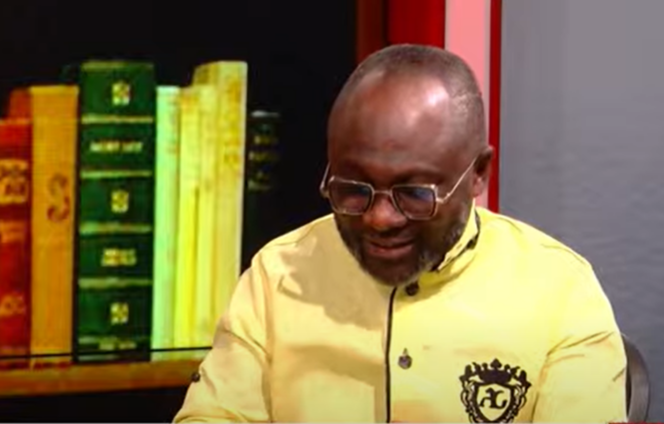
The Director of the Ghana School of Law (GSL), Barima Yaw Kodie Oppong, has said that many legal practitioners in the country render their services for free even when they have to be paid.
Speaking on JoyNews’ The Law, he explained that this is because in Ghana some clients do not pay for the services such as consultation, unless they are seeking the services that lead to a court case.
Mr Oppong told the host, Samson Lardy Anyenini that “the ordinary person who has come to lay your tiles and has charged you per square meter, doesn’t see why he should even pay you as a lawyer. He’ll say “oh boss my landlord has thrown my things out’ but, he doesn't think that the advice you are giving him is worth any charging.”
He said although originally the objective of the profession was not to render legal service for fees, over time it has been acknowledged that it is a business.
Mr Oppong said practising law is not a profession where lawyers should get paid only when they go to court or win cases.
“I perform a service, you pay me. A lot of lawyers are doing free work where they should have charged. Sometimes, the rules make it seem as if this is a profession that makes people perform a service without expectation of remuneration but at the same time, it is also a business…The law has prescribed strictly how that business is to be rendered and the fees for it,”he said.
The GSL Director added that “it is not how much to be taken but how it should be taken. That is why there are a number of cases where when a lawyer has not specifically entered into an agreement with a client, the case is ended and he sends a bill and the court says no to that. From the beginning, you did not even tell him this is how much I'll charge you or even when you have charged the person, give him prior notice to pay this amount. So not even giving a notice to your own client can be a problem.”
Mr Oppong said that the profession is guided by rules that sometimes when they benefit the lawyer cannot be enforced, but when they go against the lawyer, they can easily be enforced.
“If you were to follow strictly these rules, a lot of Ghanaians cannot access these services. People think talking about law (on TV shows and programmes) I am charging, and they think that is how I make my money,” he said, adding that although that is how it should be, in Ghana that is not the case.
Mr Oppong said that these rules need to be looked at again. “We should recognise the business aspect of it and also the fact that we are also called upon to render service without claiming any deal and merge it. And when these matters come up the general public should understand that we have rendered free services as well.”
Latest Stories
-
US seeks changes to rejected $109m health compact with Ghana – Mahama
27 minutes -
Nine dead in mass shooting at Pennsylvania home
44 minutes -
‘Time for Ukraine to get new president,’ says Trump after Zelensky condemns diesel deal
47 minutes -
Hincapie injury adds to Arsenal issues after Guimaraes rescue act
56 minutes -
Henderson scores twice as Chelsea thumb Bournemouth
1 hour -
Photos: Mentapulse Africa convenes health and labour summit to address talent retention
1 hour -
Mahama inspects Nkokɔ Nketenkete plant, eyes Bechem as chicken capital
1 hour -
Ghana not seeking full BRICS membership, applying as Partner Country – Ablakwa
1 hour -
Woman injures three people in third Poland school knife attack in a week
1 hour -
Ghana should join BRICS as partner, not member – NPP Bono East Regional Secretary
1 hour -
Ghana High Commission warns nationals in South Africa over protests in Johannesburg, Durban
1 hour -
Mahama praises Roads Minister for keeping Big Push contractors on their toes
2 hours -
World Cup Visa Scandal: ‘My client has not collected money for visas’ – Ampofo Ankrah’s lawyer
2 hours -
US immigration officials defend ICE agents who shot man in same car as child
2 hours -
Commentator Katie Zacharia picked as new White House press secretary
2 hours