

Audio By Carbonatix
The African Court on Human and People’s Rights says in strategic or public interest human rights litigation, the media are critical before, during, and after any successful justice process.
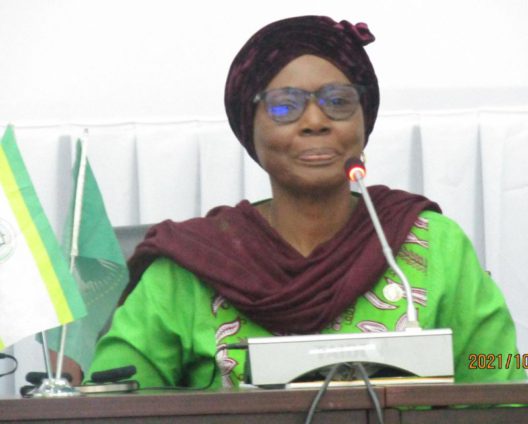
“Depending on how the stories are cast, presented, told and communicated, the media must, therefore, adopt innovative ideas on making human rights more attractive to the relevant stakeholders in the African context,” Lady Justice Imani D. Aboud, African Court President stated.
Lady Justice Aboud was speaking during a three-day African Court on Human and Peoples’ Rights Media Training for Senior Editors and Journalists in Dar es Salaam, Tanzania.
She said communication about the Court should be framed to meet the needs of its various stakeholders.
The African Court President noted that the training was also to empower the core senior editors and journalists to duly perform their mission in the chain of actions of the African Court.
“Whether for litigants to bring cases, for counsel to defend litigants, for academics or other knowledgeable institutions to act as amici curiae, for States to implement decisions or for regional organs to supervise the enforcement of the Court’s proceedings, the media plays a crucial role,” she said.
The African Court was established under Article 1 of the Protocol to the African Charter on Human and Peoples’ Rights.
The Protocol which was adopted by Member States of the then Organization of African Unity (OAU) in Ouagadougou, Burkina Faso, in June 1998 came into force on January 25, 2004.
African Court Media Network, therefore, questions the commitment of the African Union to the mandate of the African Court as currently only 31 AU Members States have ratified the Protocol to ensure the protection of human and peoples’ rights in Africa.
About 24 AU Member Countries have refused to ratify the African Court Protocol.

The countries which have ratified are Algeria, Benin, Burkina Faso, Burundi, Cameroon, Chad, Côte d’Ivoire, Comoros, Congo, Democratic Republic of Congo, Gabon, The Gambia, Ghana, Kenya, Libya, Lesotho, Mali, Malawi, Mozambique, Mauritania, Mauritius, Nigeria, Niger, Rwanda, Sahrawi Arab Democratic Republic, South Africa, Senegal, Tanzania, Togo, Tunisia, and Uganda.
However, only six out of the 31 State Parties to the Protocol had deposited the declaration, recognizing the competence of the African Court to receive cases directly from NGOs and individuals.
The six States are Burkina Faso, The Gambia, Ghana, Mali, Malawi, and Tunisia.
The African Court Media Network, therefore, challenged the AU member states to show commitment to the African Continental Court to protect the human rights of its people.
Latest Stories
-
Anti-LGBTQ Bill: Forget the rumour mongers, I’m a man of action, and will pass the bill – Speaker
26 minutes -
Women and children among those killed in Sudanese army shelling of wedding celebration
29 minutes -
President Mahama is not sincere with Ghanaians on LGBTQ bill matter – Hassan Tampuli
47 minutes -
Gov’t to establish Prison Industrial Hub to equip inmates with income-generating skills – Prison Service boss
1 hour -
Alhassan Tampuli donates cement, roofing sheets to support storm victims in Gushegu
1 hour -
Alhassan Tampuli appeals for urgent support for storm victims in Gushegu
1 hour -
The hypocrisy must stop; pass Anti-LGBTQ+ Bill now – Alhassan Tampuli to Mahama
1 hour -
Imprisonment should be rehabilitative, not punitive – Ghana Prisons boss at UNGA
2 hours -
Ga Adangbe traditional priests petition Mahama over McDan aviation licence revocation
2 hours -
Anti-LGBTQ Bill: NDC’s arrogance is worrying – Hassan Tampuli
2 hours -
Let’s give OSP time to mature, not to scrap it – Hassan Tampuli
2 hours -
Nigeria convicts 386 Islamist militants in mass trials
2 hours -
Djibouti president wins election with 97.8% of vote, state media says
2 hours -
We don’t have mandate to deduct tax from rent allowance of security services personnel – Interior Ministry clarifies
2 hours -
Ablakwa receives Presidential Special Envoy on Reparations to advance global agenda
3 hours