

Audio By Carbonatix
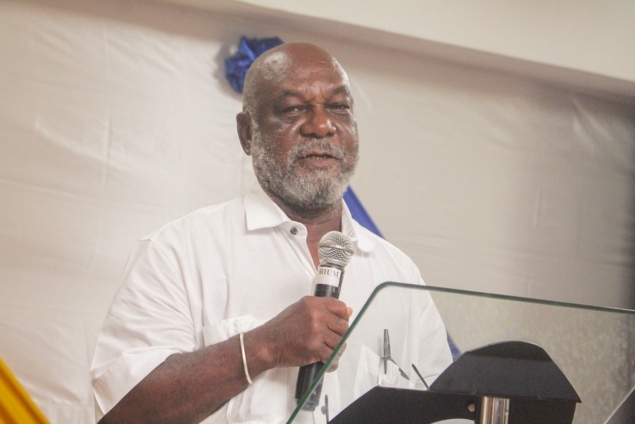
Journalism Professor Kwame Karikari says the media has the right to exercise its discretion and blackout any newsmaker or public official whose actions are deemed disrespectful to the media profession.
According to him, the 1992 Constitution guarantees the independence of the media, describing it as offensive to the constitutional provisions should newsmakers, particularly, politicians assault a media practitioner.
Professor Karikari contended that if a public official, especially a minister, engages in behaviour that disrespects the principles of journalism and fails to rectify such actions, the media is well within its rights to impose a blackout.
He argued that this approach serves as a powerful tool for the media to protect its integrity and uphold journalistic standards.
"For a minister to behave like that to any sector of the media and without rectifying that action, then the politician deserves to be simply blacked out," Professor Karikari said on JoyNews' PM Express on Monday.
He drew attention to the fact that in the current media landscape, politicians can boycott specific media houses and not invite certain media teams to their programmes. Therefore, he argued, the media should also have the right to reciprocate such actions.
Last two weeks, the Ghana Journalists Association (GJA) imposed a total media blackout on the Fisheries and Aquaculture Development Minister, Mavis Hawa Koomson.
The GJA directed journalists to avoid covering any activities involving the Awutu Senya East MP following an attack on a journalist allegedly by the MP's thugs during the NPP’s parliamentary aspirants’ vetting in Cape Coast.
The Yendi MP, Farouk Aliu Mahama, has also been included in this total blackout after he was reported to have assaulted a Citi FM reporter during the NPP Parliamentary elections.
Although some have criticised the strategy as one which is not in the public interest, Prof Karikari clarified that while media blackout of key institutions like Parliament and the Presidency would be highly inappropriate, individual politicians who engage in disrespectful behavior towards the media should face the consequences of being blacked out.
"When you assault a journalist, you are telling the media 'We don’t want you,' so what business does the media have rendering a service that you claim you do not want? So for me, the media blacking out anyone is within their right."
On the same show, the Information Minister, Kojo Oppong Nkrumah urged the GJA to ensure that thorough investigations are carried out before the blackout policy is implemented.
He noted that although the directive is a laudable one, it can be abused if left unchecked.
Latest Stories
-
Fire guts auto parts warehouse at Bubuashie, one fire officer injured
3 minutes -
I owe my victory to coach Ofori Asare – Allotey after winning WBA Africa Gold Super Flyweight belt
7 minutes -
Church of Pentecost supports over 2,000 BECE candidates in Obuasi with career guidance seminar
2 hours -
Brandon Asante and Coventry all but promoted to Premier League despite Sheffield Wednesday draw
2 hours -
GPL 2025/26: Late Kwartemaa strike downs Hearts in Tema
2 hours -
Ghana Faces Sierra Leone Moment as Prosecutorial Powers come under strain
2 hours -
Don’t consume fish or seafood from Tema Shipyard until further notice – FDA warns
2 hours -
Why volunteering might be Africa’s most underrated career accelerator
3 hours -
ActionAid Ghana raises concern over gender gaps in Feed Ghana Programme
3 hours -
Windstorm wreaks havoc in Gushegu, displacing nearly 2,000 residents and damaging schools
3 hours -
Friends of Bridget Bonnie Marks her 35th birthday with donation to Kasseh Model Health Centre
3 hours -
From Ekumfi Kokodo to the Pulpit Stage: Essi Donkor’s gospel journey takes shape
4 hours -
Landfilling waste management creates no value, it’s an economic waste
4 hours -
Photos: Speaker Bagbin Commissions MPs constituency office under parliamentary decentralisation programme
4 hours -
Black Stars technical advisor Winfried Schäfer sacked as GFA shakes up backroom staff
4 hours