

Audio By Carbonatix
Policy analyst and founding president of IMANI Africa, Franklin Cudjoe, has warned that Ghana risks falling behind in the global artificial intelligence (AI) revolution due to fragmented and politically driven skills programmes that lack clear strategic direction.
Speaking on Joy SMS, Mr Cudjoe said the country’s current approach to digital and technical training appears scattered, with multiple initiatives being rolled out without a coherent plan to prepare young people for the future labour market.
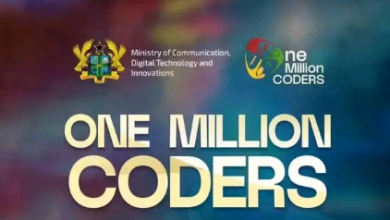
“We are in an AI revolution, and we are doing what? One million coders,” he said. “I don't even know what that means. These programmes are crowded, they are all over the place.”
His comments come in the wake of a security services recruitment exercise that attracted more than 405,000 applicants for just 5,000 available positions — figures that have reignited debate about youth unemployment and job creation in Ghana.
The Minister for the Interior, Muntaka Mohammed-Mubarak, disclosed the numbers while speaking to journalists in Parliament on Wednesday, March 11.
According to the minister, the country’s security services collectively employ fewer than 100,000 personnel across all agencies, with their combined wage bill already nearing GH¢13 billion — highlighting the fiscal limits of relying on public sector recruitment to absorb large numbers of job seekers.
While acknowledging the importance of digital skills development, Mr Cudjoe questioned the way some government programmes are designed and presented.
He argued that many of the skills promoted under initiatives such as coding programmes can easily be learned online and should not be treated as standalone flagship policies unless they are closely linked to industry demand and employment opportunities.
Instead, he called for greater investment in technical and vocational education and stronger support for graduates to enter competitive markets.
“If you can disproportionately apportion money to technical and vocational education and be ready to empower them to create — give them the opportunity to blossom, sell their wares — that will be competitive,” he said.
Mr Cudjoe also highlighted the role of the National Development Planning Commission (NDPC), noting that while the institution produces useful long-term development plans, its effectiveness is often weakened by partisan appointments.
According to him, without independent and well-resourced planning institutions guiding policy, Ghana risks continually reacting to economic pressures instead of planning ahead.
“We need to move faster,” he said, warning that the pace of global technological change demands more coordinated and forward-looking policies.
“Things are moving faster than last.”
Latest Stories
-
Power restoration fault suspected in Kumasi Central Market fire
4 hours -
The 7-foot giant of Ngleshie Amanfro: Seven-foot Ghanaian Ephraim Saawa dreams of joining the national basketball team
4 hours -
Government promises support for Kumasi Central Market fire victims
4 hours -
Vibes The Movie: Big Ghun’s Ghanaian film earns five nominations at 2026 REFFA
5 hours -
MamaCare CEO warns unresolved conflicts among health workers could undermine maternal and neonatal care
5 hours -
Health professionals urged to translate medical knowledge into practice to save mothers
5 hours -
Conflicts among care providers linked to maternal, neonatal deaths – Expert
7 hours -
GIS marks 10th TIME conference, champions improved teaching practices
7 hours -
BRICS Or Balance? What Ghana’s bid really means
8 hours -
GPRTU wants full TRAFFITECH-GH implementation to start in 2027
8 hours -
Mahama announces plans to import electric wheelchairs for PWDs
8 hours -
KGL U17 Colts 2026: Western beat Prempeh Elite Academy to set up final final with Greater Accra Region
8 hours -
Late Solanke strike salvages 10-man Spurs draw at Man United
8 hours -
Gender Ministry to monitor welfare of Nana Akua Addo’s children amid domestic violence case
9 hours -
Benedict Okyere Yeboah: Ghana’s football problem goes beyond sacking a coach
9 hours